States aim to clip wings of drones smuggling contraband into prisons
A coalition of more than 20 state attorneys general is urging the federal government to grant states and local law enforcement broader authority to intercept drones used to smuggle drugs, weapons and other contraband into prisons.
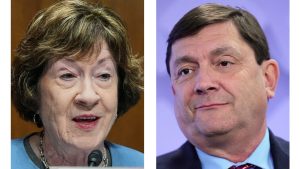
Georgia Attorney General Chris Carr is leading the effort. In a letter sent to the White House’s Task Force to Restore American Airspace Sovereignty, the group asked for “carefully defined authority” that would allow trained state and local agencies to detect, monitor and disable unauthorized drones before they reach prison grounds.
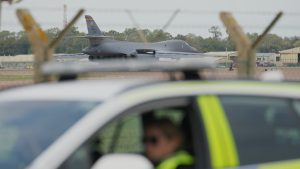
Under current federal law, only a small set of federal agencies is authorized to take direct action against drones, leaving correctional officials largely limited to detection and reporting. State officials argue that gap has allowed criminal networks to use drones to deliver contraband directly into secure facilities.
“Drones are dropping a staggering amount of contraband into our prisons, and law enforcement are doing their best to combat the problem, but their hands are tied,” Carr said. “Current rules put those on the front lines — our correctional officers — at a significant disadvantage.”
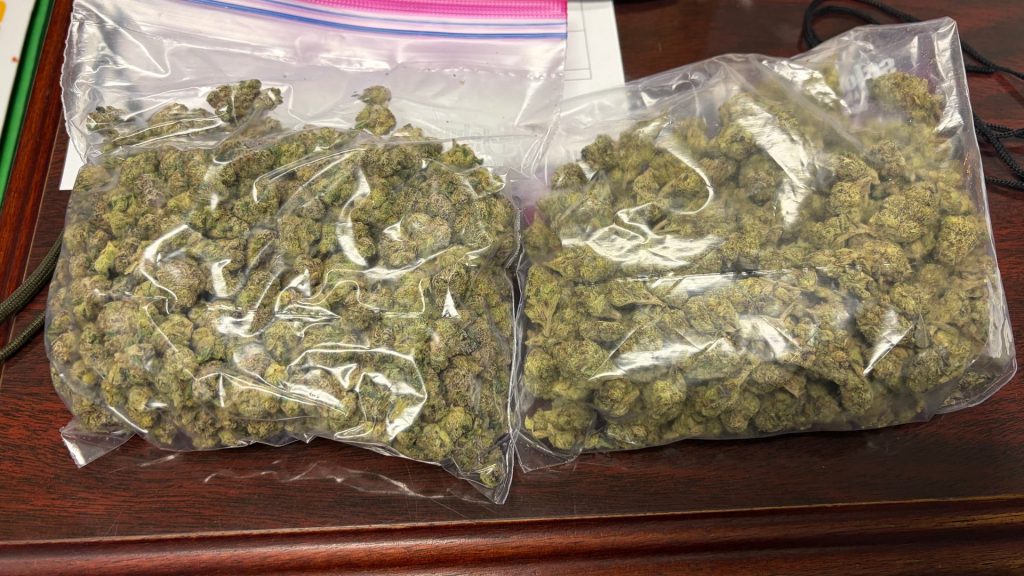
The attorneys general cited a sharp increase in drone incidents nationwide. In Georgia, the Department of Corrections has recorded an average of nearly 58 drone incidents per month over the past six months, according to state officials. Authorities say recovered contraband has included marijuana, methamphetamine, ecstasy, cell phones, razors, liquor and food items.
In their letter, the attorneys general warned that drone smuggling has consequences that extend beyond prison walls. They said drugs contribute to addiction, violence and overdose incidents, while smuggled weapons heighten the risk of assaults and coordinated attacks. Contraband cell phones, they added, allow incarcerated individuals to continue criminal enterprises such as fraud schemes, witness intimidation and violent crime.
Airspace regulation in the United States has traditionally fallen under federal control. Congress has taken steps to address the issue in recent National Defense Authorization Acts. This allows limited counter‑drone actions near prisons. However, state officials say those measures do not go far enough.
“There is a lot of question as to whether federal law preempts state law,” Carr told Fox News Digital. “It doesn’t say specifically what you’re allowed to do nor what you are prohibited from doing.”
Law enforcement and corrections groups have echoed those concerns. In an August 2025 letter to Congress, a coalition of 17 law enforcement organizations wrote that “detection without mitigation is not a viable strategy for public safety,” urging lawmakers to pair funding for drone detection systems with clear authority to stop airborne threats.
Recent cases highlight the scope of the problem. In Texas, seven people were arrested following an investigation into a large‑scale drone smuggling operation at the Mark W. Michael Unit in Anderson County. State officials said drones were used to deliver large packages of contraband, leading to the seizure of more than 100 cell phones along with methamphetamine and synthetic cannabinoids.
Some jurisdictions are experimenting with new approaches. In Georgia, the Fulton County Sheriff’s Office launched what it describes as a first‑of‑its‑kind “Drone as First Responder” program at the county jail on Rice Street. The system is designed to intercept unauthorized drones and provide faster situational awareness during security incidents. The program is part of a public‑private partnership involving the sheriff’s office, its foundation and a private technology firm.
The attorneys general are asking the federal task force, led by Deputy Assistant to the President Sebastian Gorka, to work with relevant agencies to grant states narrowly tailored authority while continuing to investigate and prosecute those who use drones to introduce contraband into correctional facilities.
States signing the letter include Alabama, Arkansas, Florida, Idaho, Indiana, Iowa, Kentucky, Louisiana, Mississippi, Missouri, Montana, Nebraska, North Dakota, Ohio, Oklahoma, South Carolina, South Dakota, Tennessee, Texas and West Virginia.
Ella Rae Greene, Editor In Chief