USDA plans to move Forest Service HQ to Utah. What happens now?
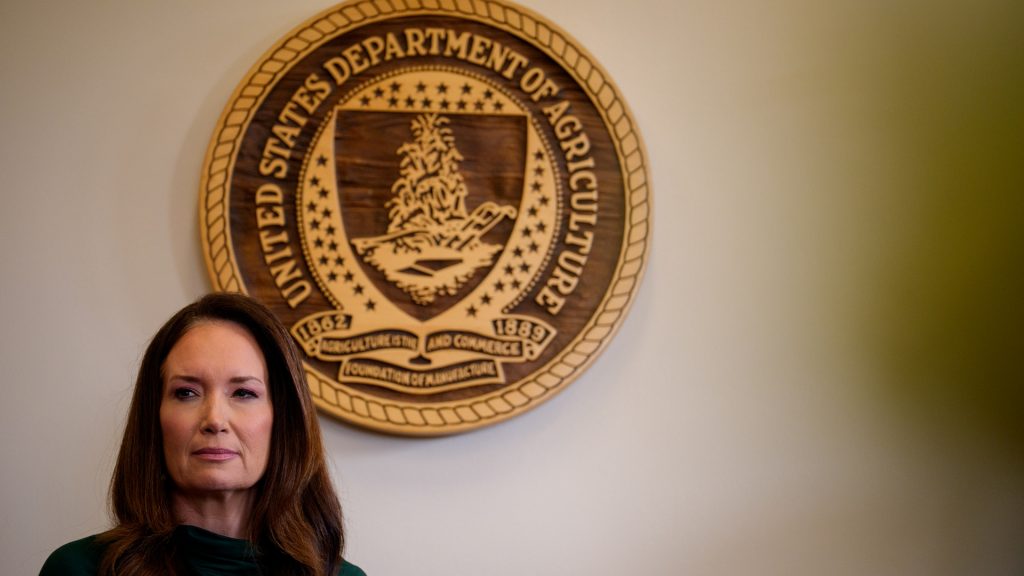
Earlier this week, the United States Department of Agriculture announced plans to move its Forest Service headquarters to Salt Lake City, Utah.
It’s a part of the Forest Service’s transition to what the USDA calls a “state-based organizational model.”
While officials call the change a “common sense” way to “move leadership closer to the forests and communities it serves,” some have voiced concerns, especially when it comes to the closing of regional offices across the country and the closing of research facilities in 31 states.
Regional offices are now set to be consolidated into six “service centers” in Albuquerque, New Mexico; Athens, Georgia; Fort Collins, Colorado; Madison, Wisconsin; Missoula, Montana; and Placerville, California.
Fifteen state directors will be distributed throughout the country to oversee Forest Service operations.
Around 260 Forest Service employees currently at the headquarters in Washington, D.C., will relocate, the USDA said to The Hill.
“Moving the Forest Service closer to the forests we manage is an essential action that will improve our core mission of managing our forests while saving taxpayer dollars and boosting employee recruitment,” Agriculture Secretary Brooke Rollins said in a statement. “Establishing a western headquarters in Salt Lake City and streamlining how the Forest Service is organized will position the Chief and operation leaders closer to the landscapes we manage and the people who depend on them.”
It remains to be seen how the restructuring plan is going to be implemented, Kevin Hood, Executive Director of Forest Service Employees for Environmental Ethics, told Straight Arrow News. But the agency employees he’s talked to keep saying the plan is “vague.”
“Several have said we have far more questions than answers,” Hood said.
Forest Service chief Tom Schultz said employees would get more information about relocation “over the coming days and weeks.” In an interview with Politico, Rollins said the USDA will be “flexible” if employees can’t move right away or have “other issues.”
One of the ramifications of the relocation, Hood said, is a possible “brain drain” at the Forest Service.
When Trump in 2019 sought to relocate the Bureau of Land Management from Washington to Grand Junction, Colorado, the proposal drove many federal workers with specialized expertise to retire, the Sierra Club said.
“The Forest Service should be structured in a way that allows them to steward our public lands effectively and with robust public engagement,” Alex Craven, Sierra Club’s Forest Campaign Manager, said in a statement. “This administration has routinely pursued the exact opposite by gutting protections and the public lands management workforce. Despite continued appeals of ‘common sense’ management, it’s far from clear this latest reorganization will get us any closer to that.”
The USDA first publicly proposed the reorganization last July. During the public comment period, the USDA received 14,000 comments. Of these, 82% were not happy with the overall plan; 5% were positive, and 7% were neutral.
About 28% of comments referenced possible ecological impacts, with 15% citing the Forest Service’s 2012 rule for National Forest System land management planning, which mandates that “land management plans provide for ecological sustainability and contribute to social and economic sustainability, using public input and the best available scientific information to inform plan decisions.”
Hood said this underpins a broader concern.
“A lot of the things that the administration is pushing — like increased timber production, very aggressive wildfire mitigation treatments, that includes building roads into roadless areas and doing more aggressive timber removal — a lot of those are not only ecologically unsustainable, but ecologically impactful,” Hood said.
While research is being reined in and consolidated, Hood said the “responsible officials, the decision makers are being fanned out.”
“How are you going to uphold ecological integrity?” he asked.
In public comments, Native tribes expressed fear about the diminishment, or elimination, of gains they got from good working relationships with the Forest Service’s regional offices; a loss of institutional knowledge when it comes to tribal issues and treaties; the potential for losing coordination with the service; and the changes’ effects on the management of local treaty resources.
Whether voices from these tribes are diminished could vary if states have more sway, Hood said.
“Some states have better relationships with tribes than other states, but I think that underpinning all of tribal relations should be the recognition that the tribes, they are the original governments of the North American continent, and they have the right and expectation to consult with the federal government,” Hood said.
Even amid his concerns, Hood noted that when the first Trump administration moved the BLM headquarters to Colorado, the Biden administration undid or “greatly dampened” many of the changes.
“It remains to be seen” what happens, Hood said, but at the same time, he added “I also have faith in the next generation.”
“When there is going to be an upswing in rehiring or needing to fill positions with dedicated and capable people, I do feel like there will be a new generation to come in,” he said.
Ella Rae Greene, Editor In Chief