Why the Supreme Court struck down a law banning ‘conversion therapy’
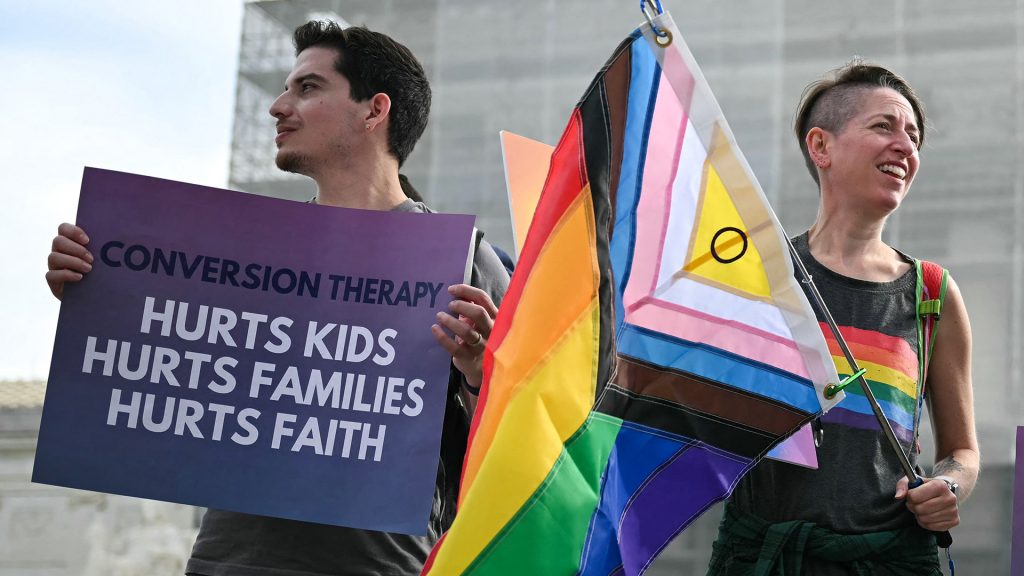
One of the most incendiary battles in the nation’s culture wars came to a head Tuesday when the Supreme Court rejected a Colorado law that barred therapists from trying to change the sexual orientation or gender identity of minors.
The 8-1 ruling also affects the more than 20 other states that have regulated so-called “conversion therapy,” which aims to convert LGBTQ+ children and teens into heterosexuals or cisgenders. Justice Ketanji Brown Jackson was the only dissenter.
The ruling in Chiles v. Salazar was a win for the Trump administration, which had argued that the ban raised serious First Amendment issues. The decision is the most recent in a series of cases in which the justices have sided with parties claiming religious discrimination.
Writing for the majority, Justice Neil Gorsuch rejected Colorado’s contention that the law represented a legitimate effort to regulate medical practice.
“Colorado may regard its policy as essential to public health and safety,” Gorsuch wrote. “But the First Amendment stands as a shield against any effort to enforce orthodoxy in thought or speech in this country.”
Conversion therapy can involve religious counseling, aversion techniques and even shock therapy. Colorado passed a law to ban the practice in 2019. Violations can result in fines of as much as $5,000 and the suspension of a therapist’s license, but the law has never been enforced.
Colorado’s attorney general, Phil Weiser, a Democrat, said in a statement that the ruling “limits the authority states have long exercised to safeguard patients from substandard care.”
Kaley Chiles, a licensed therapist who filed a lawsuit challenging Colorado’s law in 2022, uses talk therapy in dealing with LGBTQ+ children. She says her approach is voluntary and does not seek to change a client’s orientation.
“Today the Supreme Court condemned Colorado’s unlawful censorship of my counseling,” Chiles said in a video produced by the Alliance Defending Freedom, a conservative legal organization that says it has secured 16 Supreme Court victories.
“I hope this win for free speech will fuel a greater pursuit of truth both among professionals and in the counseling room. Our kids deserve it. The law I’m challenging harms kids and silences speech. Kids deserve real help affirming their bodies are not a mistake and that they are wonderfully made.”
In Tuesday’s ruling, the majority of justices treated the ban as a speech restriction, not just a professional regulation. However, a lower court will now have to decide whether the ban does indeed violate the First Amendment.
In her solo dissent, Jackson said the decision is dangerous.
It “threatens to impair States’ ability to regulate the provision of medical care in any respect,” she wrote. “It extends the Constitution into uncharted territory in an utterly irrational fashion. And it ultimately risks grave harm to Americans’ health and wellbeing.
Ella Rae Greene, Editor In Chief