Why Trump is threatening Kharg Island, Iran’s oil export hub
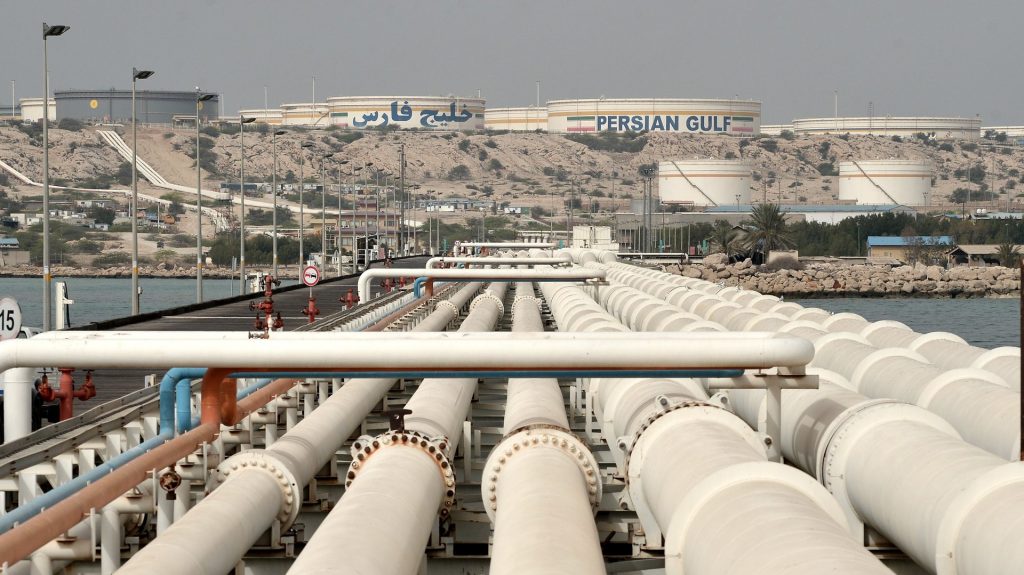
It covers a mere 8.5 square miles, but it’s where Iran ships out 90% of its oil exports. Kharg Island is a vital strategic outpost in the Persian Gulf, and it’s the latest target for potential military operations floated by President Donald Trump.
The U.S. has already struck Iranian military equipment on the island, but the latest threat from Trump suggests that attacks on energy infrastructure are on the table if Iran does not allow shipping traffic to resume through the Strait of Hormuz.
On Monday, Trump said that if Iran does not open the strait, the U.S. would respond by “blowing up and completely obliterating” Kharg Island as well as Iran’s power plants, oil wells and, possibly, desalination plants.
Trump has shown an interest in the obscure island since long before he was in a position to order an attack on it. In a 1988 interview with The Guardian, when he first talked about running for president, he was asked about his foreign policy regarding Iran, if he were elected.
“One bullet shot at one of our men or ships and I’d do a number on Kharg Island,” Trump said. “I’d go in and take it.”
Nearly four decades later, he may make good on that threat.
What’s on Kharg Island?
Located about 15 miles off the coast of Iran in the Persian Gulf, Kharg Island is the heart of Iran’s oil export capacity. The waters closer to shore aren’t deep enough for large crude carriers, so tankers anchor around the island and load up at offshore buoys and docking platforms connected to pipelines from the Iranian mainland.
The island is a “key node to the Iranian economy, and a key node to the global economy, because those tankers of Iranian oil go out to serve import countries with critical transportation fuels,” said Jim Krane, a fellow studying energy and geopolitics in the Middle East at Rice University’s Baker Institute for Public Policy.
Kharg Island processes roughly 90% of Iran’s crude exports, making it the financial engine of the Iranian state. The island has enough storage tanks to hold 30 million barrels of oil. Disrupting it would cut off the revenue Iran uses to fund its government and military. While most tankers have been blocked, Iranian oil has continued to flow through the Strait of Hormuz.
The U.S. has already struck military targets on the island, including air defense systems, a radar site, an airport and a hovercraft base, according to satellite imagery cited by The Associated Press.
How might striking Kharg Island change the conflict?
The destruction of Iran’s oil export capacity would further drive up global prices.
Petras Katinas, an energy researcher at the Royal United Services Institute, told the AP that destroying Kharg’s infrastructure would not completely halt Iranian exports, since Iran has other smaller ports. But it would force oil flows “through a much smaller, costlier and less efficient export system.”
Krane said he doubts the Trump administration wants to stop Iranian oil from flowing to the global market. Instead, he suspects that “Trump wants to threaten Kharg Island and potentially capture it as a bargaining chip for an eventual settlement.”
Iran would not surrender the island easily. The regime has been preparing for attacks by moving additional military personnel and air defenses to Kharg Island and laying traps, CNN reported. Iran is also adding shoulder-fired, surface-to-air missile systems known as MANPADs and mines along the shoreline.
Trump also told the Financial Times he wants to “take the oil in Iran,” which suggests a mission to capture Kharg Island.
Whether it would be destroyed or captured, Krane said Iran would look to retaliate, setting off an escalation of the war and the global economic fallout.
“There’s lots of escalatory options that Iran has that could be brought to bear if US boots are on the ground,” Krane said, including striking even more energy infrastructure in neighboring Gulf states, or hitting water desalination plants. “Iranian leaders have been saying for decades that if they can’t use the Strait of Hormuz, then they’re not going to let their neighbors use it, either.”
Ella Rae Greene, Editor In Chief