Here’s why Trump may stop short of reopening the Strait of Hormuz
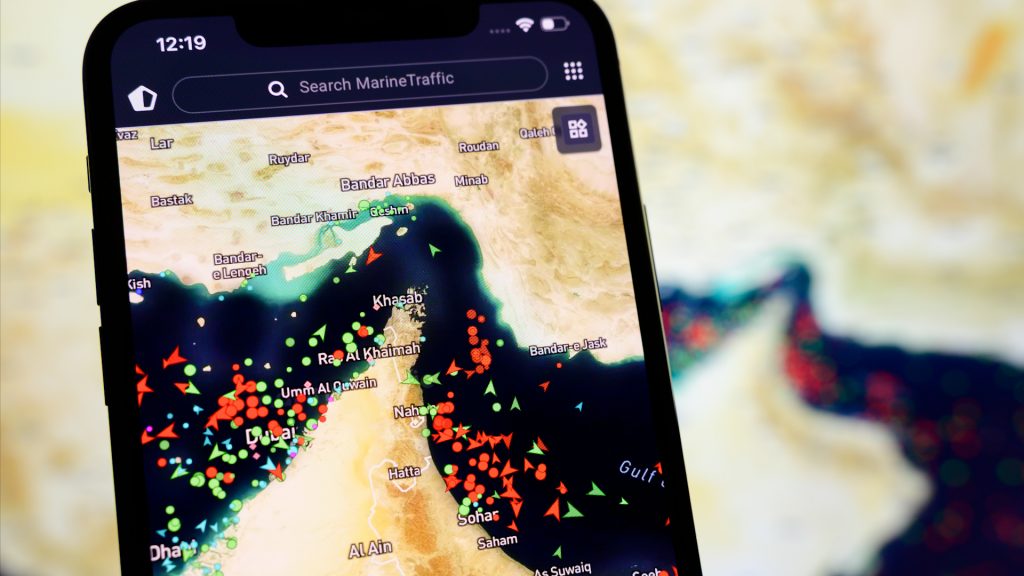
President Donald Trump is signaling that he’s ready to wrap up the war in Iran even if the Strait of Hormuz remains largely closed. The Wall Street Journal reported that the White House is considering winding down military operations without first reopening the critical oil and gas shipping route.
The Journal reported that Trump and his advisers recently concluded that forcing Hormuz to open could extend the conflict beyond the White House’s preferred timeline, so they are prioritizing current military objectives and leaving broader action on the Strait for later.

That approach could leave the Strait unsettled even as the United States reduces direct military operations. Roughly one-fifth of the world’s oil supply passes through Hormuz, and any prolonged disruption could continue to strain trade, energy markets and industries tied to those shipments.
Trump told CBS News on Tuesday that the U.S. was not yet pulling assets in and around the Strait of Hormuz. However, he said other countries would eventually have to step in.
NEWS
: I called President Trump for some clarity on this post. He says the U.S. is not pulling assets in and around the Strait of Hormuz yet: “At some point I will, not quite yet, but countries have to come in and take care of it. Iran has been decimated, but they’re going to… pic.twitter.com/67BRdrOkRV
— Weijia Jiang (@weijia) March 31, 2026
What Trump and his aides say about ending the war
The Journal said the administration wants to weaken Iran’s naval and missile capabilities, damage its defense industry and limit its path to a nuclear weapon before shifting toward diplomacy aimed at restoring trade through Hormuz. If diplomacy fails, the Journal reported, Washington would press allies in Europe and the Gulf to take the lead on reopening the waterway.
Trump reinforced that approach Tuesday in a Truth Social post urging other countries to “TAKE IT” and adding, “Go get your own oil!”
The post was a departure from a message he posted Monday, in which he said there had been “great progress” toward ending military operations, but warned the U.S. could widen its offensive if no deal is reached soon and the Strait of Hormuz remains closed. He said then the U.S. could strike Iran’s power plants and oil wells, its Kharg Island oil processing center and possibly its desalination plants.
White House press secretary Karoline Leavitt said Monday that the U.S. was “working towards” normal operations in the Strait. Still, she did not list reopening it among the administration’s core military objectives.
Secretary of State Marco Rubio told Al Jazeera on Monday that the current campaign would be completed within weeks. Rubio said the Hormuz issue would be resolved later, adding that either Iran would reopen it or a coalition with U.S. participation would make sure it happened.
Treasury Secretary Scott Bessent also suggested Monday, according to The Journal, that the U.S. or a multinational group could escort tankers. Bessent said the market was still well supplied and suggested the U.S. would eventually help restore freedom of navigation through the Strait.
How Trump’s shifting message has moved markets
Markets initially treated the report as a sign of possible de-escalation, even though oil remained elevated.
By mid-morning Tuesday, the Dow Jones Industrial Average was up 0.83%, while the S&P 500 rose 1.17% and the Nasdaq increased 1.61%. Bloomberg reported that West Texas Intermediate crude prices fell 1.3% after earlier rising as much as 3.9%.
Analysts cited by Bloomberg said the change in tone could lift sentiment, but they cautioned that a final settlement remains uncertain.
What happens if the Strait stays restricted
The Journal reported that the administration still sees military options for reopening the Strait, but those are not Trump’s immediate priority. It also reported that nearly 40 countries, including the U.K., France and Canada, pledged this month to contribute to efforts to ensure safe passage through the Strait.

Trump is still pushing for a quick end to the conflict even as the U.S. builds up forces in the region and keeps other options on the table, leaving open the possibility of later military or allied action if Hormuz remains restricted.
Ella Rae Greene, Editor In Chief