Iran applies lessons from Ukraine as US stockpiles thin
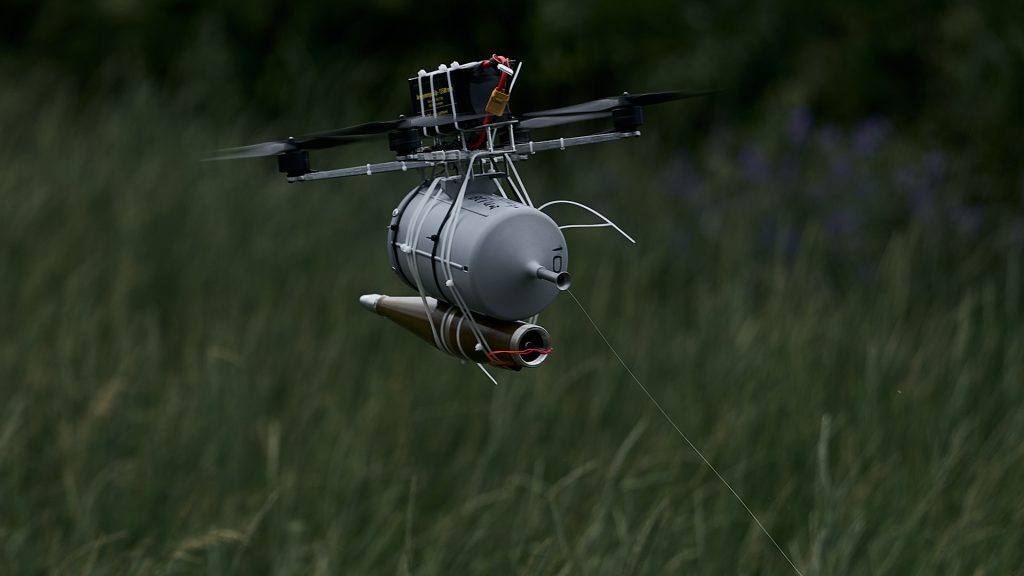
The war with Iran is simultaneously exposing two pressures on the U.S. military: a battlefield increasingly shaped by drone tactics tested in Ukraine, and growing competition for air defense weapons already in demand elsewhere.
One problem is tactical: inexpensive drones, including wire-guided first-person view, or FPV, systems, are creating challenges that standard electronic defenses may not stop. Another is supply: air defense interceptors are under pressure because both the Middle East conflict and the war in Ukraine rely on them.
Together, they point to a broader question facing the Pentagon — whether the United States can adapt quickly enough to a changing battlefield while engaging in multiple conflicts at once.
How Iran is applying lessons from Ukraine
The Wall Street Journal reported that an Iranian-backed militia in Iraq released a video from Baghdad showing FPV drones attacking two U.S. assets at a base there: a Black Hawk helicopter on the ground and an air defense radar system. The report said the drones used fiber-optic guidance. The tactics closely resemble methods used in Ukraine, where FPV drones have become a defining feature of the battlefield.
Analysts say those systems pose a tougher problem because they do not rely on the same signal links used by many other drones, thereby limiting the effectiveness of typical jamming tools. The Journal reported that Russia used the systems heavily during fighting in Kursk in late 2024, and analysts say Iran’s ties with Moscow have helped transfer those battlefield lessons.
Former Ukrainian Defense Minister Andriy Zagorodnyuk told The Journal that the two countries have been exchanging military know-how, intelligence and technology.
“As true allies,” Zagorodnyuk said, “the Iranians are absorbing the lessons of the war, and will try to absorb more.”
The Journal also noted that drone warfare in the Middle East is not limited to aircraft. Ukraine used naval drones to reshape the fight in the Black Sea, and analysts say even less-capable Iranian systems could still threaten ships in the confined waters of the Strait of Hormuz.
Why US forces could be vulnerable
Analysts told The Journal that any U.S. ground troops or warships operating close to Iran would likely become “close in” targets for FPV drones.
Martin Sampson of the International Institute for Strategic Studies, a retired marshal from the Royal Air Force, said the U.S. does not appear to be fielding, on regional vehicles and landing craft, the kind of layered anti-drone protections that have become routine in Ukraine. He suggested that jammers alone would not solve the fiber-optic problem.
That concern matters because President Donald Trump has considered possible ground and naval operations tied to the Strait of Hormuz. Any operation near Iran’s coast would place U.S. forces in a combat environment unlike those that dominated American campaigns in Iraq and Afghanistan, where they primarily encountered gunfire and improvised explosive devices.
Michael Kofman, a senior fellow at the Carnegie Endowment for International Peace, told The Journal that the U.S. military is still working through what FPV drones mean for doctrine, protection and day-to-day battlefield practice. Other analysts have argued that American advantages in surveillance, intelligence and longer-range strike capabilities could offset some of the risk in a relatively confined space such as Hormuz.
Pavlo Klimkin, a former Ukrainian foreign minister, offered a more skeptical view, telling The Journal that no armed forces are fully prepared for this challenge — “not technically, not mentally and not experiencewise.”
The broader implication is that the war in Iran may be exposing not just a threat from a single adversary, but a larger shift in warfare. The technologies and tactics that emerged in Ukraine are now appearing in a conflict that directly involves U.S. forces, narrowing the gap between lessons learned abroad and the risks faced by the Pentagon itself.
How the munitions debate overlaps with that threat
Separately, The Washington Post reported that Pentagon officials are discussing whether equipment slated for Ukraine may need to be redirected as fighting with Iran places new demands on U.S. stockpiles. Three people familiar with the matter told The Post that the weapons under discussion include air defense interceptor missiles ordered for Kyiv through NATO’s Prioritized Ukraine Requirements List, or PURL.
No final decision has been made, according to the report.
Even so, the debate reflects how the Iran conflict is forcing choices about supply and priorities as U.S. Central Command’s campaign continues at a heavy pace with more than 9,000 targets hit in less than four weeks.
The Pentagon spokesperson cited by The Post said the Defense Department would ensure that U.S. forces and allied and partner forces have what they need to fight and win, while declining to comment further.
The possible diversion would matter because many of the most in-demand systems in the Middle East are the same ones Ukraine relies on to defend its cities and infrastructure from Russian attacks. The Post identified Patriot and THAAD interceptors as among the most coveted air defense munitions in both theaters. One person familiar with the internal discussions told The Post that shipments through PURL may continue, but later packages could be thinner on air defense items while the U.S. rebuilds its own inventories.
European diplomats told The Post they are concerned the U.S. is using up munitions so quickly that deliveries of systems to Ukraine could be disrupted. A European official said any diversion would probably affect later deliveries rather than items already in the pipeline.
The Post also reported that the Pentagon notified Congress on Monday that it intended to divert about $750 million in NATO-provided PURL funding to restock U.S. inventories rather than send additional assistance to Ukraine.
What the combined picture suggests
Taken together, the drone threat and the munitions strain point to the same underlying issue: the Iran war is testing both the readiness of U.S. forces and the limits of U.S. capacity. Iran and its partners appear to be adapting battlefield lessons from Ukraine faster than many Western militaries expected, while the Pentagon is simultaneously drawing down high-end defensive weapons that are already scarce and in heavy demand.
That does not mean the Pentagon lacks options. Analysts cited by The Journal said U.S. forces retain major advantages in intelligence, reconnaissance, surveillance and longer-range firepower. The Post’s reporting also suggests that any shift away from aid to Ukraine remains under discussion rather than settled policy.
Ella Rae Greene, Editor In Chief