Millennials are becoming caregivers for their aging parents. Are they ready for it?
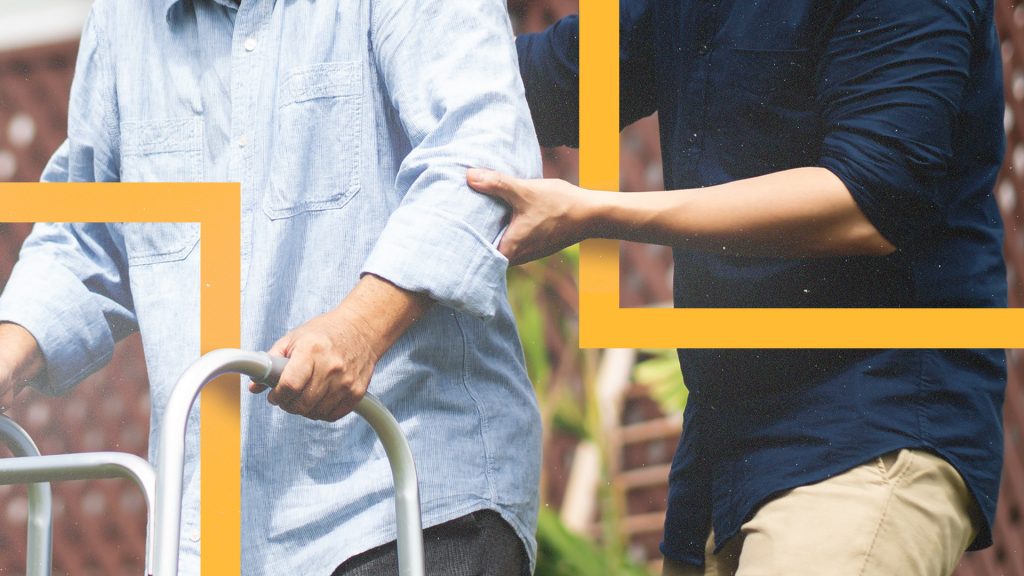
Amanda Ross was enjoying life and focused on her career. She was young — in her 40s — and excited about building her future. But her world flipped when her mother was diagnosed with a rare form of dementia called posterior cortical atrophy.
That was two years ago. Now, Ross told Straight Arrow News, she and her sister have spent the last couple years moving in a new, unexpected direction.
“We’ve been through day groups, in-home care, to the difficult decision of moving Mom into an assisted living wing of a retirement home,” Ross said. A year after that, they moved her again.
Ross and her sister join a growing number of other millennials, now in their mid-30s and 40s, who are becoming caregivers for aging parents.
According to the Pew Research Center, 66% of Americans say adult children have a responsibility to care for elderly parents who need help. The Centers for Disease Control and Prevention estimates about 1 in 4 U.S. adults now serve as caregivers.
That accounts for about 63 million Americans, according to research from AARP and the National Alliance for Caregiving. The vast majority — 89%, according to the AARP — are helping a relative.
While Americans have long cared for their aging parents, millennials’ parents are living longer, causing a cultural shift in caregiving that many weren’t prepared for.

Successful solutions
Bill Johnson bought a duplex where he lives on one side, and his mother lives on the other. Johnson, who is in his 30s, said the arrangement allows him to keep his mother close while helping cover her expenses.
“The situation couldn’t have been more favorable to us,” Johnson told SAN. “Now we have a place to shelter family as needed and a good equity position if we have an emergency.”
Katherine Rivas has also formed a partnership with her parents: They help with her daughters, and she plans to step up for them in return.
“We became a team,” Rivas told SAN. “When it’s my turn to take care of them, I will gladly do so.”
But these arrangements aren’t possible for everyone. Many families have complicated dynamics.
“I’ve been no-contact with my mother for more than five years,” said Jessica Allen. “At this point, if she needs help in that capacity, that would be something my siblings would handle without my input.”
And then there are families who want to show up but don’t know how to manage it.
“Many millennials are starting to realize they are moving into a stage of life where they may be supporting both their children and their parents at the same time,” Tiffany Petite, a therapist and CEO of Virtuous Circle Counseling, told SAN. “For a lot of people, this creates a feeling of being pulled in two directions.”
Dr. Sher Downing, founder of The Entrepreneur Sandwich, sees it play out among the business owners she works with.
“Elder millennials in their early 40s are hitting peak career and business-building years at the same moment their parents’ needs are beginning to escalate,” Downing told SAN.
A 2026 Pew Research report found caregiving touches nearly every part of life including emotional well-being, work, finances and social life. Wanting to help and being able to afford it are two very different things.
Tiffany Woods knows that situation well. She’s 38, single and still establishing herself financially.
“I feel like I’m just starting to make money in my career,” Woods told SAN. “If my parents needed me for help financially in the near future, as much as I would want to, I don’t know how I could when I’m just trying to get on my own feet.”

Feeling the squeeze
And those who have children are facing another challenge. Caregiving expert Sue Ryan told SAN that this group, called the “sandwich generation,” includes middle-aged adults caring for both aging parents and their own children at the same time. That, she said, can be a big burden.
“We’re experiencing the perfect caregiving storm,” Ryan told SAN. “Multiple economic, medical and demographic forces are colliding simultaneously.”
Paid eldercare runs about $108,000 a year on average, according to Ryan.
For millennials specifically, this can be especially challenging, given that many are still paying off five-figure student debt. Families fill the gap with an estimated $600 billion in unpaid labor annually.
Ryan told SAN her research shows sandwich-generation caregivers spend an average of 18.5 hours a week on caregiving logistics alone. About half adjust their work schedules to accommodate family needs, and roughly 89% never tell their employers.
Experts say watching for early warning signs that a parent will need support is one of the few things people can actually control.
Orlando Duran, a senior transition specialist at BridgeCare Services, works with families navigating this every day.
“Repeated falls, medication mismanagement, significant memory changes, poor nutrition and difficulty maintaining the home are some of the most common indicators,” Duran told SAN.
Dr. Kara Watthanasuntorn, a geriatrician and medical director at the Center for Better Aging, told SAN that even when money is tight, families can start by developing a clear picture of a parent’s daily needs — from bathing and dressing to managing medications and finances.
“Planning can alleviate stress for everyone and bring the best care option that balances independence and safety,” Watthanasuntorn told SAN.
Ross said she and her sister began making plans as soon as it became clear their situation was changing, having serious conversations they had never imagined.
“Many people associate dementia solely with memory loss,” Ross said. “PCA has compelled us to be innovative in how we care for her.”
It has been hard. But Ross believes the experience has strengthened her family.
Duran says open dialogue, planning and self care are the best ways to navigate this stage in a healthy way.
“Start the conversation earlier than you think you need to,” he said. “Having open discussions about safety, finances and future preferences allows everyone to plan thoughtfully and with dignity.”
Ella Rae Greene, Editor In Chief