EPA waives summer ethanol fuel restrictions in push to ease pump pains
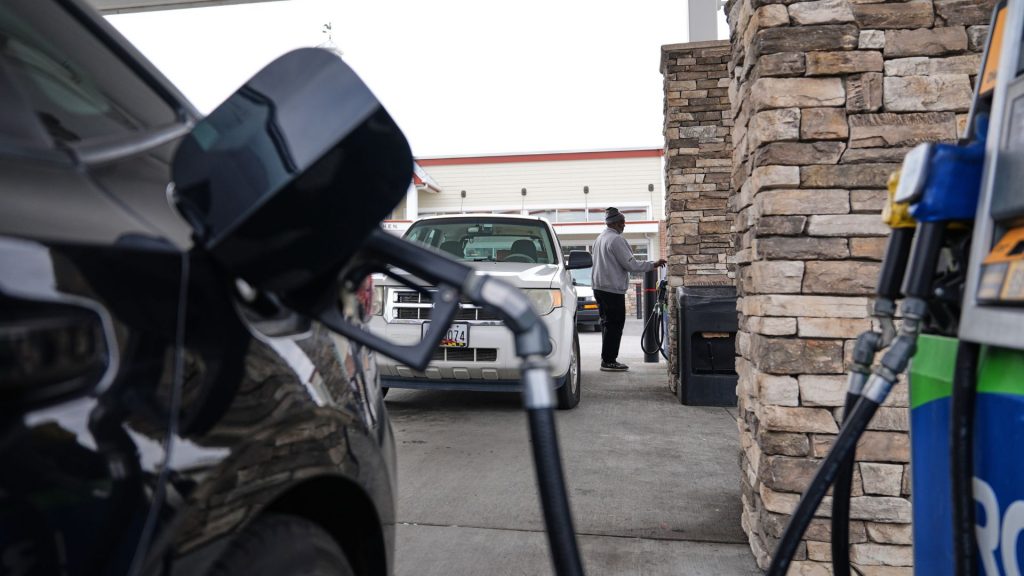
The Environmental Protection Agency announced that it had issued a temporary waiver allowing the sale of higher-ethanol gasoline at gas stations this summer. The move is an attempt to help lower consumer gas prices as the war in Iran continues to drive them higher.
Called E15, the higher-ethanol blend contains 15% ethanol, while most gas is blended with 10% ethanol. Federal regulations ban the sale of E15 in nearly half of the country during summer months to curb air pollution. The announcement marks the fifth year of a summer waiver that started in 2022 due to the Russian invasion of Ukraine.
The EPA said the move was to help strengthen the gas supply as the busy summer travel season begins.
“EPA is working with our federal partners to reduce unnecessary costs and uncertainty and ensure that gas prices remain affordable for all Americans through the summer,” EPA Administrator Lee Zeldin said. “This emergency action will provide American families with relief by increasing fuel supply and consumer choice.”
Will this impact gas prices?
According to AAA, the average price of gas is just under $4 a gallon, more than a dollar higher than it was a month ago. In his press release, Zeldin said that the move to release higher-ethanol fuel will help lower prices.
However, energy experts don’t all agree with Zeldin, and some say the move won’t change the price at the pump. While higher-ethanol gasoline is cheaper, it’s not available everywhere, and there isn’t enough infrastructure or supply to increase production so that any price decrease would be modest at most.
Since ethanol is typically made from corn, less of it is then used for animal feed, Jason Hill, a professor at the University of Minnesota, The Associated Press. A study by the International Council on Clean Transportation found that diverting seed oil to ethanol production affects feed prices for livestock.
“We also find that, although small, the [renewable fuel standard] has a negative economic impact on household consumers,” researchers wrote, estimating a 0.1% cost to at-home food spending in 2019. “This impact is more significant for domestic and international consumers that are food insecure.”
Hill told the AP that he believed the decision was more targeted towards farmers than consumers.
Is E15 gas safe?
Drivers of newer vehicles don’t need to worry about higher-ethanol fuel, but people who drive older models could have some issues, especially later on.
Higher-ethanol fuel is much more corrosive to an engine, which could permanently damage certain parts. The EPA approved the use of E15 in light-duty conventional vehicles from 2001 and newer, following testing funded by the Department of Energy.
Other vehicles, like motorcycles, heavy-duty trucks and off-road vehicles should not use E15 fuel. Drivers should also be aware that E15 is less fuel-efficient than regular gas, which could offset some savings.
Experts disagree about the environmental impacts of higher-ethanol fuel, especially during the summer. Some claim that during the hotter months, E15 fuel can affect the ozone layer, which leads to some earlier deaths from heart attacks and respiratory issues that wouldn’t otherwise have occurred. This is the reasoning behind the summer restriction.
”There’s more likely to be ozone issues in the summer and some people will die,” Kenneth Gillingham, a professor at the Yale School of the Environment, told the AP. “It will lead to some earlier heart attacks and it will lead to some earlier respiratory issues that wouldn’t have been the case otherwise.”
Ella Rae Greene, Editor In Chief