Supreme Court to hear case over mail-in ballot deadlines
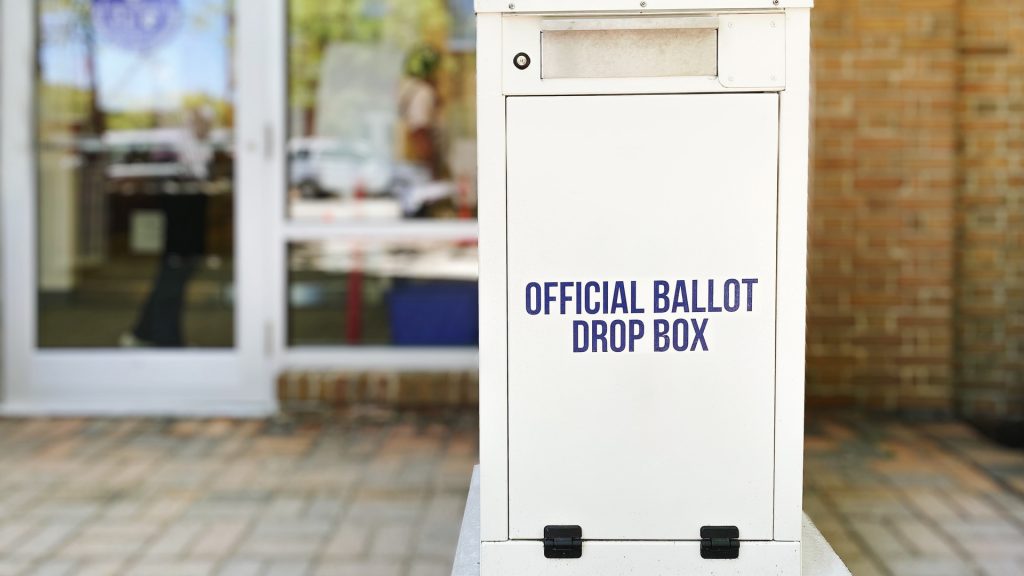
The Supreme Court is set to hear arguments Monday over whether states can count mail-in ballots that arrive after Election Day if they are postmarked by that deadline.
The decision sould affect 29 states and Washington D.C., which allow at least some military and overseas ballots to be counted after Election Day, according to the National Conference of State Legislatures.
Voting by mail declined after the COVID-19 pandemic, but it remains widely used. About 30% of ballots in the 2024 election were cast by mail, according to the United States Election Assistance Commission.
History of the case
Mississippi allows mail-in ballots to be counted for up to five days after an election under a law passed in 2020.
In 2024, the Republican National Committee sued, arguing the policy violates federal law.
A federal district court ruled in favor of Mississippi, finding that counting ballots after Election Day does not conflict with Congress setting a single election date.
However, the 5th U.S. Circuit Court of Appeals reversed that ruling, saying ballots must be received by Election Day once Congress sets that deadline.
Mississippi appealed to the Supreme Court.
What supporters of state grace periods say
Several organizations, along with 19 states and Washington, D.C., filed amicus briefs supporting Mississippi.
The American Civil Liberties Union said states and Congress have “operated for decades on the shared understanding that Election Day statutes do not preempt state ballot-receipt deadlines for timely mailed absentee ballots.”
The group argued eliminating grace periods would limit states’ ability to design election systems that meet local needs and could disenfranchise certain voters. Including older adults, people with disabilities, rural voters facing mail delays, and workers who travel.
The Brennan Center for Justice said overseas and military voters often rely on mail voting as their only option.
“Since before the Civil War, states have developed voting processes like grace periods to accommodate the needs of military voters, their families, and other Americans living away from home,” the center said.
“It would be egregious to now make it harder for them to vote.”
The Brennan Center added that while Congress can override some state election laws, “it has consistently deferred to states when it comes to setting grace periods for receiving ballots.”
What critics of grace periods say
Groups including the Honest Elections Project, the American Legislative Exchange Council (ALEC), the Center for Election Confidence (CEC), and Restoring Integrity and Trust in Elections (RITE), filed a brief urging the court to end grace periods.
They argue federal law requires a uniform Election Day and does not allow states to extend ballot deadlines.
“Congress has not left the uniformity of a single federal Election Day to state exploration,” the brief said. “Letting these unconstitutional policies remain will exacerbate inconsistencies and delays, lead to disenfranchisement and dilution, and foster mistrust in elections.”
The groups said extended deadlines create delays, inconsistencies, and mistrust in election results.
“Loose ballot return rules engender all sorts of mischief and problems, not the least of which is sowing mistrust in our election system at a time when citizens already lack confidence in it,” they said.
Political backdrop and fraud claims
President Donald Trump has repeatedly opposed mail-in voting, including pledging last year to “lead a movement to get rid” of it.
“ELECTIONS CAN NEVER BE HONEST WITH MAIL IN BALLOTS/VOTING, and everybody, IN PARTICULAR THE DEMOCRATS, KNOWS THIS,” Trump wrote.
Multiple analyses have found voter fraud is rare, including mail-in voting.
A report by the Brookings Institution found roughly four cases of fraud for every 10 million mail-in ballots, or about 0.000043%.
Ella Rae Greene, Editor In Chief