Chuck Norris, 86, dead after brief hospitalization
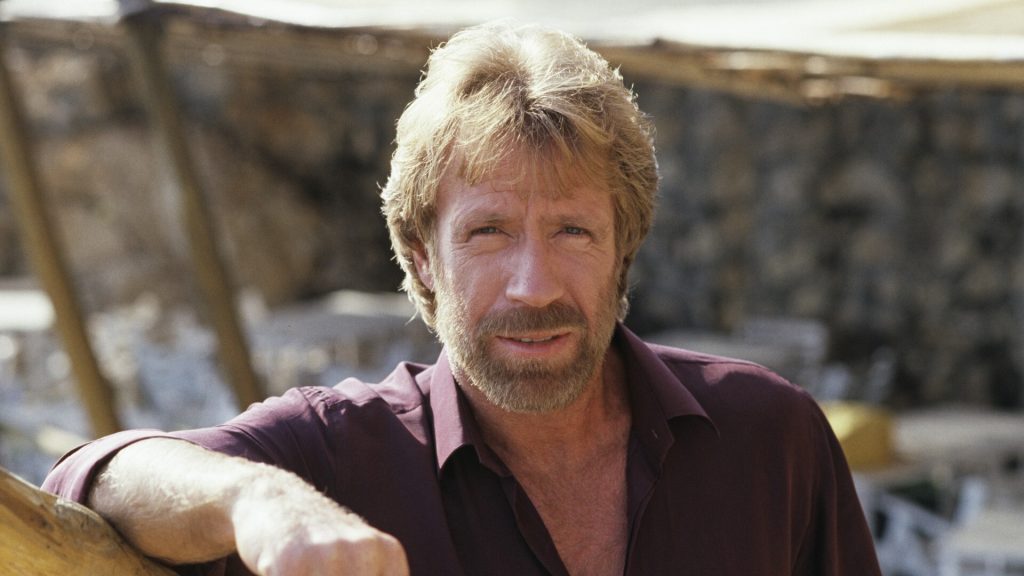
Martial artist and action movie star Chuck Norris has died at 86, his family confirmed on social media Friday. They said he passed away on Thursday morning.
The news comes after TMZ reported Norris was hospitalized in Hawaii on Thursday.
“While we would like to keep the circumstances private, please know that he was surrounded by his family and was at peace,” the family wrote on Instagram. “To the world, he was a martial artist, actor, and a symbol of strength. To us, he was a devoted husband, a loving father and grandfather, an incredible brother, and the heart of our family.”
Norris found his fame thanks to 1980s karate films including “A Force of One” and “An Eye for an Eye.” He went on to become one of Hollywood’s biggest action stars, starring in the tv series “Walker, Texas Ranger.”
Early life
Born Carlos Ray Norris on March 10, 1940, Norris spent the first 12 years of his life in Ryan, Oklahoma, before moving to California, where he helped his mother raise his two younger brothers.
He’s spoken at length about his childhood and his father, who struggled with alcoholism. In his 2004 memoir he described growing up with instability and fear, but credited his mother with keeping the family together.
“My father had a very serious drinking problem… it tore our family apart,” Norris said.
Unbiased. Straight Facts.TM
Chuck Norris inspired a viral wave of “Chuck Norris facts,” humorous exaggerations that cast him as an impossibly powerful figure.

Upon moving to California, he graduated from North Torrance High School, which has numerous storied alumni, including a professional baseball player, an ESPN analyst, and musicians.
“I wasn’t a good student. I was actually a C student.” Norris added, “I was very shy and not very athletic.”
The beginning of his martial arts career
After graduating, he joined the U.S. Air Force and served a tour in Korea, where he began studying the Asian martial art of Tang Soo Do.
“I started taking Tang Soo Do lessons and for the first time in my life, I began to develop confidence,” Norris said. “Martial arts gave me something I had never had before — self-respect.”
He said he became totally obsessed with it, and upon returning to the U.S., began moonlighting as a karate instructor. Two years later, he was a full-time martial arts teacher and running a number of martial arts schools.
His fighting career spanned from 1964 to 1974, compiling a fight record of 65-5. He retired as an undefeated Professional Full-Contact Middleweight Champion despite losing the first three tournaments he ever competed in.
He never stopped fighting though. In fact, just a week before his death, Norris shared a video on social media of him boxing, saying “I’m grateful for another year, good health and the chance to keep doing what I love.”
Acting career kicks off
Norris shifted into an acting career in 1968, when he starred in an uncredited role in “The Wrecking Crew” in 1968. However, his big break came in 1972 with the film “Way of the Dragon.” The fight scene at the end of the film, starring Norris and actor Bruce Lee, became iconic in martial arts cinema.
“It was an honor to work with Bruce,” Norris said. “That fight became a classic.”
Lee has commented on working with Norris as well, saying he wanted the best actor for the role “so the fight would be believable.”
Following the success of “Way of the Dragon,” Norris transitioned into leading-man status, starring in box office hits like “Good Guys Wear Black,” “Lone Wolf McQuade,” and the popular “Missing in Action” series.
Finally, in the 1990s, he broadened his horizons even more, starring in the “Walker, Texas Ranger” series, blending martial arts with a Texas Ranger.
He was best known for blending strength, discipline and justice with crime fighting.


Charity work
In addition to his work on screen, Norris was also involved with many charities, including Veterans Administration National Salute to Hospitalized Veterans, the United Way, Make-a-Wish Foundation and KickStart, a nonprofit organization he created to battle drugs and violence in schools.
“We are all given gifts. What we do with those gifts determines who we are,” Norris said. “One of the greatest rewards in life is helping others.”
He has previously said there is no greater calling than to serve others.
Ella Rae Greene, Editor In Chief