Power play: Our ultimate energy bracket picks most affordable electricity source
America’s electric grid needs more power as future demand surges. Where the nation’s power companies get that power has implications for the environment and future grid reliability, but in the near-term, it’s a business decision.
Today, the various fuel and technology types capable of generating electricity are heavily politicized. The Trump administration and Republican-controlled Congress have eliminated incentives for renewable energy and sought to stop the construction of offshore wind turbines. Meanwhile, the Department of Energy has pledged financial support to keep coal plants running and build more gas power plants.
Democrats, on the other hand, have lambasted those cuts to renewable energy grants and tax credits. Many democratic politicians and progressive groups have long sought to close coal plants and generally oppose the construction of new gas power plants due to concerns around carbon emissions and climate change.
The rise of power-hungry data centers that form the building blocks of artificial intelligence tools has set off an energy arms race. But the grid needs a variety of technology types to maintain reliability and minimize costs, and a few technologies — such as solar plus batteries and combined cycle gas power — show the most promise for meeting future energy demand.
What is SAN’s reporting process?
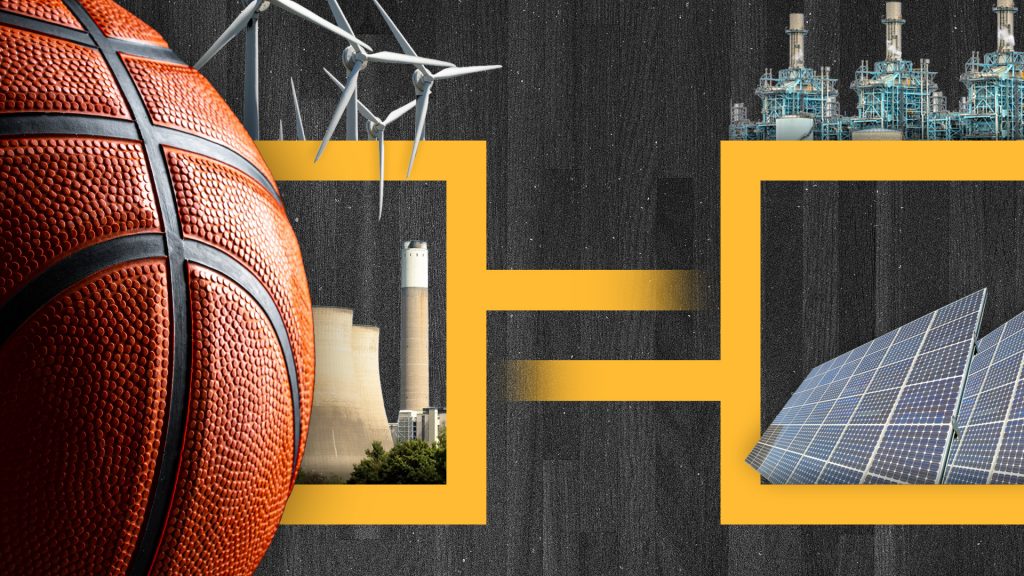
In the spirit of the NCAA tournament, Straight Arrow News distributed a bracket of 16 power-generation options to more than two dozen experts on energy economics and the power grid.

We asked the experts to fill out a bracket split between conventional thermal power plants and the most modern updates to them on one side, and technologies that rely on sunlight, wind or water on the other side. Their guidelines: Choose the most economical source of power in 2026. It wasn’t exactly simple to do. Deciding on the most cost-effective electricity source is complicated, and experts told SAN that there are significant trade-offs involved in each decision.
To see how the bracket shook out, watch the video above.
Levelized cost of energy (LCOE) is a common metric for comparing energy resources. LCOE attempts to capture the costs of energy infrastructure over its lifetime, then calculate the minimum break-even point for that type of generation.
However, LCOE only captures how much electricity costs to generate, not how much that power is worth on electricity markets. It also looks at the lifetime costs of building a new project versus the marginal cost of producing more electricity from an existing facility. Some of the lowest-cost electricity from a real-time market perspective is usually generated by renewables or nuclear, but power from gas peaker units during high-demand hours is often the most valuable.
Because reputable energy economists can have varying interpretations on the best method of analyzing electricity generation sources, the bracket seemed fitting.
Which technologies made the final four?
Experts largely agreed that the top four cost-effective electricity types of power generation are solar photovoltaic panels, solar plus storage, geothermal power and combined cycle gas-fired turbines.
Solar photovoltaic is the classic solar panel. Economies of scale have led to a dramatic decline in the cost of solar panels, with production costs sinking by 99% since the 1970s, according to research from the Massachusetts Institute of Technology. Solar supplies some of the lowest-cost power to the grid, and it’s the fastest-growing source of electricity in the U.S.

The major downside of solar is intermittency; solar panels cannot generate electricity when the sun isn’t shining. But comparable cost declines in batteries have made solar plus storage attractive to power companies because excess solar power can be saved and discharged to the grid as the sun goes down. However, most grid-scale batteries need to recharge after one to four hours.
Gas currently provides more electricity to the power grid than any other energy source. And combined cycle gas power plants are the largest, most efficient types of gas power plants. Barring maintenance issues, they can run for 24 hours a day, seven days a week and have some ability to ramp energy production up — or down — as electricity demand changes, making them valuable for grid operations.
The largest downside to gas power plants — purely from an economic perspective — is the fuel itself, because natural gas prices can spike due to world events, such as Russia’s 2022 invasion of Ukraine.
Geothermal has generated intense interest because it is a renewable energy source derived from naturally occurring heat under the earth’s surface, but it can also generate electricity during all hours and weather. The geothermal industry has recently employed drilling techniques originally developed for oil and gas extraction, which allows geothermal energy to be harnessed virtually anywhere.
Upfront geothermal costs are still higher than other technologies, such as solar or gas, and the next few years could determine if geothermal can meet the promise of “clean, firm” power.
Should one technology dominate the grid?
Nearly all of the experts picked the same winner: solar plus battery storage. But they also all agreed that the most cost-effective technology depends on the context, and ultimately, the power grid should not rely on one single resource.
“Well-functioning grids have a mix of technologies just like a basketball team has a mix of different types of players on the team,” said Carey King, assistant director at the Energy Institute at the University of Texas at Austin.
That team dynamic reflects how the grid operates today, with each resource playing a role in keeping the lights on.
Ella Rae Greene, Editor In Chief