Your ‘instant’ delivery has a massive hidden cost
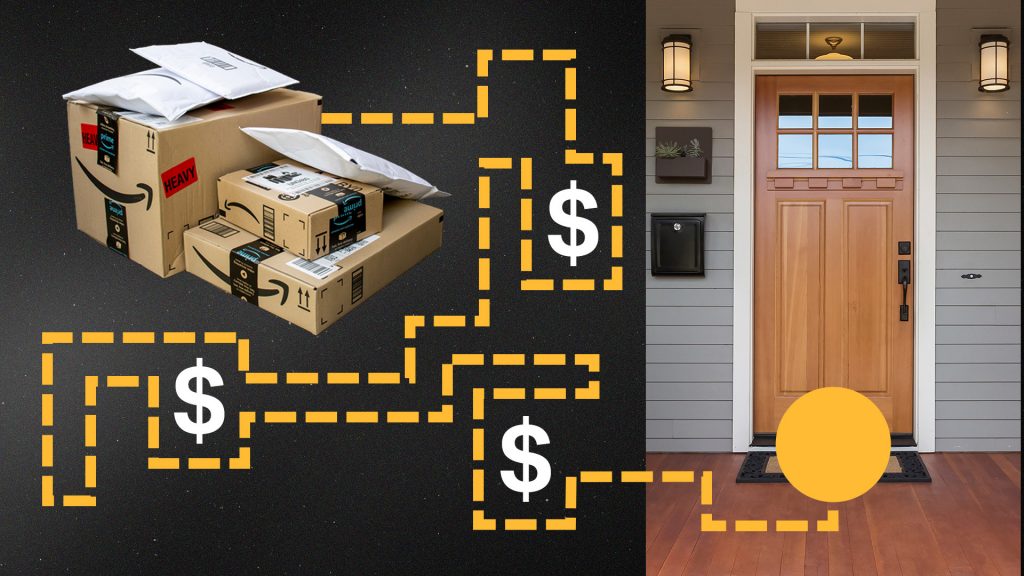
Want it this week? Tomorrow? How about between 4 a.m. and 8 a.m.? Consumers don’t think twice about ordering something online and expecting to find it on their doorstep within days — or sometimes hours.
Behind that convenience lies one of the most complicated problems in modern logistics: delivering over the last mile, the final step in moving a package from a distribution hub to the customer. And it doesn’t come cheap. Last-mile delivery can eat up more than half the total cost of shipping, making it the most expensive mile in modern logistics.
“Last-mile delivery is evolving, even to the point of sending drones out to deliver small packages to houses,” Chris Brady, economist and principal of Long Island-based Commercial Motor Vehicle Consulting, told Straight Arrow News. “But don’t expect drones buzzing around skyscrapers. Amazon and Walmart are pushing the drone frontier in suburban and rural areas where skies are wide open.”
A combination of experimentation and practical problem-solving is currently refining the last mile. From making deliveries to centralized lockers to artificial intelligence-enhanced routing systems, innovation is fueling the race to your doorstep.

The price of convenience: Why the final mile costs the most
“You can stop in a CVS drugstore and pick up or send off packages with UPS. Or buy Party City goods and pick them up at Staples locations,” Brady said. “Retailers are trying to get products to consumers quickly, either at home or nearby.”
The scale of the challenge is growing alongside e-commerce itself. Online sales now account for roughly 15% of U.S. retail activity, while delivery expectations continue to rise. According to research compiled by logistics data site ZipDo, 76% of shoppers want online orders in one to two days, and 48% expect same-day delivery service.
No wonder the last mile is the most expensive step in the shipping journey. Last-mile deliveries add up to 41-53% of total supply chain costs on average, according to a 2026 report by Daniel Foster, industry analyst at ZipDo. In the report, Foster called the last mile “a logistical quagmire where everything from fuel and labor to failed attempts and stolen parcels conspires to make that final delivery staggeringly expensive.”
Consumer demand for high-speed delivery continues to shape purchasing behavior and service preferences, according to a recent research report by Kushal Nahata, CEO of FarEye Logistics.
Six in 10 consumers value faster delivery, making convenience a key driver of both purchase decisions and satisfaction, according to the report. But about 39% remain price-sensitive — underscoring the need for tiered delivery options. Consumers broadly view expedited delivery as a valuable upgrade, with speed and reliability improving perceived service quality and justifying premium prices. That willingness aligns with wider market trends where perceived value, urgency and brand trust shape what shoppers are willing to pay.
As FarEye’s vice president of products Stephane Gagne recently put it: “Reliability is the new loyalty.” And increasing reliability affects the bottom line: “The cost of a failed delivery can range from three to six times the cost of the original delivery,” according to Gagne.

Drones, AI and lockers: Innovations racing to your doorstep
To improve performance, logistics companies are investing heavily in technology designed to squeeze efficiency from crowded road networks. Consider that artificial intelligence systems can now analyze traffic patterns, weather conditions and historical delivery data to optimize routes and reduce delays.
Case in point is the UPS ORION routing system, which crunches millions of data points, including daily package deliveries and pickup times, and past route performance to create the most efficient daily route for drivers. The data has helped guide UPS’s push to minimize left-hand turns across traffic, which save time and fuel, and reduce accident risk. Even modest efficiency gains can translate into major savings when multiplied across thousands of drivers and millions of packages.
Other strategies are reshaping where goods are stored before they are delivered. Micro-fulfillment centers — compact warehouses located within or near urban neighborhoods — allow shippers to stage inventory closer to customers. Shortening the distance between warehouse and doorstep can cut delivery times and potentially lower the cost of the final mile.
Growing concerns about sustainability also influence last-mile strategies. One approach is to develop urban logistics models that combine electric vehicles, cargo bicycles and optimized routing to reduce carbon emissions in cities. Yet greener delivery options often come with higher costs, pitting environmental goals against the relentless pressure to keep down the cost of those packages landing on your doorstep.

Reliability vs. reality: Solving the ‘logistical quagmire’
“With everyone from Amazon to UPS and major retailers from Best Buy to Walmart pushing the last mile for years now, it almost seems like old hat,” said Brady. “But it’s still an industry in its infancy, and it operates in a churned-up environment. You can bet shippers will keep whipping out new services to trim order-to-delivery times.”
The battle for your doorstep has never been more intense or complex. But one thing is clear: As e-commerce grows, the companies that find ways to deliver faster, cheaper and more reliably will gain the advantage in one of retail’s most critical battlegrounds.
Ella Rae Greene, Editor In Chief