Iran war puts pressure on US-China relations
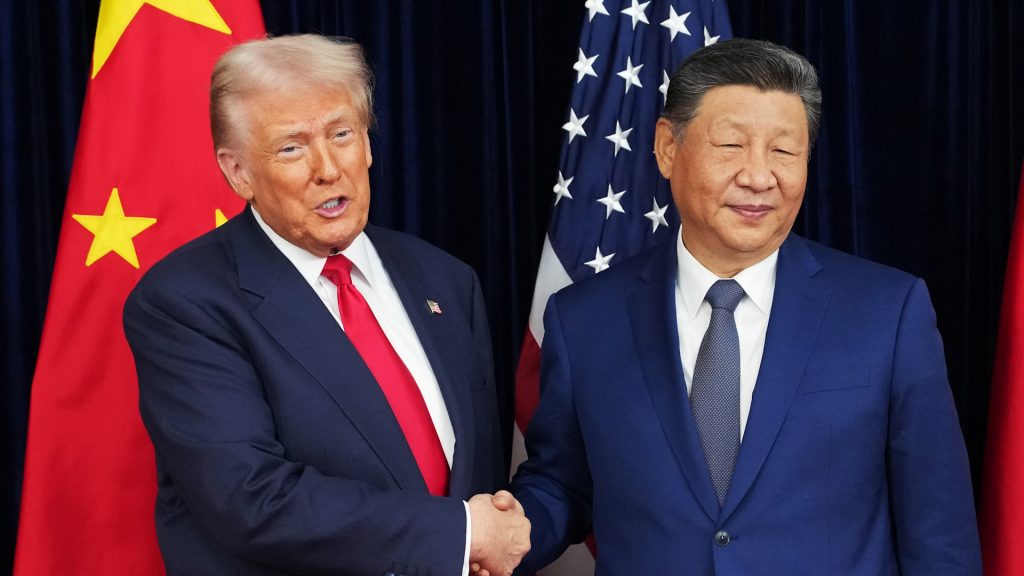
The war in Iran has turned the Strait of Hormuz into a new point of tension between the U.S. and China, as both countries weigh the military and economic risks of keeping the Strait open.
President Donald Trump has urged China, along with other nations, to help reopen the Strait, which oil tankers and other commercial vessels are avoiding because of feared Iranian attacks. With the war now in its third week, Trump also asked to delay a planned summit with Chinese leader Xi Jinping.
Beijing has resisted Trump’s push for foreign naval help, calling on all parties to stop military operations and giving no sign it would join a U.S.-led security effort in the Strait, which connects the Persian Gulf with the Gulf of Oman.
The standoff has added new uncertainty to summit planning at a moment when both governments had been trying to preserve a fragile improvement in relations.
What US officials are saying
Trump said from the Oval Office that he asked to delay his trip to China for “a month or so.”
Trump also told reporters he was urging multiple countries to deploy naval forces to help keep shipping moving through the Strait. In a Truth Social post, he specifically called out China, France, Japan, South Korea and the United Kingdom.
Treasury Sec. Scott Bessent said any delay for the summit would be about “logistics,” not about Trump pressuring China to help police Hormuz.
Bloomberg reported that U.S. officials also framed recent economic discussions with Chinese negotiators in Paris as constructive and said a summit delay should not rattle markets.
Why is China resisting the Hormuz request?
Although Trump discussed the delay publicly, neither side has announced a new summit date. A Chinese official familiar with preparations told The Washington Post that a delay was likely and that a new date had not been set. Bloomberg similarly reported that Beijing is willing to postpone the meeting, citing short preparation time and uncertainty tied to the war as factors that could complicate a high-profile summit.
At the same time, Beijing has signaled it does not want to be seen as joining a U.S.-led operation in the Gulf. The New York Times reported that Chinese officials have reacted coolly to Trump’s warship request, and it described public ridicule in Chinese media and commentary.
The Times also reported that Iran has allowed ships carrying oil to China to cross the Strait while targeting vessels linked to the United States and its allies. That stance appears to reduce immediate pressure on Beijing to commit naval forces.
In a Washington Post opinion piece, Craig Singleton, a former U.S. diplomat and senior fellow at the Foundation for Defense of Democracies, argued that Beijing’s restraint reflects not only political caution but also limits on its ability to project force in the Middle East.
China remains exposed to a prolonged disruption in Gulf energy flows. The Times reported that as much as 40% of China’s oil imports pass through the Strait of Hormuz, while The Post described China as the world’s largest crude importer and noted that it maintains large oil reserves that could provide a short-term buffer.
Singleton argued that China’s more immediate vulnerability may be financial rather than physical, with higher oil costs posing a near-term strain even if reserves soften the supply shock.
Analysts cited by The Post said the shift from a war-based explanation to one centered on “logistics” may have been meant to ease pressure on Beijing. Bloomberg reported that China’s top leadership has been cautious in its public messaging on the war, even as officials assess the conflict’s economic and diplomatic fallout.
What the delay could mean for the diplomacy
For now, neither side has publicly locked in a new summit date. The Post reported that Beijing had not publicly confirmed the original late-March window and that a delay was expected. Bloomberg reported that China and the United States are still communicating about timing.
How long the delay lasts could depend in part on the course of the war and whether pressure over Hormuz eases. The Times reported that Beijing wants to preserve the trade truce and avoid further economic turbulence, but Chinese officials and analysts have also made it clear that they do not want to join a U.S.-led security effort in the Gulf.
Ella Rae Greene, Editor In Chief