US allies reject Trump’s request for help in Strait of Hormuz
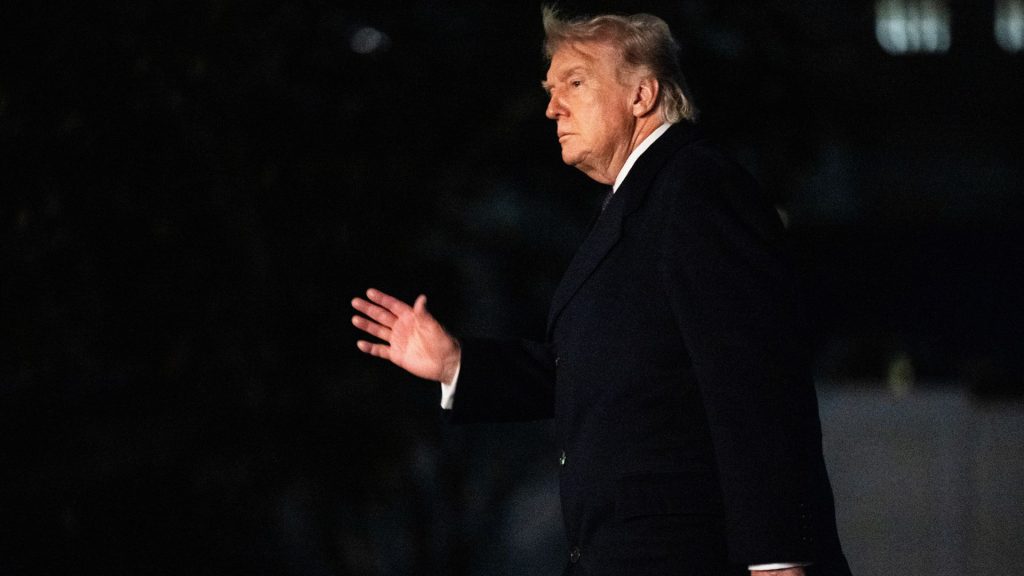
As crude oil prices remain elevated, President Donald Trump is asking other countries to help reopen the Strait of Hormuz, one of the world’s most strategically important bottlenecks.
The Iran War has prevented cargo ships from entering or leaving the strait. The closure has caused a dramatic increase in crude oil prices since about a fifth of the world’s crude oil passes through the strait. Al Jazeera reports that the closure is preventing about 15 million barrels of crude oil from entering the global market every day.
In a post on Truth Social, Trump called on China, France, Japan, South Korea and the United Kingdom to send warships to the region to keep the Strait of Hormuz “open and safe.” He said the U.S. Navy will continue its attacks on Iranian targets.
“In the meantime, the United States will be bombing the hell out of the shoreline, and continually shooting Iranian Boats and Ships out of the water,” Trump wrote.
Why is Trump asking other countries to help?
While speaking with reporters on Air Force One, Trump said the U.S. doesn’t get most of its oil from the strait and said these other countries need to help break up Iran’s closure.
“I’m demanding that these countries come in and protect their own territory, because it is their own territory,” Trump said, The Associated Press reported. “It would be nice to have other countries police that with us, and we’ll help. We’ll work with them.”
The president singled out China, which he says gets about 90% of its oil through the Strait of Hormuz. Trump declined to discuss whether China agreed to join the coalition.
It is true that the U.S. only gets a small fraction of its oil supply through the strait, but the closure is still directly affecting Americans. Since global oil prices are fluctuating, oil prices around the world are influenced. So while the U.S. only gets about 8% of its oil through the strait, according to Factcheck.org, every barrel of oil the U.S. buys is still impacted by the strait’s closure.
Trump has seemingly threatened friendly nations that refused to send their navies to the strait, saying the U.S. would “remember” if NATO counterparts didn’t help, NPR reports.
How have countries responded?
Japan, Germany and Australia have all ruled out sending warships. In Japan’s case, some legal experts noted that deploying its navy to the strait may not pass strict Japanese laws allowing military deployment.
“We have not made any decisions whatsoever about dispatching escort ships. We are continuing to examine what Japan can do independently and what can be done within the legal framework,” Prime Minister Sanae Takaichi told the country’s parliament.
Germany gave a little more pointed response to the idea. The country’s defense minister Boris Pistorius said they would not provide the U.S. with any military support, saying, “this is not our war, we have not started it.”
Pistorius also questioned what help other countries could provide that the U.S. could not do alone.
“What does … Trump expect from a few European frigates that the powerful U.S. Navy cannot do?” he asked, Newsweek reports.
Before Trump made his coalition request, French President Emmanuel Macron said he and a few allied nations were preparing a “purely defensive” mission to escort ships through the Strait of Hormuz. However, he stressed that the country would do so only once the “most intense phase” of the war was over. According to The Guardian, Macron said it would be a “purely escort mission” by European and non-European allies.
How has Iran responded?
Iran has made it clear that they intend to continue to use the strait as a weapon against the U.S., Israel and their allies.
After Iran announced Mojtaba Khamenei would replace his father, Ali Khamenei, as supreme leader, Mojtaba Khamenei said they would continue to use the passage as a “tool to pressure the enemy,” CNBC reported.
Iran Foreign Minister Abbas Araghchi said several countries were reaching out to Iran seeking safe passage for their vessels. He stated safe passage was “up to our military to decide,” but said military leaders allowed a group of vessels to pass through without issue.
During an interview with CBS News, Araghchi said Iran had no reason to negotiate with the U.S. or Israel since the war began during ongoing negotiations.
“We were talking with them when they decided to attack us, and that was for the second time,” he told CBS. “There is no good experience talking with the Americans. We were talking, so why they decided to attack us? So, what is good if we go back to talk once again?”
Ella Rae Greene, Editor In Chief