What we know about the two men who carried out attacks on March 12
As Americans plan their weekends, a new sense of unease has hit the nation after two different targeted, violent attacks. While authorities have not said both were terror attacks, the proximity to the U.S.’s recent attacks on Iran raises questions.
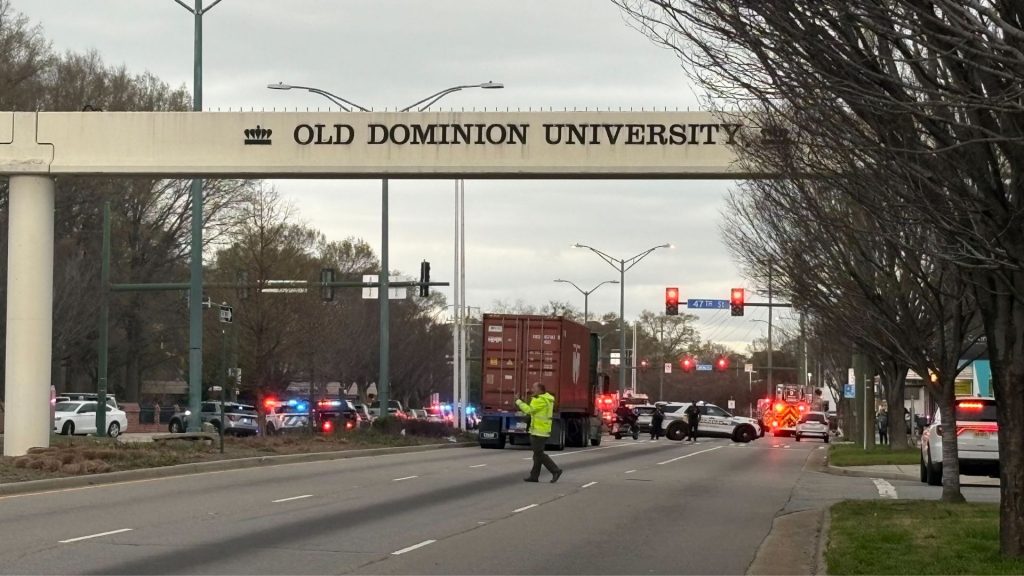
The two attacks occurred hundreds of miles away but only hours apart. The first happened at Old Dominion University in Norfolk, Virginia, just before 11 a.m., when a man opened fire on students. Two hours later in West Bloomfield, Michigan, a man drove a vehicle into the Temple Israel synagogue, causing a large fire inside the building.
Before the attacks, the federal government had already been on high alert, with the FBI even sending a warning that Iran could activate sleeper agents living in America. However, on March 8, Reuters and other media reported that the Trump administration stopped the release of a security bulletin warning of Iran-related attacks.
What happened at Old Dominion University?
Just before 11 a.m., police say 36-year-old Mohamed Bailor Jalloh walked into ODU’s Constant Hall. When he got there, he asked someone if he was in an ROTC class, and someone else responded that he was, and then he opened fire, investigators said.
Jalloh killed one person, Lt. Col. Brandon Shah, an Army lieutenant colonel and ROTC instructor. The shooting left two others injured, one critically. But other ROTC students and officers grabbed Jollah and held him down and allegedly killed him. At least one student stabbed Jollah, but authorities have not released the cause of death.
FBI special agent Dominique Evans, who oversees the Norfolk field office, said the students showed “extreme bravery and courage” and prevented Jollah from harming anyone else, The Associated Press reported. She said they “rendered him no longer alive,” saying she didn’t know “how else to say it.” Authorities did say police shot Jollah but didn’t confirm that’s what killed him.
Jollah was a member of the Virginia Army National Guard but left in 2015. Investigators said that, after he left, he began to listen to extremist Muslim clerics who radicalized him. In 2016, he pleaded guilty to attempting to provide funds and weapons to ISIS. A judge sentenced him to 11 years in prison, but prison officials released him in December 2024, according to CNN.
Jollah was on supervised release when he carried out his attack.
During the investigation that led to his arrest, Jollah told FBI investigators that he was thinking about carrying out an attack similar to the 2009 Fort Hood shooting, the AP reports. That attack left 13 people dead.
Investigators believe Jollah had just one weapon for the attack. They also didn’t find any explosive materials during their search, according to CBS News.
“I can tell you that we have confirmed reports that prior to him conducting this act of terrorism, he shouted, stated, ‘Allahu Akbar,’ and he was formally a subject of a FBI investigation into material supporting terrorism,” Evans said.
Despite the attacks taking place during the Iran War, investigators said that they have not found a mention of the war as a possible motivating factor, according to Evans, which wasn’t the case for the Michigan attack.
What happened in Michigan?
Only a few hours after the students stopped Jollah, police began hearing reports about a possible active shooter at the Temple Israel synagogue in West Bloomfield, a suburb northwest of Detroit.
Authorities said a man, 41-year-old Ayman Mohamad Ghazali, rammed his vehicle into the building. A fire started shortly after the crash, and investigators said Ghazali had loaded the vehicle with fireworks and an unidentified chemical agent.
Security guards that the synagogue hired over concerns of potential threats following the Iran War opened fire on Ghazali, killing him. Several officers and security guards did require treatment for smoke inhalation but no one except Ghazali was killed. One security guard was knocked unconscious after being hit by Ghazali’s vehicle.
Temple Israel is the largest Reform synagogue in the United States. Besides being a place of worship, the building also hosts a school that teaches pre-K through 12th grade. Michigan Gov. Gretchen Whitmer said the attack could have been much worse, saying it could’ve resembled the Sandy Hook shooting if it weren’t for the quick actions of the security team.
Ghazali was a naturalized citizen but was originally from Lebanon. Investigators believe a recent Israeli airstrike that killed four of his family members a week before may have motivated him. NBC News reports that two of those killed in the strikes were members of the Lebanese terror group Hezbollah.
Shortly before the attack, investigators said Ghazali called his ex-wife and told her to look after their kids. Alarmed, the woman contacted the police to check on him.
Are these attacks connected?
Given the timing of both attacks, some have wondered whether they were connected or planned together. So far, investigators have not found any evidence linking the two, but they are still looking.
While the attackers may not have planned together, they do have similarities worth noting. Both attacks happened during Ramadan, the holiest month in the Islamic religion. They also happened against the backdrop of the Iran War, which U.S. officials have said could lead to an increase in domestic threats. Experts have also agreed with that sentiment.
During a press conference on Friday following the shooting, the mayor of Dearborn Heights, Michigan, the town where Ghazali lived, said events in other parts of the world can still make their way onto American soil.
“When tensions rise abroad, they impact us here at home in ways that threaten our shared sense of safety,” Mayor Mo Baydoun told reporters.
Ella Rae Greene, Editor In Chief