Correlation isn’t causation: What headlines often get wrong about health science
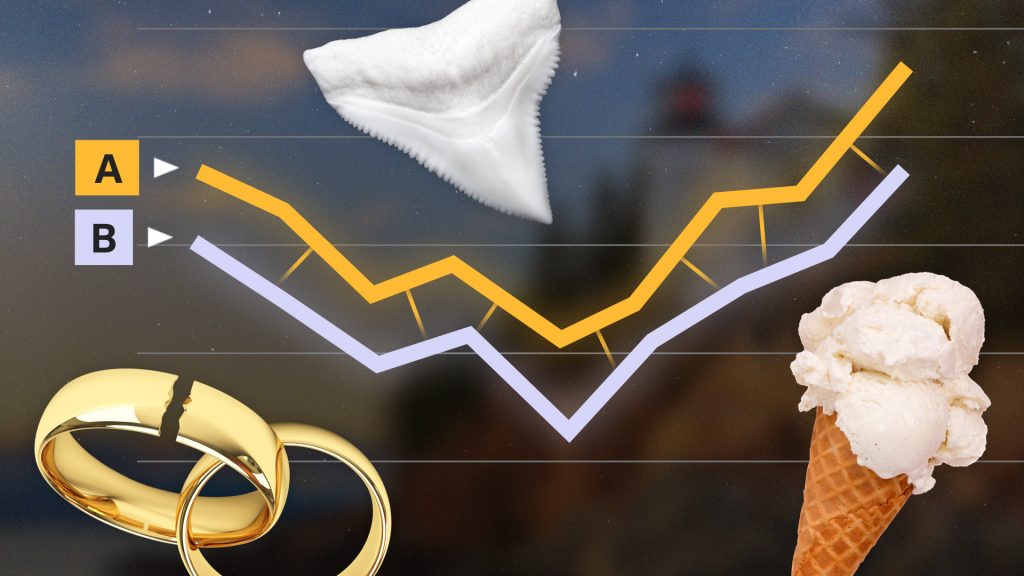
News headlines often compress complex science into a simple storyline: If two things are happening at the same time, one must be causing the other. Tylenol causes autism. Ultra-processed foods cause cancer. Social media causes depression.
But in science, that’s only the starting point.
When two trends move in tandem, researchers call that a correlation. It does not mean one directly causes the other. Proving causation — that one factor independently produces a specific outcome — requires far more rigorous evidence.
Consider a classic example: Ice cream sales and shark attacks both spike in the summer. It’s not that ice cream causes shark attacks. Rather, there is a hidden third factor — temperature. When it’s hot, more people go swimming — and more people buy ice cream. The trends overlap, but for different reasons.

Health research is far more complex than ice cream and beach weather. Autism diagnoses have increased over the past few decades, but so have awareness, screening practices and changes in diagnostic criteria. Chronic diseases have risen alongside changes in diet — including more ultra-processed foods — but also alongside longer life expectancy, sedentary lifestyles, environmental exposures and socioeconomic shifts.
Epidemiologists and biostatisticians follow careful processes to untangle different factors affecting health.
The strongest evidence of causation usually comes from randomized controlled trials, in which participants are randomly assigned to receive a treatment or not. This design helps eliminate bias and isolate an intervention’s true effect. Regulatory agencies such as the Food and Drug Administration require rigorous trials before approving new drugs.

But many real-world questions can’t be tested that way. It would be unethical to randomly assign pregnant women to take a potentially harmful substance. You can’t randomly assign children to years of high social media exposure. In those cases, researchers rely on large observational studies and advanced statistical methods to account for confounding variables — the hidden third factors that might explain an apparent link.
And no single study settles the debate. Scientists look for patterns across many studies conducted by different teams, in different populations, using different methods. They weigh consistency, biological plausibility and the totality of evidence.
In an era when political rhetoric and viral posts can amplify selective findings, understanding the difference between correlation and causation can help shape public policy and guide personal health decisions.
Ella Rae Greene, Editor In Chief