Trump’s top general warns of munitions shortages as Iran strike risks grow
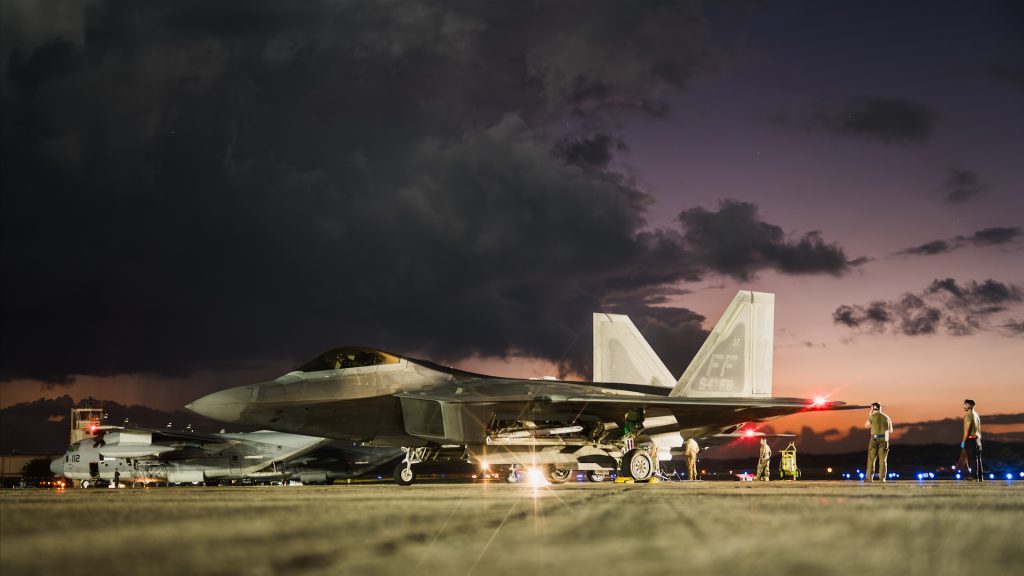
The Pentagon is shifting more than 150 military aircraft into positions ready for a potential strike on Iran, according to publicly available data reviewed by the Washington Post. Despite the posturing of readiness, America’s top general has reservations about how much ammo the country has in the tank after aiding allies in other conflicts.
The buildup began after a second round of U.S.-Iran nuclear talks ended without a breakthrough on Feb. 17.
The U.S. now has one of its largest regional force buildups in roughly two decades, comparable to levels seen before the 2003 Iraq war. It has surpassed the buildup seen before U.S. strikes on Iran’s nuclear program last June. Experts who reviewed the deployment told The Post the assets suggest a multiday air campaign rather than a ground invasion.
Why the US buildup near Iran matters
The buildup follows President Donald Trump’s threat to attack Iran unless a deal is reached to restrict Iran’s nuclear program. While Trump has not publicly defined the goals of any potential attack, Iranian officials have said an agreement remains possible but would take time.
Analysts interviewed by The Post said the assembled assets, including stealth aircraft, refueling tankers and early-warning planes, would give Trump options ranging from limited strikes to a broader, sustained campaign.
Dana Stroul, a former deputy assistant secretary of defense, told The Post the force posture could support whatever course Trump chooses, while Center for Strategic and International Studies adviser Mark Cancian said a weeks-long campaign would require additional assets.
What Trump’s top advisers and generals are saying
Inside the administration, Joint Chiefs Chairman Gen. Dan Caine has warned that depleted U.S. munitions stocks and limited allied support could increase the risks of any Iran operation, according to Axios and people familiar with internal discussions quoted by The Post. Those sources said Caine has told Trump and senior aides that U.S. stockpiles have been significantly reduced by recent operations defending Israel and supporting Ukraine.
A senior Persian Gulf official told The Post that Arab countries have informed Washington they would not allow their bases to be used for a strike against Iran, complicating planning for any large campaign. In Pentagon meetings this month, The Post reported Caine also raised concerns about the scale and complexity of a potential operation and the possibility of U.S. casualties.
One former defense official told The Post that an effort to degrade Iran’s missile program could require strikes on hundreds of targets. If the objective were to overthrow Iran’s supreme leader, the official said, the target set could expand to thousands of sites, and a campaign could extend for weeks or months.
Caine’s office said in a statement that, as the president’s top military adviser, he provides civilian leaders with a range of options, along with associated impacts and risks, and does so confidentially. White House spokeswoman Anna Kelly told both outlets that Trump listens to “a host of opinions” and called Caine a “talented and highly valued” member of his national security team.
Trump has publicly rejected reporting that portrays Caine as opposed to war with Iran. In a social media post, Trump called it “100% incorrect” to claim the general is against going to war and wrote that Caine believes a conflict would be “something easily won.” Trump also highlighted Caine’s role in Operation Midnight Hammer and said Iran’s nuclear development had been “blown to smithereens” by U.S. bombers. People familiar with Caine’s thinking told The Post that Trump’s optimistic description does not reflect the general’s private warnings.
Inside Trump’s Iran debate and allied pressure
Axios reports Caine has been the only uniformed officer briefing Trump on Iran in recent weeks, with the head of U.S. Central Command absent from the high-level meetings the president has convened. Axios also reported Vice President JD Vance has raised concerns during internal deliberations about the risks, complexity and potential for entanglement, though he has not explicitly opposed a strike.
Axios describes Secretary of State Marco Rubio as “sitting on the fence” on military action, while Sen. Lindsey Graham has urged Trump to move forward with a strike. Israeli Prime Minister Benjamin Netanyahu has pushed for a more aggressive approach and, according to a U.S. source cited by Axios, left a recent meeting asking whether Trump was still “with us.”
At the same time, Trump envoys Jared Kushner and Steve Witkoff have pressed for more time for diplomacy. They plan to meet Iranian Foreign Minister Abbas Araghchi in Geneva on Thursday and have argued that Trump’s leverage grows as the military buildup continues.
Trump’s strike options
In his social media post, Trump said he would “rather have a Deal than not” but warned that if no agreement is reached, “it will be a very bad day” for Iran.
U.S. officials are weighing options that range from a more limited strike intended to pressure Tehran into a nuclear deal to a broader campaign that could include missile or leadership targets. Some officials warned that even a narrower operation could trigger a cycle of retaliation and broader regional violence.
Ella Rae Greene, Editor In Chief