How policy change in Colombia led cocaine overdose deaths to surge in US
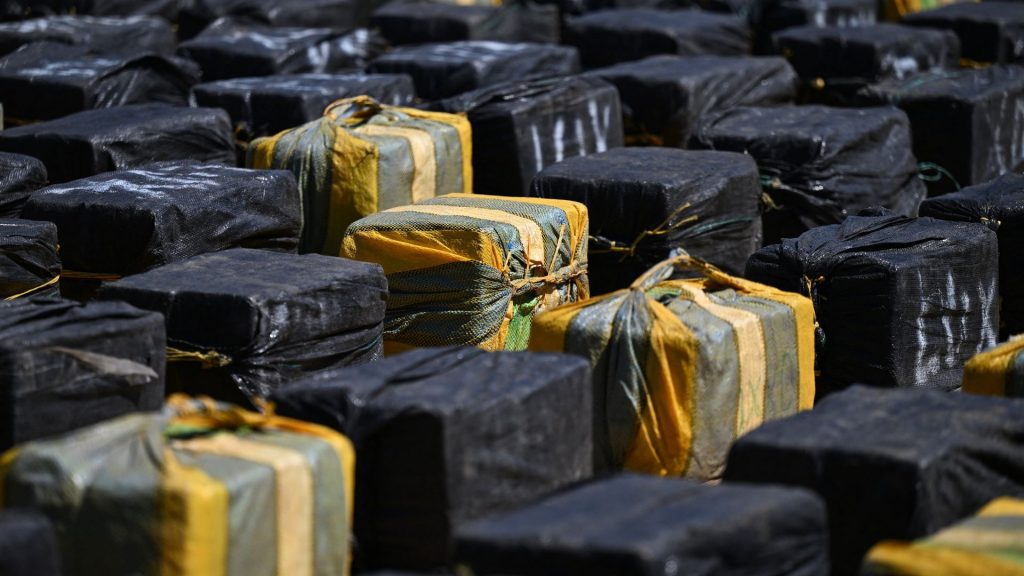
As the Trump administration highlights fentanyl as a dangerous drug entering the U.S., another narcotic is also making its way across the border. Cocaine, a drug more associated with the 1970s and ‘80s, is making a comeback.
On Thursday, Mexico and El Salvador announced that joint operations led to the seizure of more than 10 tons of cocaine in just a week. The drugs were likely heading to Mexico for distribution or the U.S. for sale.
With more cocaine coming into the U.S., more people are fatally overdosing on the drug, according to government data. Since 2011, cocaine overdose deaths have more than quintupled.
A recent economic working paper found that the increase in supply is because of a major decision made in 2015.
Why is cocaine production increasing?
In the paper, published by the National Bureau of Economic Research, the authors write that in 2015, the Colombian government made policy changes that “created a perfect storm for coca’s resurgence.” The government ended aerial fumigation that the U.S. had supported, citing public health concerns that the chemicals used to kill coca plants were carcinogens. However, the country was using glyphosate, which is widely thought not to be carcinogenic.
A year later, the Colombian government reached a deal with FARC, a Marxist revolutionary group that had predominantly used cocaine to fund decades of fighting the government. But the deal had unexpected consequences.
“When the rebels demobilized, a power vacuum formed in remote coca-growing regions,” the paper states. “A variety of other armed groups ranging from dissident FARC factions to cartels rushed in to seize these territories. These new traffickers actively encouraged local farmers to plant more coca as they consolidated control.”
The government worsened the problem when it introduced a new crop-substitution program that allowed farmers to earn money by destroying their coca crops. However, the program required farmers to have coca crops before they could qualify — so many began cultivating coca.
The authors of the paper said these factors led to an explosion in production.
“By 2022, Colombia’s coca cultivation area and potential cocaine output were more than three times their 2015 levels,” the paper states.
Ben Hansen, an economist at the University of Oregon and one of the authors of the working paper, told Straight Arrow News that because of the massive supply of cocaine, the demand skyrocketed.
“With the way markets work, an increase in supply lowers the price, which increases the quantity demanded,” Hansen told SAN. “So the amount purchased goes up even if the demand curve for cocaine hasn’t moved or shifted at all.”
How much has cocaine use increased?
According to the Drug Enforcement Administration, the average size of cocaine seizures “jumped markedly,” but other drugs didn’t see the same increase. Seizures of cannabis, heroin and meth have all decreased. Fentanyl and cocaine are the only two that have seen stable increases.
Not only are seizures up, but the purity of the drugs coming into the U.S. and Europe is also higher. In 2020, cocaine seizures in the U.S. had an average purity level or 54%, but by 2024, it jumped to 84%, according to the DEA.
With much more and much higher-quality cocaine, drug overdose deaths have risen. The paper estimates that if Colombia had not made the changes in 2015, 1,500 fewer overdose deaths would have happened in the U.S. every year.
Researchers also found that the increase in fatal overdoses is costing the U.S. billions.
They wrote that every hectare of coca cultivation in Colombia “eventually inflicts an economic cost on the United States of roughly $45,000 per year.” With 230,000 hectares of coca fields, that means cocaine overdose deaths theoretically cost the U.S. $10 billion each year.
Cocaine usage is also up. In 2023, the United Nations estimated that 25 million people globally used cocaine, 8 million more than a decade before. Europe, like the U.S., has also had a significant cocaine surge.
“It got cheaper and is easier to find,” Hansen said.
A study published in The Lancet Public Health found that cocaine cartels partially diverted shipments to Europe after increased anti-trafficking initiatives targeting North American supply routes. The Guardian reports that 61% of Europe’s supply comes from Colombia.
What can countries do to stop the increase?
Hansen said that countries need to begin targeting coca plantations as they did before 2015. However, he said other methods used in the past could also help decrease cocaine production.
“Perhaps subsidize the growth of other crops — done before in Peru,” he told SAN. “Make it more costly to export/smuggle cocaine through better customs enforcement; some evidence [suggests] this helped reduce the heroin trade in Australia a few decades ago.”
The post How policy change in Colombia led cocaine overdose deaths to surge in US appeared first on Straight Arrow News.
Ella Rae Greene, Editor In Chief