Bondi tells Congress she released all Epstein files, explains redactions
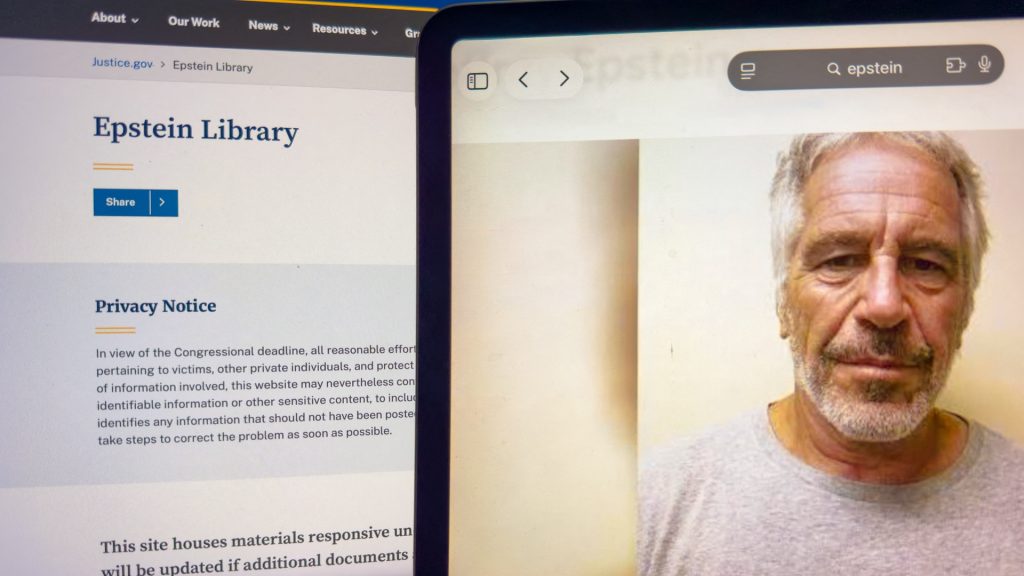
The Justice Department on Saturday outlined the categories of records it released and withheld under the newly enacted Epstein Files Transparency Act, providing Congress with a sweeping list of prominent political figures, celebrities and business leaders whose names appear in materials tied to financier and convicted sex offender Jeffrey Epstein.
In a Feb. 14 letter to the leaders and ranking members of the House and Senate Judiciary Committees, the department said it had released all records in its possession relating to Epstein and his longtime associate, Ghislaine Maxwell, subject to limited redactions permitted under the law.
The six-page report, signed by U.S. Attorney General Pam Bondi and Deputy Attorney General Todd Blanche, was sent to Senate Judiciary Chairman Chuck Grassley, House Judiciary Chairman Jim Jordan, and their Democratic counterparts, Sen. Dick Durbin and Rep. Jamie Raskin.
The law required the department to provide, within 15 days of completing its disclosures, a list of categories of records released and withheld, a summary of redactions and their legal basis, and “a list of all government officials and politically exposed persons named or referenced in the released materials.”
Broad categories of records
The Department of Justice said it released records related to nine categories, including investigations and prosecutions of Epstein and Maxwell, flight logs and travel records for aircraft and vessels linked to Epstein, internal Justice Department communications about charging decisions and documents related to Epstein’s detention and death.
The disclosure also included materials concerning immunity deals, plea agreements and any communications about the destruction or alteration of investigative records, according to the report.
The department cited court filings in the U.S. District Court for the Southern District of New York in the prosecutions of Epstein and Maxwell as part of its compliance with the law.
Limited withholdings, privacy redactions
According to the letter, the only records withheld were those in which legally protected material — including information covered by attorney-client, work-product and deliberative-process privileges — could not be segregated from responsive documents.
The department emphasized that no records were withheld or redacted “on the basis of embarrassment, reputational harm or political sensitivity.”
Redactions were made to protect victims’ personally identifiable information and medical files, to remove child sexual abuse material, to avoid jeopardizing active federal investigations, and to withhold graphic depictions of death or physical injury, the DOJ said. The department said it consulted extensively with victims and their attorneys during the review process.
Although the statute allowed for withholding of properly classified national security information, the department said it did not redact or withhold any material on that basis.
Unredacted versions of the materials are available for in-person inspection by members of Congress, the letter said.
List of officials and public figures
The report also included a lengthy list of government officials and other “politically exposed persons” whose names appear at least once in the released materials. The department noted that the term was not defined in the law and that names appear in varying contexts, ranging from direct communications with Epstein or Maxwell to references in news articles contained within the files.
Those listed include current and former presidents such as Donald Trump, Joe Biden, Bill Clinton, and Barack Obama, as well as former Secretary of State Hillary Clinton.
Also named are Britain’s King Prince Andrew, Israeli Prime Minister Benjamin Netanyahu, technology entrepreneur Elon Musk and Microsoft co-founder Bill Gates, among scores of others spanning politics, entertainment, finance and media.
The department cautioned that inclusion on the list does not indicate wrongdoing and that some individuals are mentioned only in passing references or media clippings contained in investigative files.
The Justice Department said any omissions from the list were unintentional and reflected the “volume and speed” of its review.
Rep. Ro Khanna, who sponsored the Epstein Files Transparency Act, responded to the letter on X, saying that the DOJ is “purposefully muddying the waters on who was a predator and who was mentioned in an email.”
“To have Janis Joplin, who died when Epstein was 17, in the same list as Larry Nassar, who went to prison for the sexual abuse of hundreds of young women and child pornography, with no clarification of how either was mentioned in the files is absurd,” he said. “Release the full files. Stop protecting predators. Redact only the survivor’s names.”
Epstein, a wealthy financier with connections to prominent figures around the world, was arrested in 2019 on federal sex trafficking charges and later died in jail while awaiting trial. Maxwell was convicted in 2021 of sex trafficking and related offenses.
The transparency law was enacted amid longstanding public scrutiny of Epstein’s associations and the government’s prior handling of his case.
The post Bondi tells Congress she released all Epstein files, explains redactions appeared first on Straight Arrow News.
Ella Rae Greene, Editor In Chief