What we know, and what we don’t, about the El Paso airspace closure
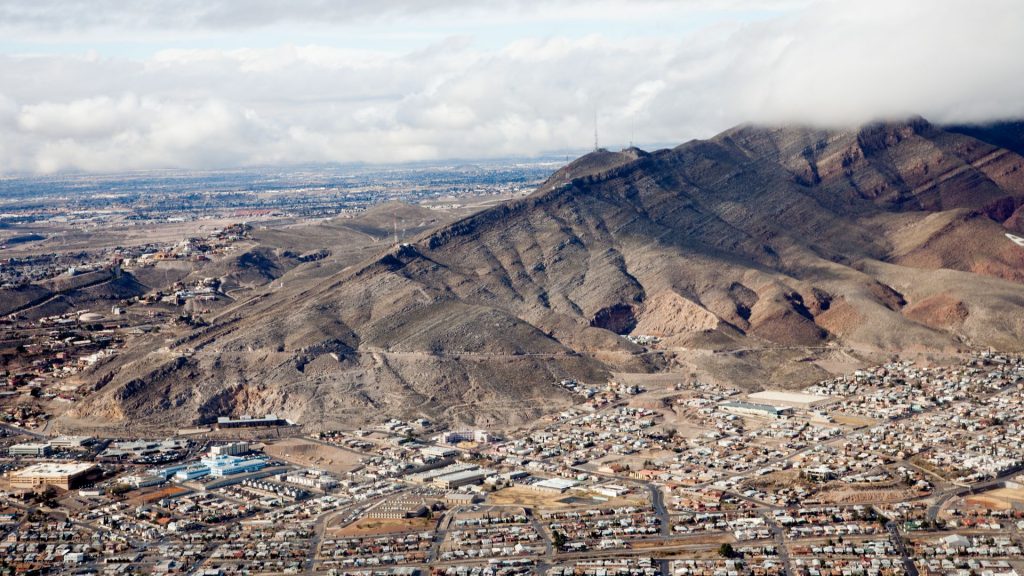
Questions remain, and tensions are stirring around conflicting explanations for the abrupt closure of the airspace over El Paso, Texas.
Late Tuesday, the Federal Aviation Administration (FAA) announced it was closing the airspace in and around El Paso International Airport for 10 days for “special security reasons.” However, the agency lifted the restriction less than eight hours later.
The abrupt closure and quick reopen left many travelers disrupted and alarmed, and lawmakers and local officials are seeking answers. Among the latest explanations: Border Patrol officials used a laser to shoot down a suspected drone that turned out to be a party balloon.
What happened
To underscore the seriousness of its action, the FAA said in its original statement that any aircraft entering the area would be intercepted or, if necessary to address an imminent security threat, shot down.
The restricted zone encompassed most of El Paso County and extended into southern New Mexico, but did not include Mexican airspace. It was an abrupt closure with no prior warning to airlines, the airport or even other agencies in the federal government.
Less than eight hours later, around 7 a.m. local time, the FAA reversed course, again without warning, and allowed flights to resume. “The temporary closure of airspace over El Paso has been lifted,” the FAA said on social media. “There is no threat to commercial aviation. All flights will resume as normal.”
The chaos sparked some tension with local officials, who said the closures never should have happened without coordination.
“This unnecessary decision has caused chaos and confusion in the El Paso community,” El Paso Mayor Renard Johnson said. “I want to be very, very clear that this should’ve never happened. You cannot restrict air space over a major city without coordinating with the city, the airport, the hospitals, the community leadership.”
What officials are saying
Since the airspace reopened, numerous officials with the FAA, the Department of Transportation and the White House have placed blame for the episode.
Transportation Secretary Sean Duffy was the first to speak out, saying that a drone operated by a Mexican drug cartel had breached U.S. airspace, prompting the closure.
Duffy added that “the threat has been neutralized, and there is no danger to commercial travel in the region.” Airlines were resuming their normal flight schedules, he said.
Officials at the White House and the Pentagon made similar statements. None, however, explained what would have justified the initial 10-day closure of the airspace.
Questions remain
But federal officials who spoke to the Associated Press, The New York Times and other publications on condition of anonymity said the real cause of the shutdown was something else: lasers.
They said the Defense Department allowed the Border Patrol to use an anti-drone laser without coordinating with the FAA, which is charged with ensuring aviation safety. Border Patrol agents reportedly thought they were firing on a drone — but it actually was a Mylar balloon that had floated away.
Sources told the AP that the Pentagon and the FAA had scheduled a meeting later this month to discuss the new laser technology, but officials decided to use it Tuesday without consulting the aviation agency.
Lawmakers want answers
As a result of the conflicting reports, senators met with FAA Administrator Bryan Bedford on Wednesday to demand more answers. Bedford said that “what Secretary Duffy tweeted was correct and that they probably could have done it better with communication and coordination,” said Sen. Tammy Duckworth, D-Ill.
However, it seems even that didn’t clear up the facts, and lawmakers have requested a classified briefing on the matter.
“The details of what exactly occurred over El Paso are unclear,” said Sen. Ted Cruz, R-Texas, chairman of the Commerce Committee, which oversees the FAA. “I don’t know them at this point, which is why I’m requesting a classified briefing to get further details.”
Sen. Ben Ray Luján, D-N.M., made a similar comment, saying administration officials need to “explain whether it’s a training mission or it’s an incursion, or whatever the hell is going on.”
The post What we know, and what we don’t, about the El Paso airspace closure appeared first on Straight Arrow News.
Ella Rae Greene, Editor In Chief