White House rescinds authority to regulate greenhouse gas emissions
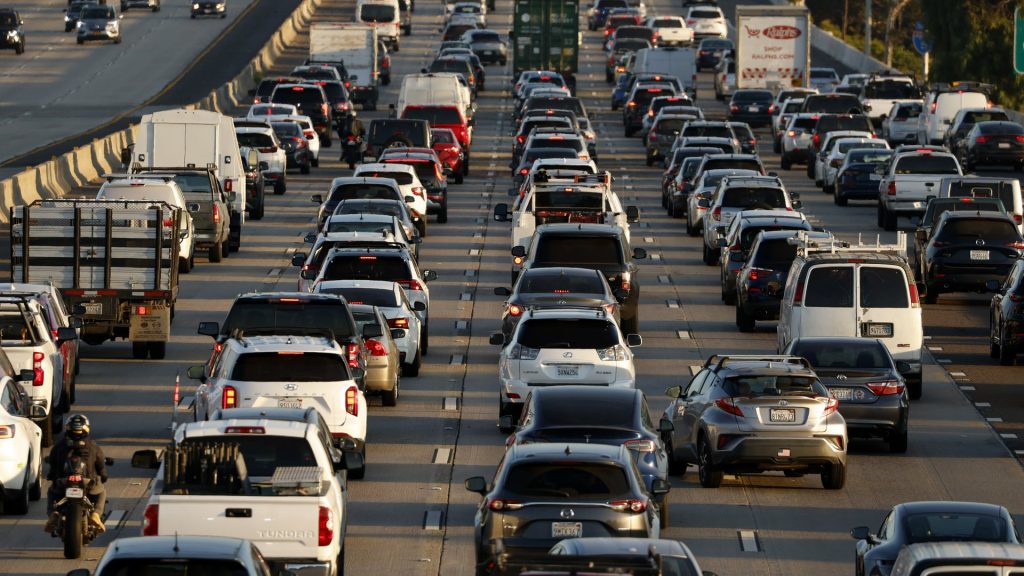
The Trump administration on Thursday revoked the endangerment finding, a 2009 Environmental Protection Agency (EPA) rule that classified greenhouse gases as a threat to public health requiring federal regulation. The decision strips the EPA of the legal authority to regulate carbon dioxide and methane emissions.
The revocation affects existing fuel economy standards for passenger and commercial vehicles. It also preemptively blocks future presidential administrations from regulating emissions by power plants and other sources.
Speaking at the White House, President Donald Trump called the endangerment finding a “terrible rip off,” and said reversing it would bring the price of a car “tumbling down.”
The endangerment finding stems from a 2007 Supreme Court ruling in Massachusetts v. EPA, which determined that greenhouse gases qualify as air pollutants under the Clean Air Act and directed the EPA to determine whether they endanger public health and welfare. Two years later, the EPA found that greenhouse gases do threaten health and welfare. The finding became a crucial precursor to the Obama and Biden administrations’ regulations on vehicle fuel standards and power plants.
“Unelected bureaucrats twisted the Clean Air Act into something it was never meant to be,” EPA Administrator Lee Zeldin said during a press briefing at the White House..
What environmental rules are affected by the reversal?
Zeldin first proposed rescinding the endangerment finding in July 2025. Zeldin made the announcement at a trucking company in Indianapolis, where he argued that emissions standards hurt the automotive industry.
In a statement to Straight Arrow News, an EPA spokesperson said the endangerment finding was “one of the most damaging decisions in modern history,” adding that “hardworking families and small businesses have paid the price” for vehicle emissions rules.
Trump and Zeldin both stated that the reversal will eliminate incentives for automakers to install the “start-stop” feature, which automatically turns off the engine when coming to a complete stop. The reversal will also undo Biden-era rules that limit carbon dioxide emissions through electrification and greater fuel efficiency.
Separately, the Trump administration is in the process of eliminating Corporate Average Fuel Economy (CAFE) standards. Other climate policies, such as limits on power plant emissions, have already been repealed.
These moves will usher in $1.3 trillion in cost savings for taxpayers and consumers, according to the administration. Signs displayed during the White House announcement said vehicles will cost $2,400 less.
But the real-world effects of the policy change are yet to be determined.
“Car makers already have their models planned out several years in advance,” said Jeff Holmstead, a partner at the law firm Bracewell and former head of the EPA air office under President George W. Bush.
“Anyone who goes to an auto dealership expecting that cars will suddenly be $2,400 cheaper is going to be disappointed,” Holmstead told SAN.
Why is the reversal facing resistance?
The decision has triggered an outcry from environmental groups who say it makes it more difficult for the U.S. government to address climate change. Several lawsuits have challenged the science in court, arguing that the EPA’s justification for revoking the endangerment finding relies on flawed research.
In January, a U.S. District Judge ruled in favor of the Union of Concerned Scientists and the Environmental Defense Fund (EDF).
The judge found that the Department of Energy violated the Federal Advisory Committee Act when it convened a climate working group in secret to contribute to a report published by the DOE last year. That report disputed the longstanding scientific consensus that greenhouse gases are a public health threat, and became part of the EPA’s justification for reversing the endangerment finding.
“It is clear that the Trump Administration unlawfully pursued a secretive effort to develop a fatally tainted report,” EDF Senior Attorney and Director of Clean Air and Energy Markets Erin Murphy said in a January press release. At the time, Murphy called for the report to be withdrawn and the EPA to abandon its plans to revoke the endangerment finding.
Now, more lawsuits are on the way. The American Lung Association and two other public health groups announced their intent to sue on Thursday.
Harold Wimmer, president and CEO of the American Lung Association, said the decision “will result in more air pollution, more frequent and intense disasters like wildfires and floods and increased risk of diseases, making lung health worse across the U.S.”
Can the endangerment finding come back?
It’s unclear whether the endangerment policy will ever come back from the dead.
If a lawsuit brings its removal before the Supreme Court, the court could side with the EPA’s new policy not to regulate greenhouse gases. In that case, only an act of Congress could reinstate a comparable policy, Holmstead said.
“The endangerment finding and EPA’s rules have accomplished very little,” to reduce emissions, Holmstead told SAN.
Holmstead said EPA policies will be vulnerable to rollback, as opposed to a “more durable” bipartisan act of Congress.
The post White House rescinds authority to regulate greenhouse gas emissions appeared first on Straight Arrow News.
Ella Rae Greene, Editor In Chief