Who counts as a journalist? Arrests, access fights put press freedom on trial
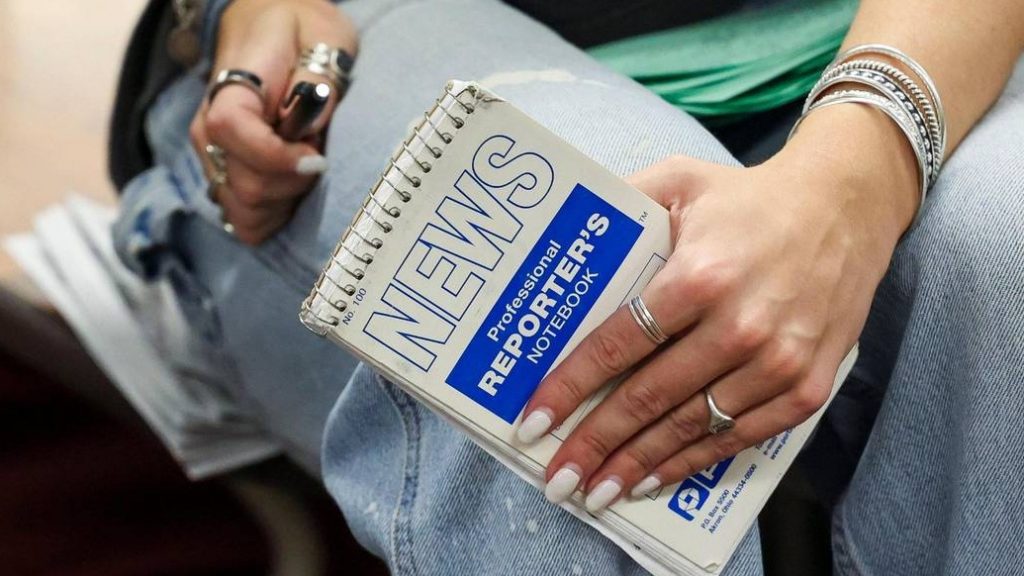
Layoffs across storied media institutions, stagnant industry wages, expanding news deserts and the rise of the internet have created a burgeoning independent journalism industry. But it’s also raised new questions about who should be able to claim the constitutional protections afforded to the press and who gets to decide whether someone is a journalist.
The arrests of journalists Don Lemon and Georgia Fort in Minneapolis briefly shifted the conversation away from federal immigration agents’ actions in the midwestern state to one about press freedom and what constitutes a journalist. Following the two independent journalists’ arrests, the Justice Department said that many others charged had claimed they, too, were journalists and sought First Amendment protection.
“A third of the people who were arrested so far claimed to be journalists,” Assistant Attorney General of the Civil Rights Division Harmeet Dhillon told One American News Network on Feb. 6, “and frankly, they could all call themselves journalists and it wouldn’t make a difference as to whether they broke the law.”
Court records didn’t back up or refute Dhillon’s assertions about those arrested. A GofundMe for Jerome Deangelo Richardson’s legal fees stated that he’s an activist, but was giving Lemon logistical support the day of the Cities Church protest. Richardson identified himself in Lemon’s livestream and was introduced as a producer, activist and “social entrepreneur.”
Bobby Block, executive director of the First Amendment Foundation, told Straight Arrow News that the Justice Department’s claim is a slippery slope since the public’s perception of the industry has dropped, and definitions about what is considered journalism have changed. He noted that people have moved towards Substack, YouTube and other platforms to gather and distribute news.
“The kind of outlets that distribute, that gather news and disseminate facts and opinion are changing and, therefore, we have to,” Block said. “Our concept of that has to change.”
The Constitution intentionally doesn’t define a journalist
The Constitution doesn’t describe what “press” is. It only defines what press freedom is and states that governments and other public entities cannot infringe on the practice of journalism. Supreme Court cases have narrowed and widened definitions in the First Amendment, but the Supreme Court has refused to say who is and is not a journalist.
“The press, in its historic connotation, comprehends every sort of publication which affords a vehicle of information and opinion,” former Chief Justice Charles Evans Hughes wrote in the leading opinion for the 1938 Supreme Court case, Lovell v. City of Griffin. The court unanimously agreed that a Georgia town’s ordinance requiring people to get permission to distribute literature violated the First Amendment.
Block said that, for Lemon, the Justice Department is trying to criminalize the news-gathering process and instead alleges that he’s an activist responsible for the protest.
“The evidence doesn’t seem to support that,” he said.

Dhillon has said the charges were brought forward because the protesters disrupted an ongoing church service, ultimately forcing worshippers to leave the building and officials to terminate services early.
“We can’t tolerate any of these protests coming into our houses of worship,” she said in a video posted to her X account. “If we do, we will have lost the ability to worship peacefully in this country.”
Trevor Timm, executive director of the Freedom of the Press Foundation, told Straight Arrow News that, in the case against Lemon, he constantly identified himself as press in the YouTube livestream and to the people he interviewed. One part federal prosecutors harped on was Lemon saying he couldn’t disclose what’s about to happen. Timm said that Lemon’s statement is similar to what other journalists say to adhere to confidentiality agreements.
Representatives and lawyers for Lemon didn’t respond to Straight Arrow News’ requests for comment. His arraignment is set for Friday afternoon.
Unbiased. Straight Facts.TM
A Pew Research survey shows that 93% of adults aged 18 to 29 obtain their news through digital devices.

“It’s our position that whether you’re an independent journalist or a corporate journalist, you should be afforded the same rights under the law and under the Constitution,” Timm said.
Journalists, however, can face criminal charges if they were active participants in breaking the law in order to obtain information, Timm said. That can happen if a journalist breaks into a locked building to grab documents. It doesn’t happen if someone like Lemon follows protesters who were breaking the law.
“That’s what we see from journalists all the time,” Timm said regarding Lemon. “They can report on something that was obtained illegally or report on potentially illegal actions as long as they are not actively engaging in them themselves.”
Government often attempts to determine what press is press
Issues in determining who is considered a journalist have come up across the political spectrum as state and federal bodies change rules on who is permitted to have press credentials, which grant the media exclusive access to politicians and certain government buildings.
In 2025, the Pentagon requested that reporters sign a new policy acknowledging they wouldn’t seek or solicit information the Department of Defense hasn’t pre-approved, even if it was unclassified. As a condition of obtaining press credentials, the agreement stated that reporters could face “adverse consequences” for disclosing unauthorized information. OANN was the only outlet to agree to the rules. All others — including Fox News — were replaced by conservative influencers, activists and media that agreed to the new rules.
In Washington state, a lawsuit filed on behalf of three journalists alleges the state’s Speaker of the House and the Capitol Correspondents Association denied them press credentials. Citizen Action Defense Fund Executive Director Jackson Maynard, who brought the suit on behalf of the reporters, is requesting an injunction. He told Straight Arrow News that neither body had published clear-cut rules or standards for handling press credentials.

The lawsuit alleged that journalists Ari Hoffman, Brandi Kruse and Jonathan Choe were denied legislative access via press credentials for ideological disagreements the press association and some state representatives had with the three journalists.
Hoffman is a show host for KVI Radio in Seattle as well as an editor for The Post Millennial. Kruse hosts her “unDivided” podcast and boasts hundreds of thousands of followers across YouTube, Facebook, and other social media sites. Choe is a former crime and justice reporter for KOMO, an ABC affiliate in Seattle, who is now a reporter for the nonprofit Discovery Institute. All three report from a conservative angle.
Washington State Speaker of the House Laurie Jinkins, who’s named in the lawsuit, didn’t immediately respond to Straight Arrow News’ request for comment. Capitol Correspondent Association President Jerry Cornfield said he didn’t have comments to share.
“The way that the House has crafted these guidelines and is applying them is just not consistent with what the law requires,” Maynard said.
The incident isn’t an anomaly, as Maynard said he’s read and seen instances across the nation where independent journalists are denied access that traditional journalists are afforded. He said Washington state’s offering of day passes to reporters isn’t sufficient, as it’s not the same level as what other journalists are offered.
With more people becoming independent journalists than ever, Maynard said both governments and the press corps need to review their access guidelines.
“As media shifts, then the guidelines and what constitutes a member of the media and what constitutes a journalist also need to shift,” Maynard said, “and the government constitutionally will be required to make that shift as well.”
The post Who counts as a journalist? Arrests, access fights put press freedom on trial appeared first on Straight Arrow News.
Ella Rae Greene, Editor In Chief