States scramble to cut SNAP error rates, or risk billions in penalties next year
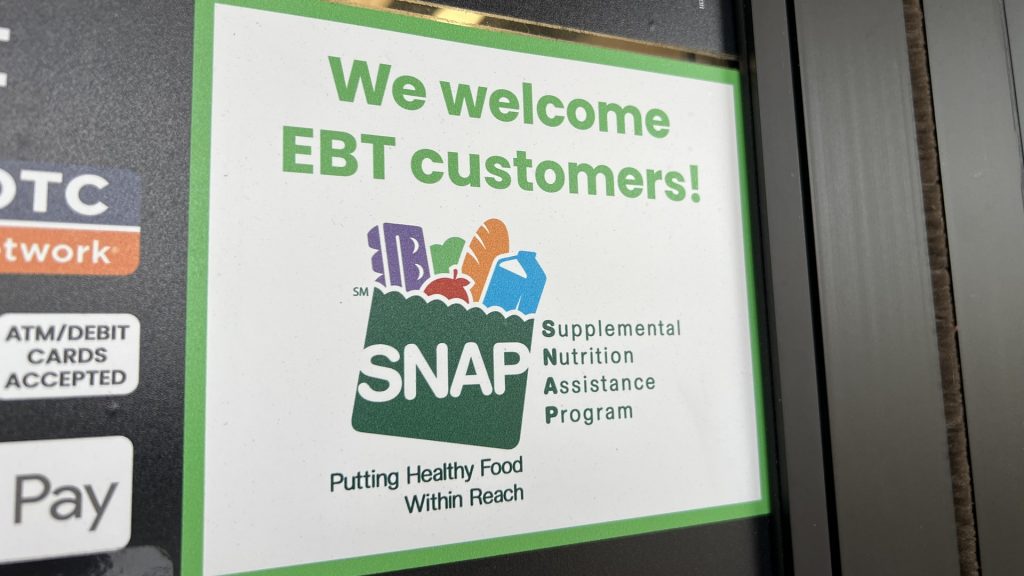
Louisiana has become the latest state to try to lower its error rate for its Supplemental Nutrition Assistance Program, or SNAP. If the states are unable to do so, they will face significant financial penalties depending on how high their SNAP error rates are.
SNAP changes incoming
President Donald Trump’s so-called “big, beautiful bill” last year made a lot of changes to SNAP.
“There were increased work requirements, making it harder for younger and older adults to be eligible,” Cindy Leung, associate professor of public health nutrition at Harvard Chan School of Public Health, told Straight Arrow News.
Other major changes shift more costs to the states.
“States have to take on a much greater financial burden to administer this program,” Elizabeth Adams, assistant professor of public health at the University of South Carolina, told SAN.
Where states are really going to have to shell out some money will depend on how accurate their SNAP rolls are.
“That’s either overpayments or underpayments that happen for a variety of reasons,” Adams said. “They’re usually very unintentional, very little fraud. It’s usually administrative, technical reporting challenges. It’s not a simple, easy process to facilitate SNAP. To get enrolled in SNAP, to determine one’s eligibility status and payment amount. So, there are high caseloads, complex eligibility rules and that can play into error rates.”
The error rate is different from fraud.
“Payment error rates are not a measure of fraud,” Leung said. “They are either overpayments or underpayments that happen as a result of someone’s application processing and how much benefits that a family or household is provided.”
Starting Oct. 1, 2027, the federal government’s fiscal new year, states will begin facing large financial penalties based on their error rates from data collected this year. Those penalties will look like this:
>6% error rate: 0% benefit costs for states.
6-8% error rate: 5% benefit costs for states.
8-10% error rate: 10% benefit costs for states.
≥10% error rate: 15% benefit costs for states.
The penalties can get up into the hundreds of millions.
The latest data comes from 2024 and shows the average error rate per state in the U.S. is over 10%, with Alaska being the highest at 24.66% and South Dakota being the lowest at 3.28%.
If those numbers held, only seven states would be below that 6% threshold.
“It’s a complex system, and so errors are inherent,” Adams said.
Louisiana’s plan
The state of Louisiana’s error rate in FY24 was 6.62%, but that went up last year to 7.61%, according to Camille Conaway, executive director for economic independence with the Office of Economic Stability, who spoke with Nola.com.
“We are taking bold and aggressive action with our teams to get below 6%,” she said.
Those actions include offering cash bonuses to anyone who spots errors on things like wage reporting, household size, addresses and more. The agency has also intensified case reviews and new methods to determine the wages of people enrolled in SNAP.
“I don’t think that’s sustainable,” Leung said.
“A lot of SNAP caseworkers retired or quit during the pandemic,” she added. “What we’ve heard is that SNAP agencies are constantly understaffed.”
Adams believes this plan can work, but it has significant downsides.
“I feel like the connotation around it is putting a negative light to it, as opposed to just really, truly understanding where these areas come from, and that’s a natural part of a complex system,” she said.
If the state can’t bring it below 6%, it’ll be on the hook for roughly $100 million.
Other state plans
Louisiana may be the latest state with a plan, but it’s not the first.
The error rate in Kansas in FY24 was nearly 10%, but lawmakers said they’ve gotten it down to 5.5% as of last August. That state took a different approach to get the number down.
The Kansas Department of Children and Families said it brought in an outside consultant to help get that error rate down, as well as participating in a mandatory federal corrective plan.
Part of the issues in Kansas were a high turnover rate within the department, the complexity of the training process for caseworkers, and inconsistency by staff to verify eligibility for benefits.
Maryland’s error rate in FY24 was over 13%, significantly lower than the 36% it was in FY22. However, the state could soon be on the hook for roughly $240 million if it can’t bring that number down.
Lawmakers there are taking additional steps to keep the rate declining, including identifying information system defects, revamping training, and more.
Next door, Virginia lawmakers are working to get their error rate down from 11.5%, which could cost the state $270 million.
Virginia and several other states have a unique problem in getting that number down. That’s because it’s not the state department of social services that distributes the benefits, but rather local social services departments.
“It will be very, very challenging, if not impossible, for some states,” Adams said.
Virginia has not been able to get their error rate below 9% for the past decade. However, former Gov. Glenn Youngkin issued an executive order to address the error rate, including new training at those local departments, working with tech companies to improve applications, error-checking and bringing in experts to look at best practices in other states.
Meanwhile, Mississippi, which had a more than 10% error rate in FY24, is turning to tech to get that number down. The state is investing in new case management software, new training for employees and better education for SNAP recipients.
Impact on SNAP beneficiaries
If states struggle to bring those error rates below 6% and start facing major fines, it could have serious repercussions.
“One thing that they could do is they could reduce their SNAP eligibility so just fewer people can qualify, so they don’t have to pay such a large share of SNAP benefits,” Leung said. “They could cut other state spending on other state programs. They could raise taxes to generate revenue. An extreme scenario is they just stop participating in SNAP altogether. None of these are favorable outcomes.”
Most of those options would raise food insecurity, which is already a big problem in the U.S.
“I’m very concerned about food insecurity increasing in the next couple years because of this,” Leung said.
More than 40 million Americans receive SNAP benefits each month.
“These families absolutely need this,” Adams said.
Adams said rising food insecurity can set off a chain reaction of other problems.
“If states aren’t able to sustain this, and less people are on SNAP, and therefore more people don’t have money to feed their family, we are going to see a tremendous financial burden, health care burden in other areas that SNAP is really good at offsetting,” she said.
Leung agreed.
“Food insecurity is such a strong predictor of health and even for children, it has potentially lifelong consequences,” she said. “SNAP is our biggest lever to reduce food insecurity and support health. So, if we want to follow the MAHA agenda and try to Make America Healthy Again, then SNAP is the best opportunity to do that by making sure people have sufficient benefits, that they can access the program, that they can stay on the program for as long as they’re eligible, that they can buy the healthy foods that they need for their families.”
During his first term, Trump expanded SNAP benefits at the start of the COVID-19 pandemic.
“That really curbed levels of food insecurity in 2020,” Leung said.
But during his second term, the program has become more politicized.
“They’re not prioritizing these programs,” Adams said. “They say they’re prioritizing it for the people who truly need it, but I think they’re making their own subjective judgment calls on who they think truly needs it that’s informed by inaccurate information.”
The post States scramble to cut SNAP error rates, or risk billions in penalties next year appeared first on Straight Arrow News.
Ella Rae Greene, Editor In Chief