Judge blocks California state law looking to prohibit masked federal agents
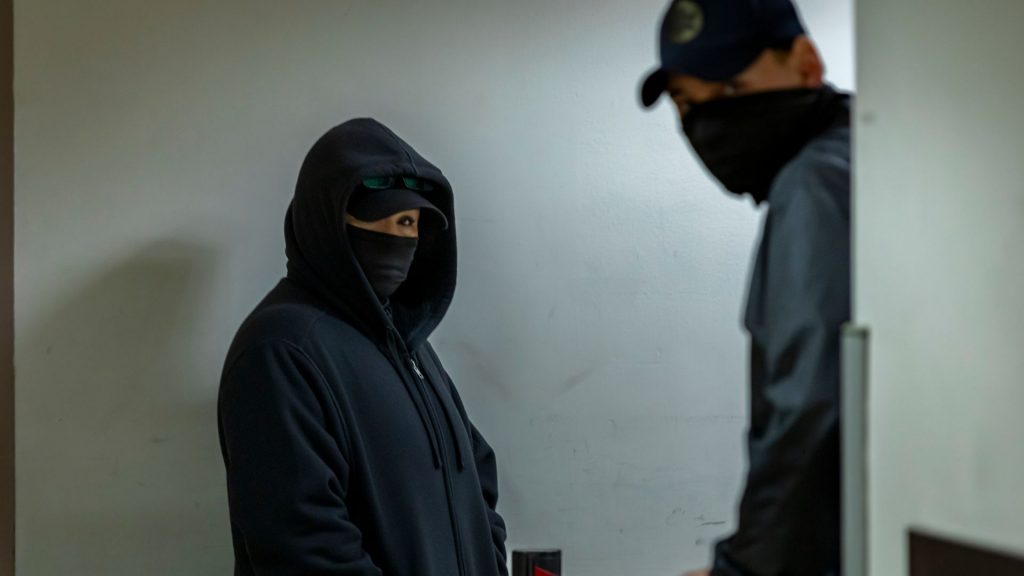
Some states are banning federal agents from wearing masks to hide their identities, a reaction to more aggressive immigration enforcement. State leaders say the practice breeds distrust in the community but also makes it easier to impersonate a federal agent.
But many of these proposed laws have faced challenges. On Monday night, a federal judge in California blocked a state law prohibiting federal agents from wearing masks. However, the judge did allow a companion measure requiring them to display identification, The New York Times reports.
Even if mask prohibitions for federal agents pass, it would be impossible for a state to enforce them. Under the Constitution, federal law and federal authorities override state law when the two conflict. So if a federal agency deems masks necessary, states can’t overrule that judgment.
In November, the FBI released a report stating criminals posing as Immigration and Customs Enforcement agents carried out robberies, kidnappings and sexual assaults. California state Sen. Jesse Arreguín said this is a reason the state passed the law.
“When armed operatives walk into our communities obscuring their face, and without a badge or a name, the public’s trust is broken and the risk to everyone increases,” he wrote in a press release. “That risk is significantly heightened when there are known impersonators exploiting ICE’s propensity to withhold their identity.”
How many cases of impersonation are there?
In October, Straight Arrow News reported that around two dozen cases of people impersonating federal agents, with cases ranging from accusations of rape, assault, kidnapping and robbery.
The CNN analysis cited in SAN’s previous reporting states that impersonation incidents last year were higher than in the last four presidential terms combined.
In one case, a woman in Florida allegedly impersonated an ICE agent to kidnap her ex-boyfriend’s wife, WTVY reports. Investigators say LaTrance Battle told the woman that she needed to go with her to the sheriff’s office, and the victim obliged. She told investigators that she believed Battle was an ICE agent since she was in the process of becoming a citizen.
After Battle took the victim to her vehicle, the victim tried to call a lawyer and her husband, but she said Battle forcibly grabbed her phone. Battle drove the victim to an apartment complex, where the victim began to think something was wrong. She said she ran out of the vehicle and called authorities.
Police later arrested Battle and took her into custody, where prosecutors charged her with kidnapping, robbery by sudden snatching and impersonating a law enforcement officer.
In the FBI’s report regarding recent ICE impersonations, officials cited an incident in New York where people impersonating ICE agents entered a restaurant and restrained workers, including putting a plastic garbage bag over one worker’s head.
After restraining the restaurant employees, the three people dressed as federal agents then robbed an ATM. The FBI said one employee who believed their story surrendered to them but was kicked to the ground and restrained.
Why does ICE wear masks?
On its website, ICE says its agents wear masks to prevent doxxing, or publicly releasing personal information about a person. The website said that releasing public information about an agent can put the agent or their family at risk.
While they may be wearing masks, the website states that all agents carry badges and credentials and will identify themselves if required for public safety or legal reasons.
However, there is no law requiring ICE agents to provide badge numbers or identify themselves, according to Sen. Alex Padilla, D-Calif., which is why he proposed a bill last year to require it.
“Officers in other agencies are required to identify themselves and provide badge numbers to prevent impersonators,” Padilla wrote in a press release. “ICE has no such requirement, and there have been reports of ICE impersonators harassing people, creating more chaos and uncertainty in some communities.”
Attorney General Pam Bondi echoed concerns about people doxxing agents. In a post on X celebrating the judge’s decision to strike down California’s law, she said people are harassing and obstructing agents from doing their jobs and masks help.
“These federal agents are harassed, doxxed, obstructed, and attacked on a regular basis just for doing their jobs,” Bondi wrote. “We have no tolerance for it.”
SAN has previously reported that attacks on ICE agents increased dramatically last year, jumping more than 1,000%. However, a Los Angeles Times report disputes that figure, calling it misleading.
The publication reviewed thousands of court records and found that the majority of alleged assaults resulted in no injuries. David Bier, the director of immigration studies at the Cato Institute, told the Times that the administration is using the number to advance its narrative.
“They are justifying why they need to use extreme force against the people they’re arresting and the public as they interact with individuals on the street,” he told the Times. “I think that’s the primary purpose, to say: ‘We’re under attack. We’re being assaulted daily and therefore we need to be able to use extreme force including military support.’”
The post Judge blocks California state law looking to prohibit masked federal agents appeared first on Straight Arrow News.
Ella Rae Greene, Editor In Chief