Colorado electric cooperatives dispute federal order to keep coal plant running
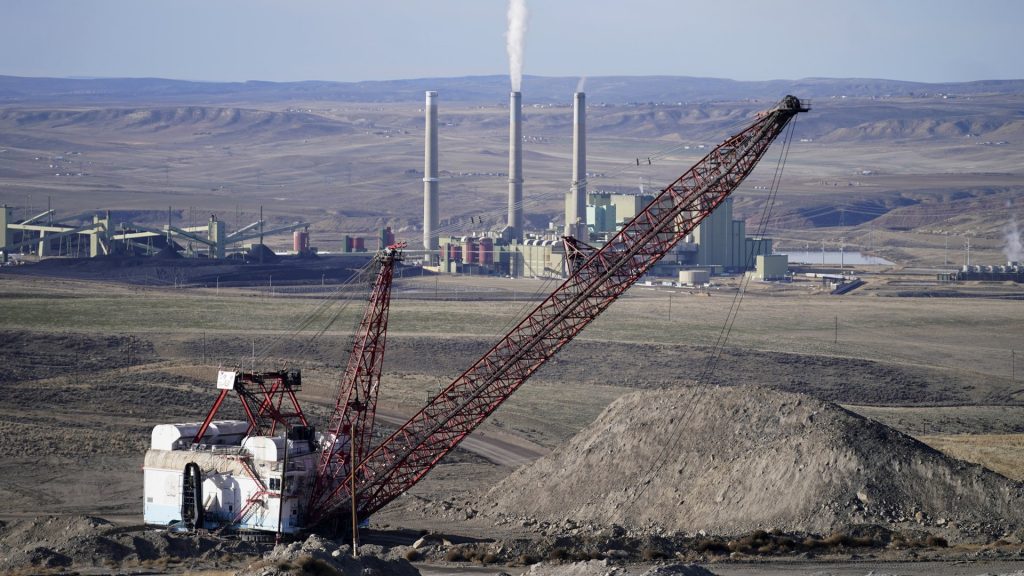
The owners of a Colorado coal-fired power plant are pushing back against a Trump administration order to keep the plant open. The plant’s owners say continuing to run it is not necessary for grid operations, and it’s raising their costs.
The Department of Energy ordered Unit 1 of the Craig Station in northwest Colorado to remain in operation after its planned retirement date at the end of 2025. The plant is co-owned by the nonprofit electric cooperatives Platte River Power Authority and Tri-State Generation and Transmission Association, which last month formally asked the DOE to reconsider its decision.
“As not-for-profit entities, we face issues that other utilities do not, because it is our members that ultimately are going to pay for the cost of this order,” said Duane Highley, CEO of Tri-State, in a press release.
The state of Colorado also asked the DOE to reconsider its order.
In 2025, the Trump administration issued orders to keep five coal plants operating past previously planned retirement dates. Unit 1 at Craig, which was built in 1980, was the fifth. Colorado state law has pushed for generating a greater share of electricity from renewable energy, and communities that form the patchwork of over 20 rural electric cooperatives in the state have been largely supportive, in part for economic reasons. Now, those choices are putting rural Colorado’s energy future at odds with federal policy.
What’s an electric cooperative?
As opposed to investor-owned utilities, which yield profit for investors by charging ratepayers, an electric cooperative is owned by the ratepayers. It takes the profit motivation out of providing electric service and gives ratepayers the power to elect the organization’s board of directors.
Tri-State is somewhat unique in that it’s a generation and transmission cooperative. The group owns power plants and renewable energy resources as well as the large transmission lines that transport that power to population centers. Tri-State’s members are other cooperatives that provide distribution services by taking the power from Tri-State’s transmission lines and carrying it across smaller power lines into homes and businesses.
The owners of these distribution cooperatives are the ratepayers across Colorado and three other mountain west states who make monthly payments for electricity. Ultimately, that’s who pays for potential increased costs from keeping the Craig plant running past its planned retirement date.
“It was becoming apparent by 2016 that our owner communities wanted us to decarbonize our energy portfolio,” Kendal Perez, a senior manager for communications at the Platte River Power Authority told Straight Arrow News in an email.
“Craig Unit 1 was facing some significant capital reinvestment decisions to continue operating long term,” Perez said, which made that power unit “the most financially beneficial resource for us to retire first.”
The unit has required frequent repairs, and its operators said it needed maintenance in order to comply with the DOE order.
Why did the Energy Department order the Craig plant to stay open?
In its Dec. 30 order to keep the power plant open for 90 days, the DOE said it was necessary to avoid blackouts on the grid.
“Keeping this coal plant online will ensure Americans maintain an affordable, reliable and secure supply of electricity,” Energy Secretary Chris Wright said in a press release.
The order described how 571 megawatts of coal power — six power plant units in total — had shut down in Colorado since 2019. By 2029, all but one of Colorado’s coal-fired power plants is scheduled to retire, the DOE said.
“The emergency conditions resulting from increasing demand and shortage from accelerated retirement of generation facilities will continue in the near term and are also likely to continue in subsequent years,” the DOE order said.
Why are the electric cooperatives pushing back?
However, the power plant’s owners and the state of Colorado have disputed the claim that the Craig plant is necessary for a reliable grid.
“We have planned for the retirement of this resource for over a decade and have proactively replaced the capacity and energy from new sources,” said Jason Frisbie, general manager and CEO of Platte River.
As far back as 2016, state air quality rules specified that the power plant should be retired, a Tri-State spokesperson told SAN. The retirement was outlined in an electric resource plan approved by state regulators. The utilities commission determined that the Craig plant was not necessary for Colorado to maintain adequate electric resources.
Will Toor, executive director of the state’s energy office, said the DOE’s order is “driven by ideology rather than the realities of the electric grid.”
Craig Unit 1 also competes directly with a large solar power array that Tri-State invested in as part of how the cooperative planned to replace the coal plant’s power output. The new 145-megawatt solar facility shares a transmission line with Craig 1, but that line doesn’t have enough capacity to carry electricity from both the coal plant and the solar panels on a sunny day.
Ted Compton, a Colorado resident and president and founder of the Co-op Innovation Network, a nonprofit that works with rural electric cooperatives, said the cheap solar power is going to waste, while residents have to pay for more expensive coal.
“Every person in every coop is being negatively impacted on affordability because of these decisions,” Compton told SAN.
He highlighted a study from Grid Strategies that estimated each 90-day period in which Craig 1 remains operating will cost $20 million. The study was paid for by the Sierra Club, which has separately asked the DOE to rescind its order.
“I see this as an affront to the rural electric coop,” Compton said. “It’s taking the decision-making power away from them and it’s increasing their costs.”
The post Colorado electric cooperatives dispute federal order to keep coal plant running appeared first on Straight Arrow News.
Ella Rae Greene, Editor In Chief