States target church protests with new criminal and civil penalties
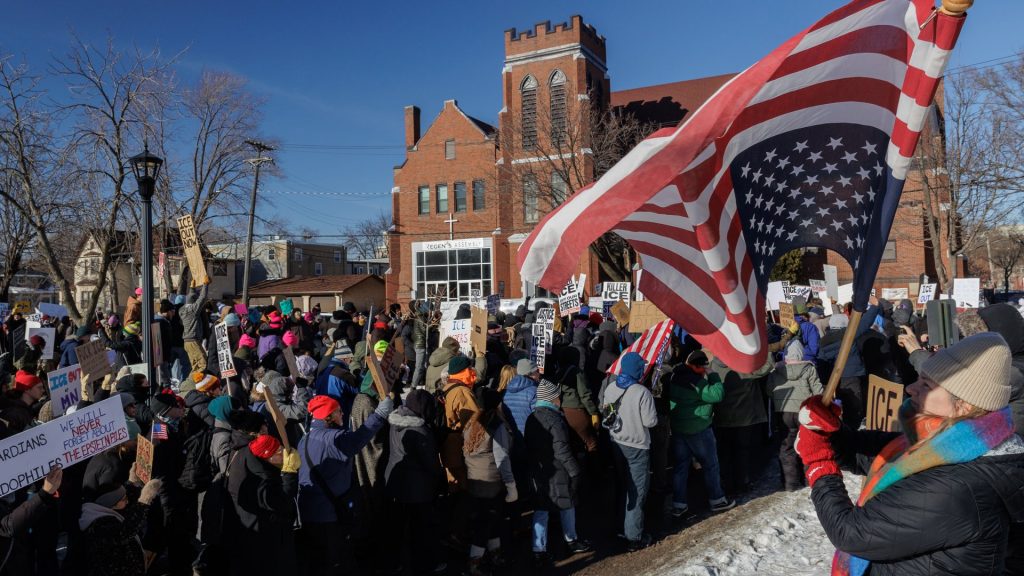
Numerous states have introduced legislation in the last week that would create stiffer penalties for protesting at churches. The proposed bills come after journalist Don Lemon was arrested while covering a protest in Minnesota that disrupted a church service.
Kentucky proposal
State Rep. Mitch Whitaker in Kentucky has proposed HB 540, which would make interference with a religious service both a criminal and civil offense. Criminally, it would be a Class A misdemeanor.
“Class A is generally the most serious level of misdemeanor, so it’s not a felony, but it’s probably more serious than trespassing or disorderly conduct,” Douglas Laycock, a professor of Constitutional law at the University of Virginia, told Straight Arrow News.
Previously, it was only a Class B misdemeanor. There are other laws on the books that potentially punish protesters in this setting.
“In America, it’s not unusual to have overlapping crimes,” Carl Esbeck, law professor at the University of Missouri, told SAN. “Just think your typical prosecutor when there’s an offense, they end up charging five, six, seven different offenses, and there’s just huge overlap.”
If this bill passes, experts SAN spoke with say it’s unlikely to face much legal pushback.
“Some of the language in the bill clearly is not problematic when you limit the threat of force, intentionally injuring, intimidating people,” Alan Brownstein, professor of law emeritus at the University of California, Davis, told SAN. “All of that can be prohibited.”
Meanwhile, the proposed bill would create what’s called a civil cause of action for the churches.
“The church can sue for damages and they recover $10,000 apparently, without proving any actual harm in attorney’s fees,” Laycock said. “So, that’s pretty substantial.”
Potential concerns?
Brownstein said the only language in the bill he found potentially concerning was the section that says a person is interfering with worship if they do “any act tending to obstruct, or physically or audibly interfere with, the religious service or any individual’s access to or egress from the service.”
He said that if, by “audible interference,” the bill means protesters are so loud that it disrupts services, then lawmakers could restrict that activity.
“But if intent to disrupt an audible interference also extends to the message that’s being communicated, so not how loud it is, but what the message is that the protesters are communicating or trying to communicate to the parishioners? Well, that’s much more problematic,” Brownstein said.
He pointed to the Snyder v. Phelps U.S. Supreme Court decision in 2011.
Fred Phelps and his fellow church members believed God was punishing the U.S. for being too tolerant of homosexuality by killing soldiers. They would go to military funerals with signs that said things like, “Thank God for Dead Soldiers.”
The father of a dead soldier sued after they picketed his son’s funeral and received substantial damages until SCOTUS stepped in.
“The United States Supreme Court said that was unconstitutional, because these protesters were on a public street, a traditional public forum, and they were being punished for what they said, for the message they communicated, despicable as it was,” Brownstein said.
Other proposed legislation
Other states are attempting to take things a step further, including Ohio.
Two Republican House lawmakers have introduced a bill that would make obstructing or interfering with a church service a fifth-degree felony, rather than the current first-degree misdemeanor.
A Republican state rep in Alabama also wants to make it a felony. Proposed legislation from Rep. Greg Barnes would make it a Class C felony, which could come with five years in prison.
“No one has the right to disrupt a church service and infringe on their fellow citizens’ right to worship freely,” Barnes told Yellowhammer News.
In Louisiana, a proposed bill would add interrupting a religious service to the list of actions that could be considered disturbing the peace. That could come with a $500 fine and six months in jail.
Political reaction?
“The timing suggests it’s a direct reaction to the events in Minneapolis,” Laycock said.
Some of the lawmakers came out and specifically said this was in response to what happened in Minnesota.
Rep. Tex Fischer, who cosponsored the legislation in Ohio, said he introduced the bill after watching the Minnesota video.
“These people, first of all, are politicians, and they know what gets their name in the paper,” Esbeck said. “And they may sense correctly that there’s a good number of their constituency that didn’t like the church invasion. They maybe didn’t like what ICE was doing, but they certainly didn’t like the protesters invading that church on a Sunday morning.”
The post States target church protests with new criminal and civil penalties appeared first on Straight Arrow News.
Ella Rae Greene, Editor In Chief