Americans volunteering more blood, sweat and time but not money: Poll
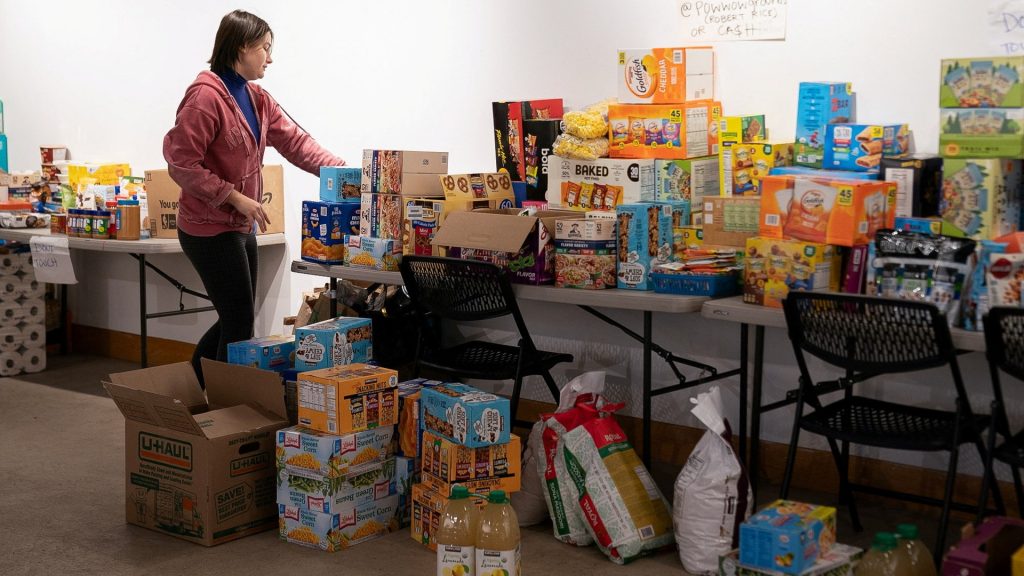
Americans are returning back to the spirit of giving, helping launch volunteerism past its COVID-19 pandemic lows, according to a new poll. However, more people are reporting they gave more time or blood to groups than money as the cost of living grows due to inflation.
A Gallup poll of 1,016 adults showed that people are getting back to charitable giving not seen since before the pandemic hit, which decimated nonprofits across the nation as they grappled with the public health emergency, social justice and a never-before-seen pause in global life.
The annual poll showed that about 76% of respondents donated money, 63% donated time and 17% gave blood.
“While giving money has softened modestly since inflation rose in 2021, volunteering has rebounded and now exceeds pandemic levels, suggesting that Americans are moving toward expressing civic commitment through time rather than dollars,” according to the pollster.
The percentage of people who said they donated money follows the inflation rate that the U.S. Bureau of Labor Statistics has tracked since December 2005. For weekly earnings, wages have crept up about $300 from 2019 to 2025 in that same time period.
One trend Gallup noticed is fewer people are being charitable with religious organizations.
“The 41% of Americans saying in 2025 that they donated to a religious organization is the lowest to date, down 21 points from the initial measurement in 2001, including three points since 2021,” the pollster said.
Americans’ philanthropy becomes more secular
The trend in religious donations and volunteerism near-follows the same for those who identify with a religion. Gallup noted that people are still volunteering their time for those organizations.
The percentage of respondents who said they donated money to religious organizations fell from 44% in 2021 to 41% in 2025. For those who said they donated time, it dipped to 35% in 2021 — an all-time low — but then climbed to 39%.
As for the share of Americans’ religious identities, a February 2025 Pew Research Center poll of 36,908 U.S. adults showed that more and more people are becoming unaffiliated with religion. The count included people who identified as atheist, agnostic and “nothing in particular.” The group found that 29% of respondents in 2024 said they weren’t affiliated with a religion, up 13 percentage points from 2007.
The breakdown by birth cohort showed the largest margins, with 44% of people aged between 24 and 34 not aligning with a religion, versus about 13% of people aged 74 and up.
Pew researchers found that despite the growing share of people being unaffiliated with a religion, 78% of the more than 36,000 people agreed that churches and other religious organizations play important roles in helping the poor and needy. They also learned that 80% said that those institutions bring people together and strengthen community bonds.
“Even among religiously unaffiliated adults, 67% say religious organizations help bring people together and 61% say religious organizations play a key role in helping the poor,” according to Pew.
Despite the results, people are still motivated to volunteer however they can, something psychologists have found to have positive effects on health. That included a reduction in feelings of isolation, stress and anxiety, and an increase in social skills, self-confidence, happiness and workplace production, psychologist David Susman wrote in Psychology Today.
“The bottom line is that volunteering does clearly seem to be associated with a variety of physical and mental health benefits, but more so if you are truly invested in making a difference to help others,” Susman wrote.
The post Americans volunteering more blood, sweat and time but not money: Poll appeared first on Straight Arrow News.
Ella Rae Greene, Editor In Chief