Can California replace the US in the World Health Organization?
California has become the first state in the country to join the World Health Organization (WHO)’s Global Outbreak Alert and Response Network, known as GOARN. It comes following President Donald Trump pulling the U.S. from the organization, saying it withheld information during the COVID-19 pandemic that would have saved lives.
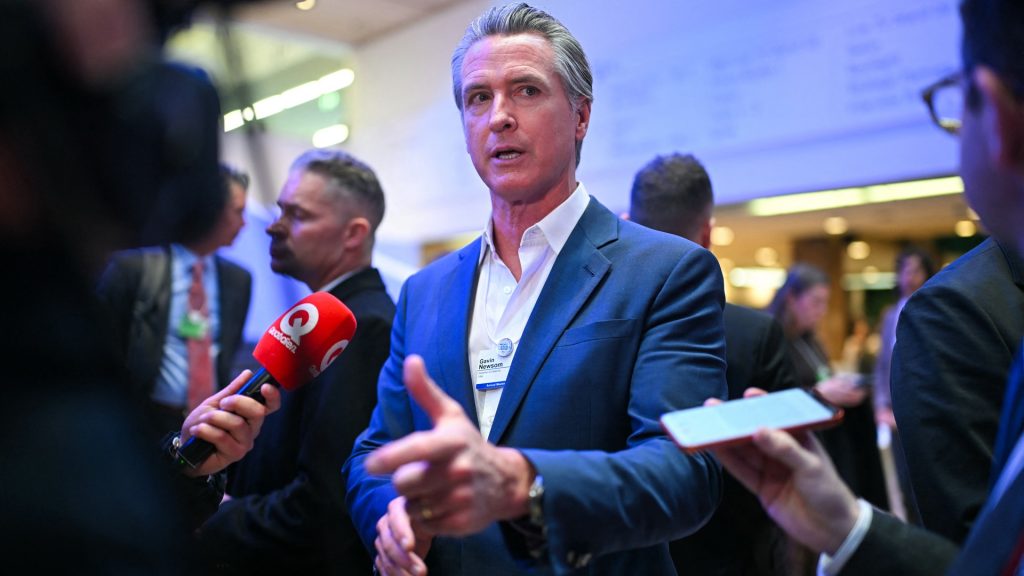
In a press release, Gov. Gavin Newsom said he met with WHO Director-General Dr. Tedros Adhanom Ghebreyesus while at the World Economic Forum in Davos, Switzerland.
“As President Trump withdraws the United States from the World Health Organization, California is stepping up under Governor Gavin Newsom — becoming the first, and currently the only, state to join the WHO’s Global Outbreak Alert & Response Network (GOARN), strengthening public health preparedness and rapid response coordination,” Newsom’s office said in a statement.
What it means
GOARN is a coordinated international network of hundreds of governments, public health institutions, labs, academic centers and more. Their goal is to detect and respond to major public health threats, especially ones that could potentially cross borders.
“[GOARN] basically finds dangerous outbreaks and scrambles resources in a coordinated international way to put the outbreak out,” Lawrence Gostin, a distinguished professor of global health at Georgetown University and director of the World Health Organization Collaborating Center on Public Health Law & Human Rights, told Straight Arrow News. “It’s part of the World Health Organization’s health emergencies program.”
Normally, the U.S. government and especially the Centers for Disease Control and Prevention (CDC) would be the ones participating in GOARN.
“In a sane world, that is what would happen,” Gostin said. “It wouldn’t be California or New York, and it wouldn’t be a red state, blue state thing. It would just be an American thing. But we’re not in a normal world, and the United States has ruptured nearly 80 years of membership in the World Health Organization.”
So, what does this mean from a practical standpoint?
“Let’s say you have an Ebola outbreak in West Africa,” Gostin said. “WHO scrambles its international team of experts to go in, assess and curb the outbreak. Normally, that would be CDC, but in this case, it would probably be the California Health Department or California specialist scientists.”
For the nearly 40 million people who live in California, Gostin said this is good news but still overshadowed by what caused it in the first place.
“Californians should not feel happy,” he said. “I think the fact that California is contributing to international health might make me think if I was a Californian, ‘okay, good, let’s do that.’ But they’re not safer. They’d be much safer if the CDC were doing this than if the California Health Department were doing it.”
US pulls out of WHO
The Trump administration announced the official pullout from the WHO last week. The president had signed an executive order on his first day in office to get that process started.
“Like many international organizations, the WHO abandoned its core mission and acted repeatedly against the interests of the United States,” Sec. of State Marco Rubio and Sec. of Health and Human Services Robert F. Kennedy Jr. said in a joint statement.
They claim WHO obstructed information sharing that could have saved American lives including during the COVID-19 pandemic.
U.S. dollars accounted for the lion’s share of World Health Organization funding. A January 2025 analysis of the group’s financial data by Statista shows the U.S. gave $1.28 billion to the WHO’s budget for the 2022-2023 biennium.
“It’s very harmful to American national interests and security,” Gostin said of the pullout. “WHO has a lot of data, pathogen samples, genomic sequencing data that the United States needs to respond to outbreaks. And our pharmaceutical companies and our national institutes of health need to rapidly develop vaccines and cures, but we don’t have access to that.”
The WHO also issued an official response to the pullout calling it, “a decision that makes both the United States and the world less safe.”
They also specifically responded to U.S. allegations that the WHO did not do its job during the pandemic.
“While no organization or government got everything right, WHO stands by its response to this unprecedented global health crisis,” they said. “Throughout the pandemic, WHO acted quickly, shared all information it had rapidly and transparently with the world, and advised Member States on the basis of the best available evidence.”
America helped found the organization in 1948.
“Harry Truman signed the law that got us into WHO and every single president, Republican and Democrat, has recognized that for all of WHO’s flaws, and there are many, that this was in America’s national interest,” Gostin said. “It’s better to stay and reform than leave and be vulnerable.”
What comes next?
California may not be the last state to go around the federal government. In September last year, California joined Oregon and Washington to create the West Coast Health Alliance.
The goal is to coordinate public health policy independent of Kennedy’s CDC, especially when it comes to vaccinations.
“They don’t trust Secretary Kennedy and the Department of Health and Human Services,” Gostin said.
Even if other states join California in this move, Gostin still said Americans in those states shouldn’t feel great about any of this.
“Normally, I would not want California to represent itself or the United States at the World Health Organization,” he said. “I would want the CDC to do it. But unfortunately, we’re not in that position today for the first time in nearly 80 years.”
The post Can California replace the US in the World Health Organization? appeared first on Straight Arrow News.
Ella Rae Greene, Editor In Chief