NATO chief says Europe is ‘dreaming’ if it thinks it can defend itself without US
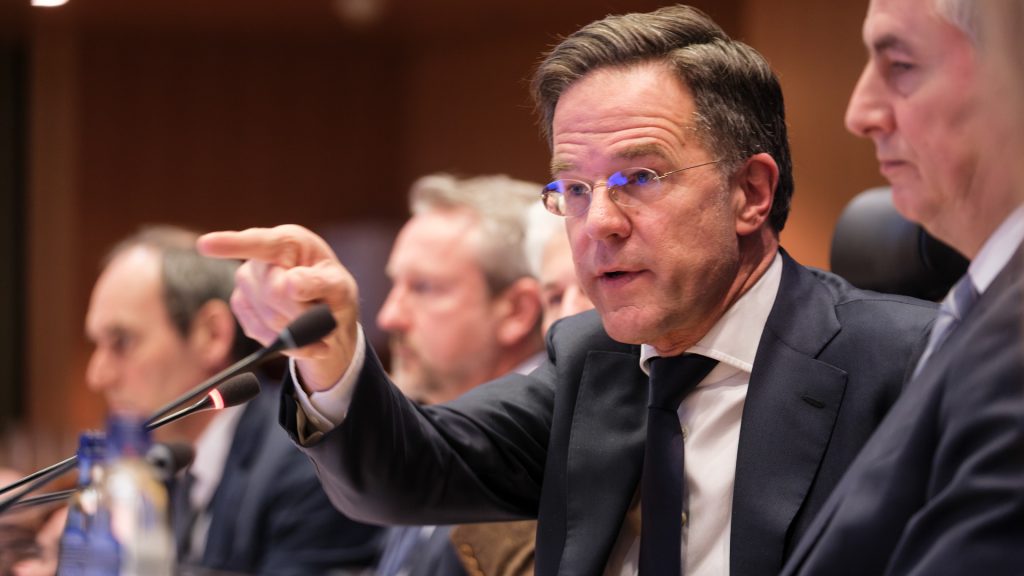
NATO Secretary General Mark Rutte has a reality check for the European Union: stop dreaming. Addressing the European Parliament, Rutte made it clear that Europe simply cannot defend itself without American muscle.
If the EU wants to go it alone, Rutte said, it had better open its wallets. He estimated that each European nation would have to spend 10% of its gross domestic product and develop a brand-new nuclear arsenal to replace the U.S. umbrella — double NATO’s current target.
Rutte’s warning comes amid European concern over President Donald Trump’s bid for greater U.S. influence over Arctic security and Greenland. European officials have questioned whether Trump’s earlier threats to seize Greenland by force undermined faith in NATO’s Article 5 mutual defense guarantee, according to Newsweek.
At the same time, Rutte said Europe and Canada can no longer “conveniently let the United States carry much of the burden” and must rapidly expand their own defense industries and budgets to meet NATO’s higher spending targets.
Spending targets, US nuclear umbrella and Ukraine talks
In his appearance before the European Parliament’s foreign affairs and security committees, Rutte said NATO leaders agreed to invest 5% of GDP annually in defense by 2035 and to “speed up the production and the innovation” of defense systems.
“Five per cent, of course, is a lot, and boosting our industrial base is not easy,” Rutte said. “But here my simple message is, we need to do it, and we need to do it fast.”
He argued that U.S. nuclear forces remain “the ultimate guarantor of our freedom.” He said Europe would “lose” that umbrella if it tried to replace American capabilities with its own, requiring defense spending closer to 10% of GDP and “billions and billions of euros” for nuclear weapons.
“And if anyone thinks here, again, that the European Union, or Europe as a whole, can defend itself without the U.S.,” Rutte said, “keep on dreaming. You can’t. We can’t. We need each other.”
Rutte also defended Trump’s role in pushing allies to spend more, saying the alliance-wide move to 2% of GDP by 2025 and the newer 5% pledge “would never, ever, ever have happened without Trump.”
Newsweek reported that the United States has long supplied NATO’s most expensive defense capabilities, including space-based systems and intelligence.
On Ukraine, Rutte said U.S.-led peace talks are underway, with Trump and senior aides Jared Kushner, Steve Witkoff and Marco Rubio working “to end the bloodshed” with European support. He described a “coalition of the willing” led by the United Kingdom and France to provide security guarantees, including forces, to Ukraine after a peace deal, adding that Europe, Canada and the U.S. have affirmed readiness to back those guarantees.
Some analysts dispute Rutte’s assessment of the peace talks. In its weekly reports on the conflict, the U.S.-based Institute for the Study of War suggests Russia may be continuing the talks merely to buy time, not to reach an agreement to end the fighting.
Rutte said Ukraine has forecast military needs of just over $60 billion from donors in 2026 and pointed to a 90 billion-euro European Union loan package, urging lawmakers to keep spending rules flexible so Kyiv can buy what it needs, including U.S. interceptor missiles.
Ukraine air defenses strain as NATO looks north
Rutte said billions of dollars’ worth of U.S. military hardware is flowing into Ukraine through what he called the PURL initiative, financed by allies, alongside bilateral programs and EU efforts to build Ukraine’s defense industry. He warned that Ukraine’s air defenses are under strain, saying some surface-to-air missile systems and Patriot systems lack enough interceptors as Russia fires “about 15 to 20 missiles” and “hundreds of drones” each night at major Ukrainian cities.
In the Arctic and Greenland, Rutte said NATO and the U.S. are now treating Arctic security as a central concern, particularly the risk that Russia and China could gain more military or economic access. The New York Times reported that Rutte outlined two “work streams”: a NATO-led effort to assume greater responsibility for Arctic defense, and a separate trilateral track among the United States, Denmark, and Greenland, launched in Washington, to address Russia and China’s roles in the region.
Trump said last week that after talks with Rutte, he had a “framework of a future deal” regarding U.S. control of Greenland.
But in his remarks Monday, Rutte stressed he has “no mandate to negotiate on behalf of Denmark,” while Danish officials and lawmakers have called any compromise on Greenland’s sovereignty a “red line,” according to the Times.
Newsweek reported that Trump’s earlier refusal to rule out using force in Greenland had raised doubts about how Article 5 would function if the alliance’s largest member attempted to take territory from another ally.
Next steps on defense spending, interceptors and Greenland
Rutte told lawmakers that ensuring allies “step up and speed up efforts on defence” is NATO’s “absolute priority” as the alliance prepares for its next summit in Ankara, Turkey, in July. He said NATO would fold Arctic requirements into its regular capability targets and continue pressing allies to send more interceptors from national stockpiles to Ukraine, calling that support “the difference between life and death” and crucial to protecting Ukrainian energy infrastructure.
On Greenland, he said future discussions on sovereignty and access would stay in the U.S.-Denmark-Greenland trilateral channel, while NATO focuses on broader Arctic defense planning.
The post NATO chief says Europe is ‘dreaming’ if it thinks it can defend itself without US appeared first on Straight Arrow News.
Ella Rae Greene, Editor In Chief