Will Minnesota’s union-led ‘economic blackout’ break ICE or harm local business?
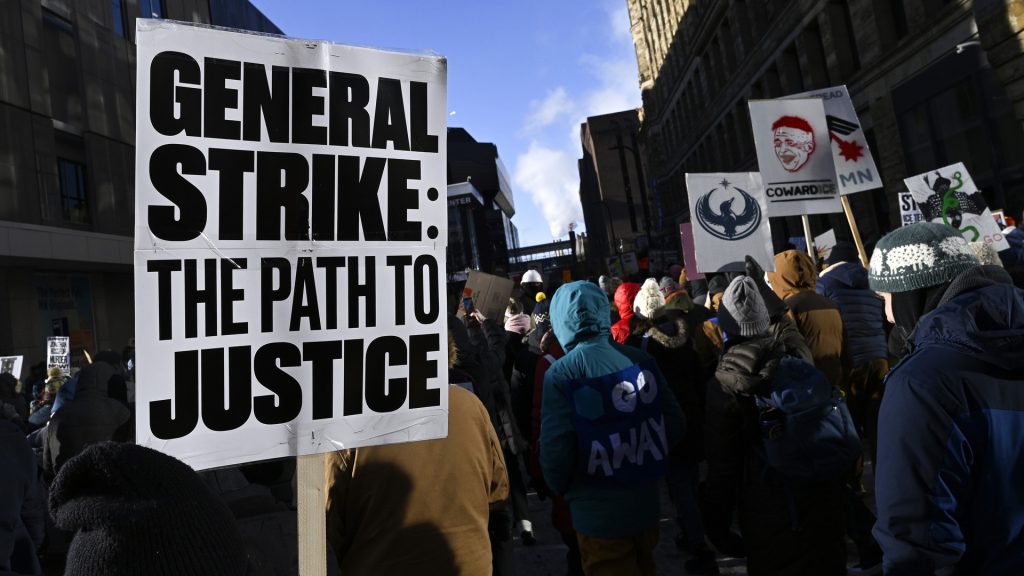
Minnesota is frozen both environmentally and economically as activists and labor unions carry out their 24-hour blackout to protect people at risk of immigration arrests. It remains to be seen if the blackout could bring change, or if it will harm the Great North state’s economy.
A threat of subzero temperatures hasn’t stopped residents from carrying out the ICE Out of Minnesota: Day of Truth and Freedom general labor strike to pressure U.S. Immigration and Customs Enforcement to leave, and to encourage businesses to adhere to the Fourth Amendment, which bars unreasonable search and seizure.
The larger impact would likely be felt on small businesses that are already experiencing sharp declines in sales due to a federal surge of agents in the Twin Cities. North Star Policy Action, a Minnesota-based research institute, found that the surge has caused about 80% of the immigrant-owned businesses in the area to close, causing a 50 to 100% drop in sales.

University of Illinois Urbana-Champaign labor and employment relations professor Emily E. LB. Twarog said a single-day boycott would only affect major companies’ daily sales, rather than overall revenue.
“In economic boycotts of the past, consumers were boycotting specific products such as meat, which had gotten too expensive,” Twarog said. “And the economic impact of that particular boycott was much more pronounced because it was often small businesses — local butchers, Mom and Pop stores — that had to bear the brunt of these consumer protests.”
AFL-CIO Minnesota chapter President Bernie Burnham said in a post on the union’s website that the blackout is a way for people to “call for ICE to leave our state, no additional funding for ICE, legal accountability for ICE’s killing of Renee Good, and for Minnesota’s large corporations to stop cooperating with ICE.”
The corporations at focus are Target, which is headquartered in Minneapolis; Delta Airlines, Enterprise, Home Depot and Hilton Hotels. According to Minnesota-based local news outlet Bring Me the News, hundreds of businesses are closed in support of the protest. That list included bars, breweries, restaurants, bookstores, cafes and coffee shops, nonprofits, museums and others.
“Our neighbors are scared to leave their homes,” The Herbivorous Butcher wrote on Instagram on Jan. 9. “Families are being torn apart. Small businesses are struggling to keep the lights on. Fear has settled into places that should feel safe.”
Multi-day blackouts more successful
Market research company Numerator said in April that the single-day economic blackout that many people participated in February 2025 appeared to have little effect, at face value. But zooming out, the protest resonated more strongly with Black shoppers.
The blackout, organized by John Schwarz, sought to convince people to not shop at major stores — namely Target — he felt were supporting President Donald Trump and to hurt corporations in their financials. Numerator said retailers experienced a dip in sales and trips, but the larger effects weren’t statistically significant. It noted that an encouragement to only buy essential items dampened any forecasted dip in sales.
Schwarz’s boycott did cause Amazon, Target and Walmart to experience a 6.2% drop in sales and 7.5% drop in visitors.
“Black households collectively spent fewer than $1 billion the Friday of the Blackout—a drop of more than $220 million and the only time that’s occurred in the past year,” according to Numerator. “At Amazon, Target and Walmart, penetration among Black shoppers fell 6.6 points, with a 24.9% sales drop and 27% fewer trips.”

One boycott achieved lasting success: Bud Light.
In that, conservatives vowed to never buy the beer after it collaborated with transgender influencer Dylan Mulvaney in 2023. Action was swift as many posted videos shooting at Bud Light packages and urging others to drop the popular beer.
According to Harvard Business Review, Bud Light sales dropped 28% compared to previous years. The company struggled to rebound as sales continued dropping in the eight months leading to the end of Q4 in 2023. But the boycott didn’t stop at sales, they added that retailers began dedicating less space for the beer, which shrunk supply.
“What started as a consumer-led boycott generated downstream adjustments from retailers and distributors,” according to the journal. “These supply-side adjustments hurt the brand’s visibility and further exacerbated the negative impact on Bud Light’s performance.”

Blackout turns to protests
Several groups urged people participating in the blackout to also attend protests throughout the state. One major gathering is planned for Minneapolis’ downtown area.
Some protests have already led to arrests at the two-terminal Minneapolis-St. Paul International Airport in hopes of “shutting it down,” according to an X post by user Brian Allen. The post included a video of people walking around the airport’s departure tunnel and chanting for ICE to leave.
Minnesotans, led by singing clergy, are marching outside Minneapolis–St. Paul airport tonight.
Not even negative 15° can freeze solidarity.
ICE out.
pic.twitter.com/mWP362V0EE
— Brian Allen (@allenanalysis) January 23, 2026
The protest doesn’t appear to have affected security wait times at the airport, as the website stated the maximum wait is 15 minutes for both terminals.
Faith in Minnesota, an interfaith political group that also organized the blackout, said on Facebook the airport is a target as more than 2,000 deportation flights took off on Delta and Signature Aviation planes. In another post, the group claimed that police arrested more than 100 clergy and faith leaders who were praying outside of the departure tunnel.
Outside of the airport thousands marched in Minneapolis to the Target Center, filling the city’s streets and sidewalks as they braved the minus 30 temperature to continue the blackout’s goal in forcing federal immigration officers out of the state. Dan Edmonds told the Minnesota Star Tribune he’s protesting as it’s “the right thing to do” and that others care about their community.
The post Will Minnesota’s union-led ‘economic blackout’ break ICE or harm local business? appeared first on Straight Arrow News.
Ella Rae Greene, Editor In Chief