FCC says late-night and daytime talk shows must give candidates equal time
The 2026 mid-term elections are fast approaching and as candidates start to push harder to win votes, the Federal Communications Commission (FCC) has set out new rules for candidate interviews.
The agency now says any talk show, be they daytime or late-night, that hosts a political candidate must offer equal time to the opposing candidate. This effectively puts and end to an exemption they were given in 2006.
Equal opportunities exemption ends
It started nearly 20 years ago, when the FCC’s Media Bureau granted Jay Leno’s “Tonight Show” the ability to feature Republican Arnold Schwarzenegger during his run for California governor, without also hosting his Democratic opponent. Since then, networks have used that ruling as precedent when it comes to interviewing political candidates.
Federal law states that any FCC-licensed broadcaster that lets a candidate appear on its network must also give “equal opportunities” to all other candidates running for the same office. There is an exemption for “bona fide” news interviews and newscasts.
Even though Leno’s “Tonight Show” was a talk show, not a newscast, the FCC determined the interview with Schwarzenegger counted as a news interview.
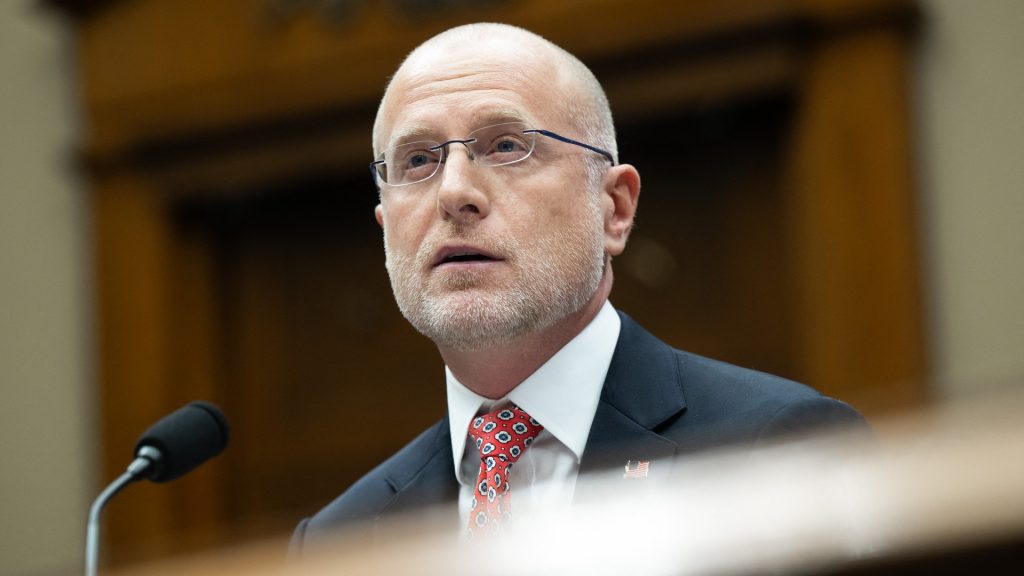
Trump appointed-FCC Chair Brendan Carr is now putting a stop to its continued use as a precedent.
“For years, legacy TV networks assumed that their late-night and daytime talk shows qualify as ‘bona fide news’ programs — even when motivated by purely partisan political purposes,” Carr said in a statement Wednesday. “Today, the FCC reminded them of their obligation to provide all candidates with equal opportunities.”
The FCC’s Media Bureau said it “has not been presented with any evidence that the interview portion of any late night or daytime television talk show program on air presently would qualify” for an exemption.
How Trump factors in
President Donald Trump has been vocal about belief that talk shows — late-night shows, in particular — show anti-conservative bias. He’s had a running feud with late-night host Jimmy Kimmel, blasting not only his show, but others like “The Late Show with Stephen Colbert.”
On Wednesday, the president shared a story by the Los Angeles Times in a post on his Truth Social platform, calling out daytime talk show “The View,” as well.
Trump has many times called for the FCC to revoke broadcast licenses for networks that consistently criticize him. He’s also publicly called on NBC to fire both of its late-night hosts, Jimmy Fallon and Seth Meyers.
In September, Trump lauded ABC’s decision to temporarily take “Jimmy Kimmel Live!” off air over comments Kimmel made about the assassination of conservative activist Charlie Kirk, and lamented the decision to put Kimmel back on air.
Equal opportunity criticism
Carr’s decision is facing both pushback and praise.
Democratic FCC Commissioner Anna Gomez spoke out against the move, calling it an escalation of the FCC’s push to censor and control speech.
“The First Amendment does not yield to government intimidation,” Gomez said. “Broadcasters should not feel pressured to water down, sanitize or avoid critical coverage out of fear of regulatory retaliation.”
Meanwhile, conservative lawyer and head of the Center for American Rights, Daniel Suhr, echoed Trump’s claims, calling out multiple talk shows he says “have consistently featured only Democratic candidates while shutting out Republicans” by name.
“This @FCC notice is an important step toward accountability for these legacy network shows,” Suhr said in a post on X.
The post FCC says late-night and daytime talk shows must give candidates equal time appeared first on Straight Arrow News.
Ella Rae Greene, Editor In Chief