There’s a long history of using the term ‘agitators’ to describe protesters
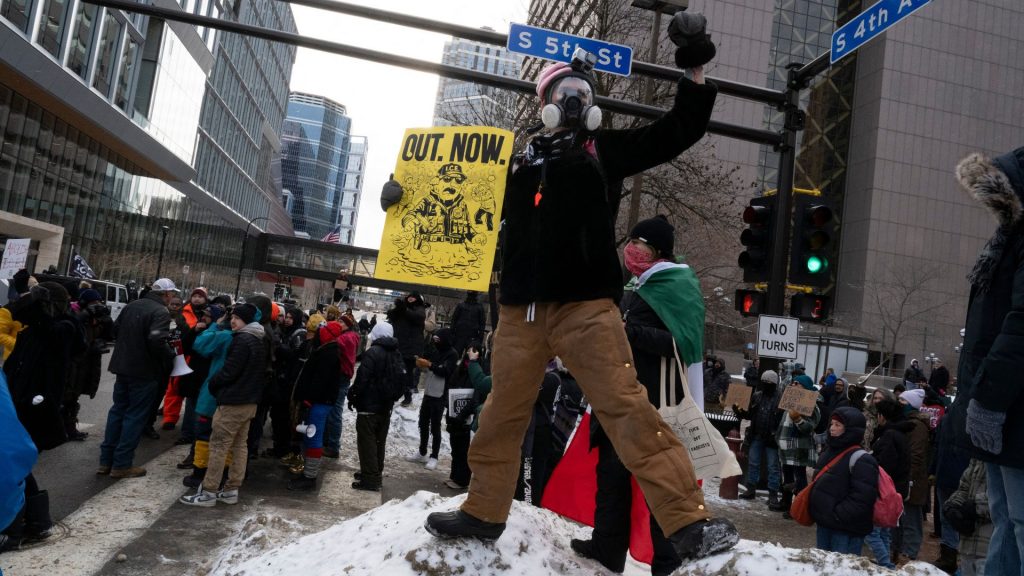
When residents of Los Angeles took to the streets last summer to protest immigration raids, President Donald Trump blamed the unrest on “agitators” as he sent in National Guard troops and Marines to quell the demonstrations.
When Minneapolis erupted over the Jan. 7 killing of Renee Good by an Immigration and Customs Enforcement agent, Trump weighed invoking the Insurrection Act to send federal troops to put down protests he claimed were organized by “professional agitators.”
Trump and members of his administration have repeatedly used the word “agitators” to refer to vocal opponents of the president’s policies, suggesting their protests are not genuine, organic expressions of dissent but rather something ginned up by outside, perhaps nefarious forces. Trump has also claimed, without evidence, that someone is paying protesters in Minneapolis and elsewhere and has vowed to prosecute their financial supporters.
While the word has taken on a new life, “agitators” has a long history in the United States, often used at times of civil unrest to control the narrative of history in the making.
What is an agitator?
Merriam-Webster defines “agitator” as someone “who stirs up public feeling on controversial issues.”
According to Aldon Morris, a professor emeritus of sociology at Northwestern University, slave owners used the word to describe abolitionists, business leaders to demonize labor union organizers and segregationists against Black civil rights activists.
During the late 1960s and early 1970s, the FBI began its Rabble Rouser Index, which it later renamed the Agitator Index, according to CNN. The bureau uses the index to catalog information about dissidents it deemed a threat to order.
The Rev. Martin Luther King Jr. is one of the most well-known figures to whom the government applied the label. In his 1963 “Letter from a Birmingham Jail,” King warned against dismissing those engaged in nonviolent civil disobedience as “agitators.”
“I am further convinced that if our white brothers dismiss as ‘rabble rousers’ and ‘outside agitators’ those of us who employ nonviolent direct action, and if they refuse to support our nonviolent efforts, millions of Negroes will, out of frustration and despair, seek solace and security in black nationalist ideologies — a development that would inevitably lead to a frightening racial nightmare,” King wrote.
During the Black Lives Matter protests in the summer of 2020, Trump used the term “agitators” to describe protesters in Washington, D.C. He also used the word to label protesters during demonstrations in 2025 against the war in Gaza.
Other governments have similarly used the term. Iran’s leader, Ayatollah Ali Khamenei, recently characterized those demonstrating against his regime as “agitators who want to please the American president.”
Why is Trump calling protesters agitators?
Morris told CNN the Trump administration uses “agitator” and other derogatory terms to dispute that most Americans oppose aggressive immigration enforcement.
“President Trump and his administration realize that large segments of Americans are genuinely opposed to their mass deportation campaign,” Morris told CNN in an email. “In this view, these ‘protesters,’ including the slain Renee Good, do not have real problems with the deportation campaign nor its aims and tactics. Rather, the Trump administration claims resistors are being doped by paid outsiders to disrupt legitimate efforts to make America great again.”
A Pew Research poll from December 2025 shows that the majority of Americans don’t support the administration’s deportation efforts. About one-third of respondents said the government should deport all unauthorized migrants, and 51% said the administration should deport some. Overall, though, half of those polled disapproved of the administration’s approach.
Trump’s complaints about “agitators” extend beyond immigration. After the assassination of conservative commentator Charlie Kirk last September, Trump announced that the administration was investigating billionaire George Soros and his Open Society Foundations. Trump alleged Soros and the organizations he supports had engaged in racketeering and had fomented political violence.
“We’re going to look into Soros, because I think it’s a RICO case against him and other people,” Trump said. “Because this is more than, like, protests. This is real agitation.”
However, Trump has refused to use the term “agitator” for another group that engaged in violent protests: his supporters.
Morris noted to CNN that Trump described supporters who stormed the U.S. Capitol on Jan. 6, 2021, seeking to overturn the 2020 presidential election, as “peaceful protesters.”
The post There’s a long history of using the term ‘agitators’ to describe protesters appeared first on Straight Arrow News.
Ella Rae Greene, Editor In Chief