Investigators analyze break in track as 40 confirmed dead in Spain train crash
Spain begins three days of national mourning Tuesday as at least 40 people are now confirmed dead after a deadly train crash Sunday night. Regional authorities said Monday night that 41 people are still hospitalized, 12 of them in intensive care.
Authorities have set up tents to collect DNA samples from families as they work to identify victims and notify relatives. Search and rescue operations are still underway.
It comes as investigators are learning more about what might have caused the deadliest crash in the history of the country’s high-speed rail system.
What caused the disaster?
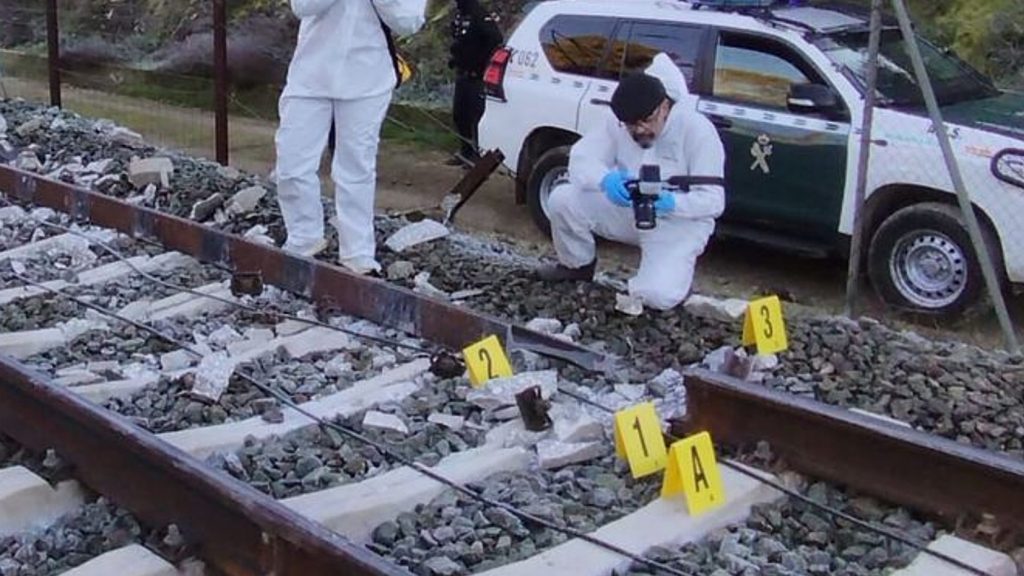
Investigators have found a broken joint in the tracks. It is a key failure point that may have triggered the disaster, according to a report from Reuters.
Reuters reports that a source briefed on the investigation said on-site technicians analyzing the rails identified some wear on the joint between sections of the rail which had “been there for some time.” They say that created a gap between the rail sections that widened as trains continued to travel on the track.

Police say the three rear cars of one train, carrying roughly 300 passengers, jumped the tracks Sunday night and crossed onto the opposite line. It slammed into the front of an oncoming train carrying nearly 200 passengers, causing both trains to flip.
Unbiased. Straight Facts.TM
High-speed rail is globally considered the safest form of ground travel, especially for long distances.
Spanish Transportation Minister Óscar Puente said investigators are trying to determine whether a break in a section of track was “the cause or the consequences” of the derailment, according to a New York Times report. He cautioned that at this time, any theories are just speculation because investigators were still working.
The president of Spain’s Railway Accident Investigation Commission, Íñigo Barrón, said in an interview with Spanish broadcaster RTVE that so far, it does not appear the crash was caused by human error or any problems with the signals.
“What always plays a part in a derailment is the interaction between the track and the vehicle, and that is what the commission is currently [looking into],” he said.
Worst crash in rail line’s history
Spain’s high-speed rail service is relatively young. It took off in 1992, ahead of the Summer Olympics in Barcelona.

This story is featured in today’s Unbiased Updates. Watch the full episode here.
This marks the first deadly crash in the high-speed rail line’s nearly 34-year history.
It is not, however, the worst train crash in Spanish history. In 2013, 80 people were killed when a non-high-speed train derailed.
The post Investigators analyze break in track as 40 confirmed dead in Spain train crash appeared first on Straight Arrow News.
Ella Rae Greene, Editor In Chief