In 2025, Americans ‘detoxed’ from social media. In 2026, they’re quitting altogether
Natalie Trice spent her last holiday season scrolling through Instagram and Facebook, checking notifications and watching other people’s highlight reels. But this time, something clicked.
“I realized how much ‘IG’ and Facebook were taking over my life,” said Trice, founder of Natalie Trice Publicity. “The comparison, the endless ads, the use of pain points to make you think everything is wrong with you, and really the realization that just ‘a quick look’ can take up hours.”
That’s why in 2026, instead of pledging to lose weight or save money, Trice, like many others, made a different kind of New Year’s resolution: stepping back from social media. And like the traditional Jan. 1 pledge to drop a few pounds, a step away from social media can lead to real health benefits.
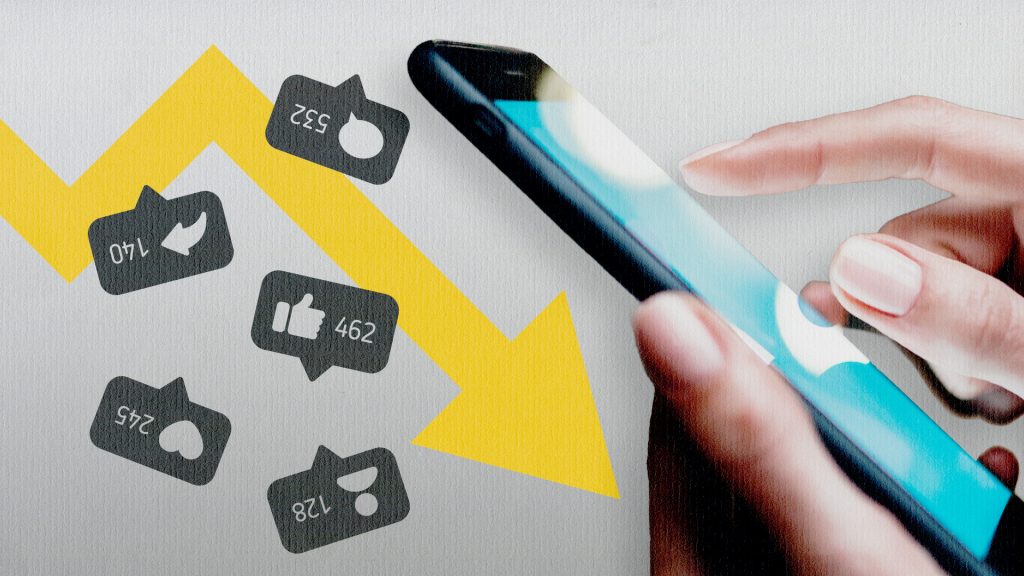
About half of Americans cut back on social media in 2025, according to a recent American Psychiatric Association (APA) poll, and even more plan to dial it down further in 2026.

Why are people canceling their social media accounts in 2026?
Barbara Guimaraes, a licensed therapist and founder of Mental Nesting, has seen the pattern emerge in her practice.
“I keep noticing the same thing: People aren’t just taking short breaks from social media,” Guimaraes told Straight Arrow News. “They’re actually choosing to post less or step back, not as a detox, but as a real boundary.”
It’s not just the hours spent scrolling driving many away, it’s the lack of engagement and a growing feeling that while followers follow, they don’t always offer support.
Allen Dentt noticed something was off with his Instagram account.
“Instagram is weird,” said Allen Dentt. “I have 2,000 followers, yet most of my posts barely crack 20 likes. Stories still pull 50 to 100 views. I’m purging my followers because this clearly isn’t working.”
Ashley Nealy has taken a different approach. Rather than purge the folks who follow her, she’s started limiting what they see.
“I’m out here hiding my likes and that’s embarrassing,” Nealy told SAN. “I don’t need a million followers. I need people who actually care about what I’m building and want to be part of the conversation.”
For many — including Nealy and Dentt — posting to social media simply doesn’t feel “good” anymore. There’s science to explain this, according to Loretta Breuning, founder of the Inner Mammal Institute.

How does social media affect our brain chemistry?
“Our brain releases dopamine when we approach a reward,” Breuning told SAN. “So you go back to social media expecting more rewards, but of course you don’t always get it. Disappointment triggers cortisol, the stress chemical, which wires you to expect disappointment… At some point, you decide that your energy would bring better rewards in some other activity.”
Joel Blackstock, a licensed clinical social worker and clinical director of Taproot Therapy Collective, said this is the case with many of his patients.
“My clients are stepping back not just because of mental health, but because the platform has broken the social contract. They are realizing they are performing labor for an algorithm that gives them nothing in return. The juice is no longer worth the squeeze,” Blackstock told SAN.
Using a New Year’s resolution to tackle mental health has become increasingly common in recent years. According to the APA’s latest poll, 38% of Americans reported their resolution for 2026 would revolve around mental health, up from 33% in 2025 and 28% in 2024. That put mental health resolutions at the third most popular, behind physical and financial well-being.
Andrew Selepak, a media professor at the University of Florida, told SAN there’s no single reason driving the exodus.
“For some, there is still the concern over being judged for what they post. This could be a concern over being cancelled or losing their job for posting something that could offend someone,” Selepak said.
The overflow of artificial intelligence and bot engagement is another major frustration.
“For people who don’t use AI or actually want to see content from their friends and family, social media is becoming a place where most of what you see is not human-generated,” he said.

What does the future of social media look like?
Blackstock agreed. “In 2026 it feels like a dead mall,” he says. “It used to be where the community gathered, but now it is just advertisements and bots.”
That said, social media is not devoid of humans. In fact, the share of U.S. adults who say they use social media continued to grow in 2025, according to the Pew Research Center. Exactly half of U.S. adults reported they use Instagram in Pew’s February 2025 survey, sandwiching it between Facebook at 71% and TikTok at 37%.
Between 2024 and 2024, Pew’s data show all social media apps measured grew in users, with the exception of Snapchat and X, formerly known as Twitter. But a growing trend of setting phones aside in 2026 could change how these numbers look in the future.
“I am taking a step back from social, because of AI slop in my feeds,” said Jessica Randhawa, head chef and founder of The Forked Spoon. “On a business level, I will continue to post real recipes, tested as always, but I know there are diminishing returns in this AI slop world of social media in 2026.”
But the impact of social media extends beyond just mental exhaustion; it’s affecting physical health too. While improving physical fitness tops the list of New Year’s resolutions according to Statista, experts say the mental toll of social media directly impacts physical well-being. Blackstock described what he called “somatic rejection” — a full biological response to digital overstimulation.
“People are leaving because their bodies literally cannot handle the cortisol spikes anymore. They are craving ‘low-dopamine’ living — slower, quieter and private,” he told SAN.
The widespread exhaustion with social media has led even mental health professionals to take a step back.
Dr. Stephanie Steele-Wren, a licensed psychologist, has taken small breaks before, but in 2026, she pledged to completely deactivate her personal social media pages. Her decision, she told SAN, is final.
“I’m opting out,” she said. “Not in a soft, ‘self-care Sunday where I put my phone away for an hour’ kind of way — in a ‘no thanks, I’m reclaiming my brain and existence’ kind of way. I want my creativity back. I want my privacy back. I want to live a life that isn’t constantly being packaged for public consumption.”
The post In 2025, Americans ‘detoxed’ from social media. In 2026, they’re quitting altogether appeared first on Straight Arrow News.
Ella Rae Greene, Editor In Chief