Can a state prosecute a federal agent? Answer divides state, federal officials
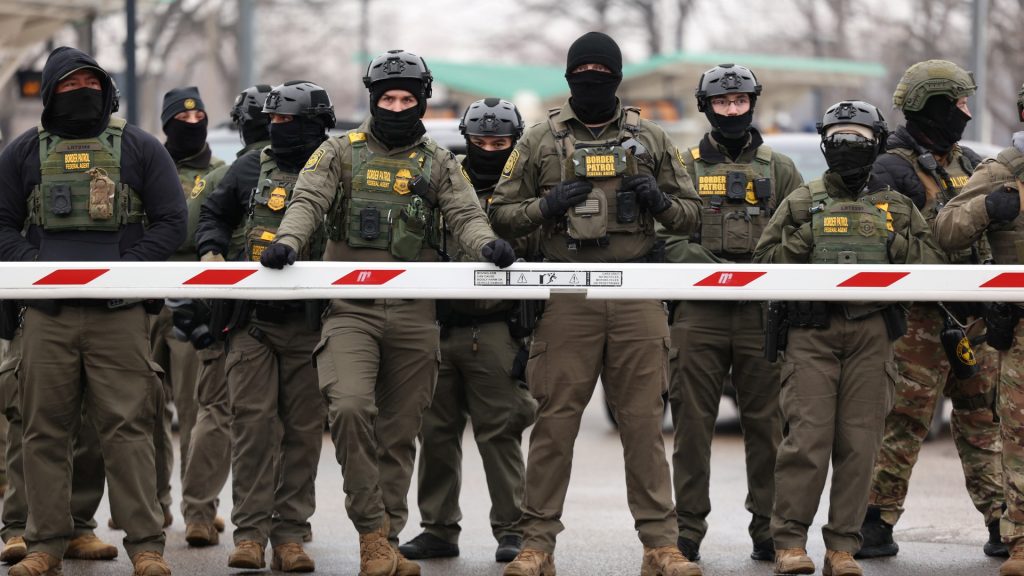
In the wake of controversial shootings by federal immigration agents — one in Minneapolis that killed a 37-year-old woman and another in Portland that left two people wounded — legal and political battles have erupted between federal and state governments over who has investigative jurisdiction. The feds are asserting their exclusive authority, but state officials are fighting back.
More than a century ago, the U.S. Supreme Court ruled that an employee of the U.S. government “does not secure a general immunity from state law while acting in the course of his employment.”
But federal officials, including Vice President JD Vance, disagree — especially when it comes to the Immigration and Customs Enforcement agent who shot and killed Renee Nicole Good last Wednesday.
“You have a federal law enforcement official engaging in federal law enforcement action — that’s a federal issue,” Vance said at a White House briefing. “That guy’s protected by absolute immunity. He was doing his job.”
A day after the shooting, the FBI said it was investigating on its own and would not share case materials with state or local law enforcement agencies.
The idea that one federal law enforcement agency is conducting the only investigation of another federal law enforcement agency erodes public trust, said Minnesota Gov. Tim Walz, a Democrat who has been at odds with the Trump administration.
“It feels now that Minnesota has been taken out of the investigation,” Walz, the Democratic vice presidential nominee in 2024, said. “It feels very, very difficult that we will get a fair outcome. And I say that only because people in positions of power have already passed judgment.”
He said Vance, Homeland Security Secretary Kristi Noem and Vance all “have stood and told you things that are verifiably false, verifiably inaccurate.”
A day later, Portland’s mayor, Keith Wilson, complained that his city’s police department had received no information from federal authorities about the shooting there by Customs and Border Protection officers.
“We know what the federal government says happened here,” Wilson said. “There was a time when we could take them at their word. That time is long past. That is why we are calling on ICE to halt all operations in Portland until a full and independent investigation can take place.”
The two shootings have prompted an urgent debate: Is it in the purview of state authorities to investigate and prosecute federal authorities? Where does the ultimate jurisdiction lie? And who decides?
Federal authority
Federal agents do enjoy certain protections from state prosecutions, with some legal experts and analysts saying that states cannot compel federal officers to comply with state investigations.
Trump’s Deputy Chief of Staff for Policy Stephen Miller suggested in a television interview that ICE officers have no need to worry about consequences for how they respond to protesters.
“Anybody who lays a hand on you or tries to stop you or tries to obstruct you is committing a felony,” Miller said. “ … You have federal immunity in the conduct of your duties.”
However, federal officers do not enjoy blanket immunity from state prosecution. Federal employees, ranging from the mail carrier to an ICE agent, can face prosecution for state crimes committed while performing their duties — for breaking and entering, manslaughter, assault and more.
“[S]tate officials are facing off with the federal government over a centuries-old question: When can states prosecute federal officials for violating state criminal law?” Bryna Godar, a staff attorney at the University of Wisconsin Law School, wrote for Lawfare.
“[F]ederal officers are shielded from state criminal prosecution in some circumstances, but they do not have blanket immunity and never have,” Godar wrote. “In fact, states have a long history of prosecuting federal actors for state crimes, stretching back to at least the early 1800s. Many of these cases arose amid high-tension flashpoints between the federal government and states, including in disputes over slavery, desegregation, and prohibition.”
The Supremacy Clause
When a state prosecutes a federal agent, however, things can get complicated.
Often, federal officers will seek to move their case to federal court, where they can claim they’re immune from state prosecution because of the Supremacy Clause.
Embedded in the U.S. Constitution, the Supremacy Clause declares that the Constitution, federal laws and treaties are the “supreme Law of the Land.” Federal laws supersede state laws, if there is conflict.
After a federal employee’s case is moved from state to federal court, the federal judge will decide whether the state can proceed with its prosecution.
Even if the state’s case does continue, the case typically will be tried in federal court.
If the agent is ultimately convicted by the state, this conviction could not be pardoned by the president, whose pardon authority applies only to federal crimes.
States versus Feds
Throughout history, state and federal authorities have worked together. But in Trump’s second term, the relationship has become strained.
California passed a law last year that bars federal agents from wearing masks while conducting law enforcement operations. Similar proposals are pending in other states and local jurisdictions.
Some state and local officials are openly defiant of the agents carrying out immigration enforcement.
“If any ICE agent is going to come to Philly to commit crimes, then you can get the f— out of here,” Philadelphia District Attorney Larry Krasner said Friday.
“[I]f you do that here, I will charge you with those crimes,” Krasner said. “You will be arrested. You will stand trial. You will be convicted, whether it’s in state or federal court, it’s my office prosecuting it, that’s how the law works, and you will do your time. Because Donald Trump cannot pardon you for a state court conviction.”
In some cases, state attorneys general can open independent investigations to review and get evidence and witness statements. Minnesota officials said they are conducting their own investigation of the Minneapolis shooting, even without federal cooperation.
State officials may also call for federal accountability, using such channels as the media, grassroots outreach or nonprofits.
“The bottom line is that states are legally permitted to prosecute federal officials for state crimes — within limits,” Godar wrote in Lawfare. “The limits stem from the federal constitutional principle that states should not be able to undermine federal policy via targeted criminal prosecutions, a doctrine known as Supremacy Clause immunity. But this principle only applies when federal officials are reasonably acting within the bounds of their lawful federal duties. When federal officials act beyond the scope of their duties, violate federal law, or behave in an egregious or unwarranted manner, state prosecutions can move forward. Even where charges are ultimately dismissed, states have occasionally used prosecutions as a form of pushback against controversial federal actions.”
The post Can a state prosecute a federal agent? Answer divides state, federal officials appeared first on Straight Arrow News.
Ella Rae Greene, Editor In Chief