‘Only time will tell’: Trump says US could be in Venezuela for years
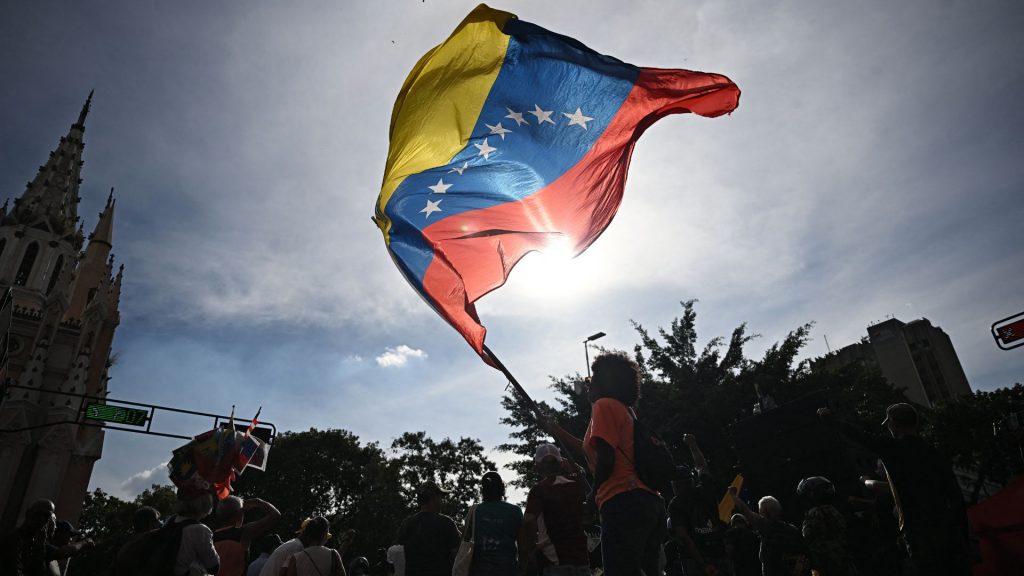
President Donald Trump says the United States could be in Venezuela for years to support his administration’s plan to stabilize the country after President Nicolás Maduro’s capture by U.S. special forces. The comments came during a lengthy interview with The New York Times on Wednesday.
Trump did not give a precise time frame for U.S. intervention in the South American country. But when asked if it could be as long as a year, he said it would be “much longer.”
The Trump administration conducted a successful raid on Maduro’s compound in the early morning on Jan. 3. The raid captured Maduro and his wife and killed about 70 Venezuelans and Cubans, most of whom were the leader’s security guards. Venezuelan officials said the attack did kill civilians but have not released a definite figure.
Trump said the effects of the operation reverberated past the borders of Venezuela. He believes that other leaders in the region will now fall in line with his wishes.
What is Trump’s plan?
The White House hasn’t released many details of what it plans to do in Venezuela. But Trump and other officials have made clear that the country’s largely untapped oil reserves are a major part of their vision.
“We’re going to market the crude coming out of Venezuela,” Energy Secretary Chris Wright said Wednesday, according to CNBC. “Going forward, we will sell the production that comes out of Venezuela into the marketplace.”
Secretary of State Marco Rubio and Defense Secretary Pete Hegseth said they plan to enact their vision for Venezuela in three phases. According to NPR, Rubio said step one would involve “quarantine” for the country, a process that would include selling sanctioned oil and distributing the profits.
“We don’t want it descending into chaos,” Rubio said. “Part of that stabilization and the reason why we understand and believe that we have the strongest leverage possible is our quarantine.”
Rubio said the first step would include the continued seizure of oil tankers. The U.S. has already taken command of at least four oil tankers linked to Venezuela, with special forces most recently seizing the M/T Sophia in the Caribbean.
Step two of the White House’s plan focuses on “recovery,” according to Rubio. He said the U.S. would restore access to the Venezuelan market, stressing that they would ensure the restoration is “fair.”
During this phase of the plan, Rubio said the administration will “begin to create the process of reconciliation nationally within Venezuela.” He says this step would release jailed members of the opposition and grant them amnesty while beginning steps to “rebuild society.”
Neither Rubio nor Hegseth spoke on the third step of the plan, which they called the “transition” step. Rubio did say that some phases would overlap, according to NPR.

How would this impact the US?
Geopolitical experts say the Trump administration’s Venezuelan plan would have wide-ranging effects on the U.S. and Venezuela, both positive and negative.
The White House has pushed a narrative that Venezuela is a leading exporter of narcotics. While it’s true that the country does transport drugs, it’s mainly used as a transit country and isn’t the primary source of the drugs. Colombia manufactures the majority of the cocaine entering the U.S., according to the United Nations.
Many experts agree U.S. involvement in Venezuela would impact the drug trade, at least for a short period, before manufacturers find another way to ship their products. The Drug Enforcement Administration says the majority of narcotics enter the U.S. through the southern border, rather than by sea, the method favored by Venezuelan narco-gangs. It’s important to note that traffickers still transport drugs via boat but they usually dock in Mexico before drug mules drive over the border.
The most significant potential positive outcome for the U.S. is having strategic control of Venezuela’s massive energy resources. Venezuela has the largest proven crude oil reserves in the world and Trump’s plan would give the U.S. leverage over a major global oil supplier.
But Venezuela’s oil production infrastructure has fallen apart. In 2000, the country produced about 3 million barrels of oil per day. Recent output shows the country produces a third of that. Some industry experts predict the U.S. would need to spend up to $70 billion over ten years to get it back to that level.
Venezuela’s oil is also expensive to refine since it’s rich in sulfur and metals. Despite this, the U.S. could get nearly $90 billion a year from Venezuelan crude if and when oil production reaches the levels seen in 2000.
Investing in better oil production isn’t the only cost for Venezuelan stabilization. According to Brookings, a nonpartisan think tank, stabilization in Venezuela would cost at least $50 billion over about two years.
How would Venezuela compare to other US occupations?
The U.S. has led regime changes in other countries before. The most similar to the Venezuela case is Operation Just Cause in Panama, which began in 1989.
Years before, Panama’s General Manuel Antonio Noriega became the country’s de facto leader after his predecessor, Omar Torrijos, died in a plane crash. Noreiga was a CIA operative but used his position of power to traffic narcotics.
In addition to selling narcotics, Noriega also began selling intelligence secrets to enemies of the U.S., like Cuba. Then in 1989, he voided an election that included a U.S.-backed candidate and said Panama was in a “state of war” with the U.S.
President George H.W. Bush authorized the operation and 13,000 U.S. troops invaded Panama, in addition to the about 12,000 already stationed there. Like the operation in Venezuela, Bush did not get congressional approval. However, unlike Trump, he notified congressional leaders shortly after the invasion began, and Congress later approved the operation.
Just over a month later, Noriega surrendered to U.S. troops, who flew him to the U.S. to face trial. He was convicted on drug trafficking charges and sentenced to 40 years in prison. From 1990 to 1994, the U.S. maintained a military presence in the country and exerted strong influence behind the scenes. The U.S. officially handed over control of the Panama Canal in 1999, nine years after troops captured Noriega.
Despite similarities, there are key differences between the two operations. For one, Trump’s operation took only hours and was a limited military operation with fewer than 100 killed and no U.S. deaths. Operation Just Cause, on the other hand, took more than a month and left 23 American service members dead and more than 300 wounded. Panama lost hundreds of people.
While Panama was a major economic target for the U.S., Bush did not say the goal was explicitly economic. Trump has said that about Venezuela, saying they stole oil from the U.S.
The U.S. is at the beginning of another regime change, and it remains to be seen whether the White House’s plan will last as long as previous ones.
The post ‘Only time will tell’: Trump says US could be in Venezuela for years appeared first on Straight Arrow News.
Ella Rae Greene, Editor In Chief