HPV vaccine may prevent cancer even for unvaccinated as CDC amends guidance
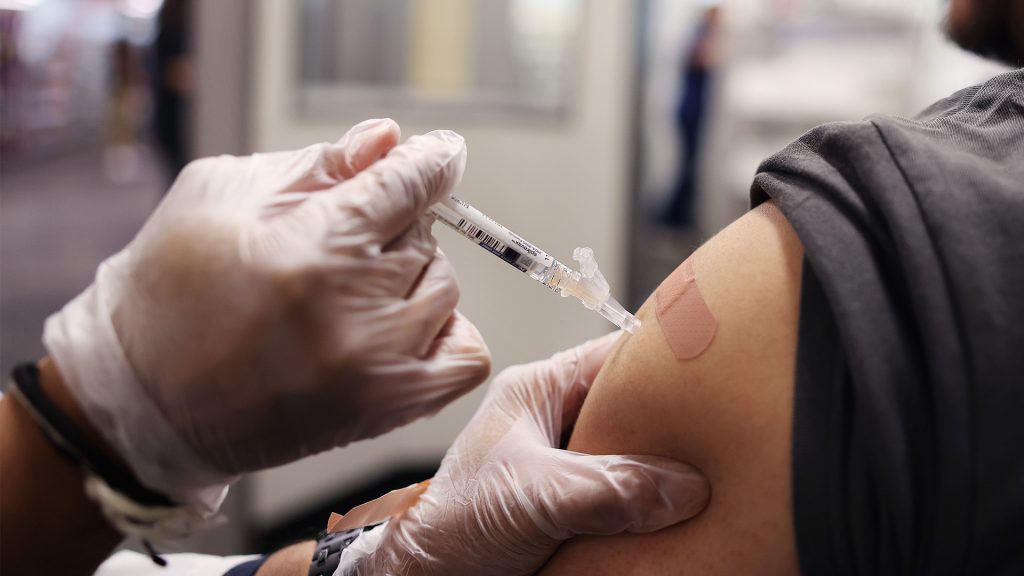
Vaccination against human papillomavirus (HPV) not only protects people who receive the shot but also reduces disease among those who are unvaccinated, a population-wide effect known as herd immunity, Swedish scientists reported in a new study published in the January edition of the medical journal, The Lancet Public Health. These findings come as the U.S. Centers for Disease Control and Prevention announced on Monday sweeping changes to the country’s routine childhood vaccine schedule, including recommending one, instead of two, doses of the HPV vaccine.
HPV is a common viral infection transmitted through sex and skin-to-skin contact. Most infections clear on their own; however, some can cause genital warts and certain types of cancer, most commonly of the cervix but also of the penis, vagina and throat.
More than 10,000 women in the U.S. are diagnosed with cervical cancer every year. About 90% of those cases are linked to HPV. Worldwide, cervical cancer is the fourth leading cause of death among women, causing about 350,000 deaths annually.
The first HPV vaccine was approved for use in the U.S. in 2006. Vaccination coverage rose steadily through 2023, when just over 75% of girls aged 13 to 17 had received at least one dose of the vaccine. The Centers for Disease Control and Prevention (CDC) long recommended two doses of the HPV vaccine for children who started the series before the age of 15, and three doses for older adolescents and adults.
The Sweden study
Researchers in Sweden assessed the population-wide impact of different national HPV vaccination strategies, including opportunistic vaccination — when people are offered a vaccine as part of a routine doctor visit, for instance — subsidized vaccination and school-based immunization programs. The study examined rates of high-grade cervical lesions among more than 850,000 unvaccinated women born between 1985 and 2000 who were exposed to the different vaccination approaches.
Compared with women born in the 1980s and 90s, the incidence of lesions was about 50% lower for unvaccinated women who were born in 1999 or 2000 and came of age when school-based vaccination programs were common and vaccinated more than 80% of girls. Women were considered vaccinated if they received at least one dose of the HPV vaccine; researchers did not obtain data on how many doses each person included in the analysis received.
The finding suggests that HPV vaccination had a herd protection effect, meaning that people who were not vaccinated indirectly benefited from widespread vaccination. Herd immunity is notoriously difficult to prove, due to variations in health status, behaviors and screening practices from one generation to the next, Nicolas Wentzensen and Nicole Campos, two researchers who were not involved in the study, pointed out in a separate commentary.
However, this new study in combination with previous ones “suggest that there is a herd effect on the incidence of cervical lesions,” Wentzensen and Campos concluded. “The magnitude of this effect is difficult to establish,” the researchers also said.
Changes to the US vaccine schedule
CDC Acting Director Jim O’Neill announced earlier this week that the federal government’s health agency now recommends that all children receive vaccines against 11, instead of 17 diseases, including measles, mumps, rubella, polio, pertussis, tetanus, diphtheria, Haemophilus influenzae type B, pneumococcal disease, human papillomavirus and chickenpox.
The seven vaccines the agency no longer recommends for every child include those against respiratory syncytial virus (RSV), hepatitis A, hepatitis B, meningococcal disease, rotavirus, COVID-19 and influenza. The CDC recommended that high-risk children receive these vaccines or that parents and clinicians decide whether to vaccinate on a case-by-case basis.
President Donald Trump signed a presidential memorandum in December directing U.S. health officials to review how other developed countries organize their childhood vaccination schedules and to update the American system to ensure it is aligned with best practices and scientific evidence.
The Department of Health and Human Services did not provide in-depth information about its review.
Physicians and public health researchers across the country criticized the changes.
“I think that a reduced schedule is going to endanger children and lay the groundwork for a resurgence in preventable disease,” said Caitlin Rivers, director of Johns Hopkins’ Center for Outbreak Response Innovation.
“The abrupt change to the entire U.S. childhood vaccine schedule is alarming, unnecessary and will endanger the health of children in the United States,” said Helen Chu, a physician at the University of Washington and former member of the CDC’s Advisory Committee on Immunization Practices (ACIP), an independent group of physicians and public health officials that develops guidance about the use of vaccines.
Is one HPV dose sufficient?
In its recent announcement, the CDC also amended its guidance for the HPV vaccine.
“Recent scientific studies have shown that one dose of the HPV vaccine is as effective as two doses,” according to HHS.
The CDC did not cite any specific studies; however, a growing body of evidence suggests that one HPV dose may be sufficient.
Last month, a large study led by the National Cancer Institute reported that a single HPV vaccine dose provided about 97% protection against the viral disease, about the same as two doses. The study included just over 20,000 teenage girls randomly selected to receive one or two doses of two common HPV vaccines. Five years after vaccination, there was no significant difference in HPV infection rates in the girls who received one dose versus two.
Before Robert F. Kennedy Jr. became the HHS secretary, the CDC’s vaccine advisory board, ACIP, had discussed amending its HPV vaccine recommendations. At an October 2024 meeting, Lauri Markowitz, co-lead of ACIP’s HPV vaccine working group, presented a series of studies from around the world that reported that one dose was just as effective as two or three.
Straight Arrow News reviewed 10 studies: Each found that one dose was as effective as two in preventing HPV infection.
The World Health Organization currently recommends that girls and boys 9 years or older receive two HPV doses. Fifty-eight countries around the world — including Canada and many countries in Latin America and Africa — recommend one dose, while 80 countries — mostly in Europe — recommend two doses of the HPV vaccine.
The post HPV vaccine may prevent cancer even for unvaccinated as CDC amends guidance appeared first on Straight Arrow News.
Ella Rae Greene, Editor In Chief