Greenland is strategic, but taking it by force could be costly for US security
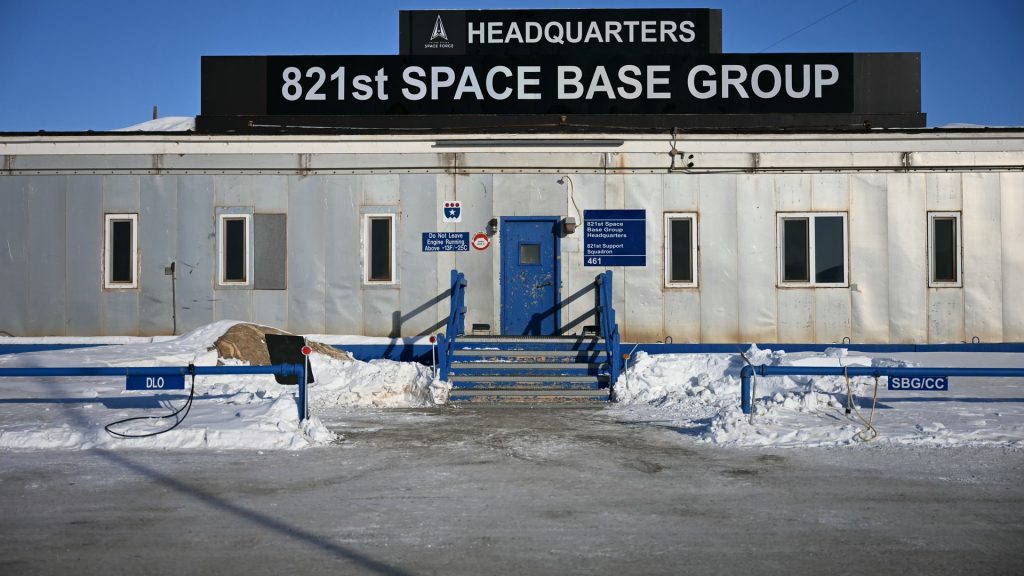
President Donald Trump and his administration continue to openly discuss taking over Greenland, including potential military action to acquire the territory. The plan to overtake an allied nation’s territory is complicated, as are the reasons behind it.
Greenland is a territory of Denmark which is also part of NATO. Secretary of State Marco Rubio said he would meet with officials from Denmark next week about the territory.
Trump has framed it as a national security necessity.
“President Trump has made it well known that acquiring Greenland is a national security priority of the United States, and it’s vital to deter our adversaries in the Arctic region,” Karoline Leavitt, White House press secretary, said. “The president and his team are discussing a range of options to pursue this important foreign policy goal, and of course, utilizing the U.S. military is always an option at the Commander in Chief’s disposal.”
US history in Greenland
“We’ve had a presence there since World War II, especially during the Cold War,” Troy Bouffard, director of the Center for Arctic Security and Resilience at the University of Alaska Fairbanks, told Straight Arrow News.
During World War II, allied forces realized Greenland’s importance on monitoring weather patterns in western Europe.
Denmark fell to the Nazis in 1940 but the U.S., Britain and Canada continued to defend the territory from German control including a 1941 defense agreement that saw America take over responsibility for Greenland’s security.
As the war came to an end and the Cold War began, a more formal agreement was reached. Denmark retained Greenland’s sovereignty as a nation, but America was allowed to build and operate bases there.
It was an important part of the Distant Early Warning Line, or DEW Line, built to detect Soviet bombers and missiles.
As warfare technology changed, so did Greenland’s importance.
“This was because of the way ballistic missiles launched onto the ground, that longer vector over Greenland kind of made it impractical,” Bouffard said. “However, that changed radically with the newer threat that we’re going to be living with for decades, known as the hypersonic cruise missiles.”
Strategic importance
Bouffard said these new missiles can be launched from air, ground or sea.
“It makes the situation of defense far more complex, and it makes the Pituffik Space Force base absolutely critical at this point,” he said.
Vice President JD Vance took a trip to that base early in 2025, where roughly 150 U.S. servicemen are stationed.
The importance of Greenland to U.S. national security is clear and has been for nearly a century. But does that mean the U.S. should take over the territory?
“There’s no benefit whatsoever to acquiring or controlling Greenland at all,” Bouffard said. “We’ve achieved our national security needs that the administration keeps talking about long ago.”
Even as threats change and new threats emerge, Bouffard believes the existing situation should be enough.
“We may have to adapt to the changing threats, but that should not be an issue,” Bouffard said. “Using the existing relationships and processes, I’m 100% certain it would work just fine as is.”
Creating other issues
The leaders of Greenland and Denmark have made it clear they are not interested in the U.S. taking over the territory. The European Union has also come to their defense.
“Allow me to be clear: Greenland belongs to its people,” Antonio Costa, EU Council President, said recently. “Nothing can be decided about Denmark and about Greenland without Denmark, or without Greenland.”
That is a lot of NATO members pushing back the U.S. plan.
“It does add unnecessary problems,” Bouffard said.
As mentioned, part of Greenland’s importance to the U.S. was keeping Russia at bay, but if the U.S. plan to take Greenland causes a rift within NATO, that would surely please Russia and President Vladimir Putin.
“Nothing would please Putin more than to disrupt or cause any issues with NATO and the alliance,” Bouffard said.
Danish Prime Minister Mette Frederiksen said U.S. military action to take over Greenland would be the end of NATO.
“If the United States chooses to attack another NATO country militarily, then everything stops,” Frederiksen said. “That is, including our NATO, and thus the security that has been provided since the end of the Second World War.”
Bouffard said that could cause serious complications for American security.
“It would disrupt security for North America in ways that are very difficult to imagine,” Bouffard said. “The uncertainty of how security would look at that point, even with NORAD maybe being unaffected, the effects are going to be all over the place. So much so, it’s really difficult to assess the expanse of that and what that means.”
The post Greenland is strategic, but taking it by force could be costly for US security appeared first on Straight Arrow News.
Ella Rae Greene, Editor In Chief