Amid charred lots and lumber, Palisades residents share struggles of the rebuild
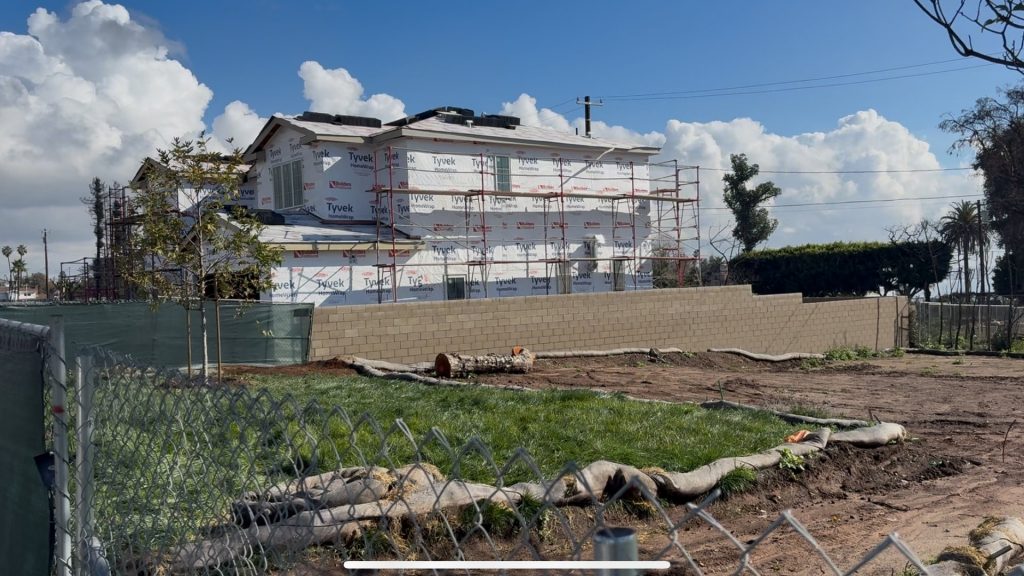
Mark Smith lived in the Pacific Palisades neighborhood of Los Angeles for eight years with his partner, who lived there for more than 40. In an instant, it was gone.
Their home on Michael Lane went up in flames when the Palisades Fire tore through west LA a year ago, and the pain lingers one year later.
Any smell of the few remaining charred vehicles had been tamped down by weeks of heavy rain in the area. Construction workers fill the air with noise. A walk down the street is a sobering contrast of burned-out lots next to homes where lucky residents who avoided disaster continue to live.

“There’s still a lot of anxiety, there’s a lot of anger, there’s deep depression, there’s been a lot of loss,” Smith told Straight Arrow News.
The Palisades Fire killed 12 people and burned more than 6,000 structures. A suspect accused of starting the fire could face the death penalty.
It came at the same time as the Eaton Fire in Altadena, which is about 35 miles northeast of the Palisades. That fire killed 18 people and destroyed more than 19,000 structures.
Back in the Palisades, the rebuild resembles one of the many construction vehicles lurching about the neighborhood: a complex, slow-moving machine with different parts, including the city of LA, insurance agencies and the homeowners themselves rolling along to get the job done.
Some of those entities have made things easier, while others may be slowing things down, according to those SAN spoke with.
Rebuilding the Palisades
The first year of rebuilding the Palisades has been successful at times but also very difficult.
“Recovery is just a slow process, and it never goes as fast as we want it to as disaster survivors,” Matt Talley, former program manager for the Palisades rebuild at AECOM, told SAN.
AECOM is a global infrastructure firm hired by LA Mayor Karen Bass to support the rebuild.
One year since the fires, more than 600 homes have been granted city permits to start the rebuild. More than 100 homes are now under construction.
“It’s gone very well being on the inside, and that might not be the exterior impression, but from a rebuild perspective, for people that have been able to move forward and make decisions, it’s gone very quickly for people getting permits and being able to move forward,” Alison MacCracken, fire rebuild liaison for Crest Real Estate, told SAN.
James Algee manages the southwest region for Carlisle Wide Plank Floors. His company has been on the ground in Palisades, attempting to help homeowners rebuild.
He and his team have been going door-to-door, analyzing each lot’s status in the process of rebuilding.
“We’ve surveyed a little over 1,100 addresses, all in the neighborhoods between the village and the ocean,” Algee told SAN. “Of those, about 220 have some sort of signage on them that reflect an architect or a builder, so some forward-looking behavior. Sixty or so of them have some active construction on it. Of those, nine or so seem like they’re close to being done.”

Smith said the process has been a little easier for those single-family homeowners.
“They’re more in control of their destiny, and many of them have already finished their design and are in the permitting process,” Smith said. “Many have actually started construction. We in the condos and townhomes were more dependent on the actions of others to get started.”
Some of the empty lots have been purchased by investors, but exactly how many remains unclear.
City/state help
Has the city of LA been helpful in the rebuilding process?
That depends on who you ask. Most said the city has done a decent job, but could do more.
“The mayor’s office has placed a very high priority on the recovery of the Palisades,” Talley said. “And have bent over backwards to remove the red tape around permitting.”
Permit approvals are coming in significantly faster than they typically would have before the fires.

“The mayor’s office, as well as the governor’s office, really did come out with the intent to expedite the permitting process,” MacCracken said. “People are getting permits within 30 days.”
Kambiz Kamdar is a Palisades resident and founded Pali Builds, a website that’s tracking the rebuilding, including the wait for issuing of permits. He said that the number of days waiting has been down, but it’s getting worse.
“That’s ticked up,” Kamdar said. “We were seeing 60 days, but now it’s up to 90 days.”
Kamdar argues the city could help more with permitting.
“I do think there’s a lot of things a year later that the city should have either done faster or hasn’t done at all,” Kamdar said. “Mainly waiving the permit fees, which I think is the lowest-hanging fruit that still hasn’t been done.”
The LA City Council would have to suspend the fees but has shown no willingness to do so. Algee thinks the reluctance may be rooted in the belief that everyone who needs to rebuild in the Palisades is very wealthy.
“That misconception of wealth in the Palisades, I think, compounds in a lack of interest or sympathy or empathy from outside groups, as well as the other city council members and the other folks inside of city government, because they’re dealing with their own problems in their own areas, and, like, sending money to the rich folks in the Palisades doesn’t feel right,” Algee said.
Smith said it’s also been very different for those who own single-family homes, as opposed to townhomes like his.
“There’s a lot of chest beating, but no, the city has not been particularly supportive,” Smith said.
Smith said it was a battle just to get his community included in the FEMA-U.S. Army Corps of Engineers program that cleaned off lots for free. Originally, that was just for single family homes.
That program helped homeowners who opted in clear ash, damaged foundation, hazardous materials, and unsafe trees for no charge.
Insurance issues
When it comes to slowing down the rebuild, all fingers pointed to the insurance industry.
“They’ve just been a disaster,” Kamdar said.
Several people mentioned State Farm in particular as making the claims process tougher on homeowners.
“We are committed to continuing being a partner with our customers throughout their recovery,” State Farm said in a statement. “We know there isn’t a ‘quick fix’ after a loss like this. Families need time to make decisions and plan their next steps. We constantly monitor and measure the claims process and make improvements as we go. And if a customer has questions at any point, our claims teams and local agents are ready to help.”
For homeowners, actually getting insurance payouts appears to be the biggest issue.
“It’s been a very much ‘delay and deny’ sort of approach,” MacCracken said.
That’s been the case when asking for money to rebuild or even to pay for a new temporary place to live, she said.
“They’re not making payments promptly, and it causes a disaster survivor a lot of anxiety when they don’t know where they’re going to live tomorrow, and what their ultimate outcome will be,” Talley said.

Smith said he and his partner have moved several times since the fires and are now in an apartment in nearby Marina Del Rey.
“We’ve been displaced,” Smith said.
He pointed to significant insurance issues as well, especially being underinsured to begin with after being moved to the California FAIR plan. That’s a state-run insurance for homeowners who cannot get private insurance.
“Insurance is a major issue for us,” Smith added. “This HOA had $48 million of coverage as of late 2024. A few months before the fire, we were dropped, the reason being that we’re in a high-risk fire zone, and we had to go with California FAIR Plan, which, at the time, was capped at $20 million coverage for the entire association. That’s about a 60% drop in the coverage and that leads to our challenges.”
Others also pointed to homeowners being underinsured as a lingering issue.
“There is a tremendous amount of wealth in the city, but there is a large, large proportion of the former residents of the Palisades who owned an expensive house as a legacy, but don’t have the money to rebuild that house, and they’re underinsured to have any hope of putting a home back onto the piece of land that they still own,” Algee said.
“Homeowners were underinsured, thinking that they could rebuild for a certain cost per square foot, and have come to find out that it’s much more expensive to rebuild,” MacCracken added.

Homeowners are also concerned about finding affordable insurance after they rebuild.
“Insurance seems to be the continuous, big bogeyman in the room that we’re really trying to work with the insurance companies to solve right now,” MacCracken said.
Kamdar echoed those sentiments.
“The insurance companies are just nickel and diming them,” Kamdar said.
Coming together
Despite all the issues over the first year, the Palisades community appears resilient.
“I’ve been amazed at the level of support of the community,” Smith said.
Smith said his neighbor, world-famous classical trumpeter Jens Lindemann, who lost his home in the fire, held a concert on their burned-out block earlier this week.
“We had a couple members of the LA Philharmonic,” Smith said. “We had a world-famous pianist performing ‘Rhapsody in Blue.’ We probably had about 40 people out here standing in the rain.”
Talley, the former program manager for the rebuild, moved his family to the Palisades following the fires because he wanted to help with the recovery effort.
“I saw that this disaster brought the community together,” Talley said. “It made me want to support the community, just because, hearing their stories and listening, it reminded me so much of the need of somebody who’s lost just everything. But they’re looking out for all of their neighbors and making sure that everyone has what they need to survive to the next day. I mean, it’s just really inspiring.”
Others believe the lessons learned in the Palisades could help many in the future.
“I think that the extraordinary experience of rebuilding post-disaster in Los Angeles has been the people who are going through this are so resilient and smart and creative,” MacCracken said. “Between the entertainment industry and the tech industry, the finance industry, the building industry, we have seen solutions that will be born of this disaster that will help the next disaster, whether it’s in Miami in a hurricane or anywhere in the world.”
Moving forward into 2026, everyone expects the rebuilding to continue and hopefully escalate.
“I think we’re going to see a big influx of construction starting in the first half of [2026],” Kamdar said.
In the meantime, those impacted still need to deal with the day-to-day reality of having lost their home. Like Smith and his partner, who no longer have their longtime home nestled in a quiet neighborhood with a beautiful backyard view of lush hills.
“There’s a lot of depression,” Smith said. “There was the initial shock of losing everything we’ve owned. My partner and I were away that morning, couldn’t get back up here, so we walked away from this with basically just the clothes we were wearing and our cars. But you think of the nostalgic items, things that have been passed down through generations that are now gone. We’re late in life. I’m 71, my partner’s older, and she and I just wonder, are we going to be living in apartments for the rest of our life?”
The post Amid charred lots and lumber, Palisades residents share struggles of the rebuild appeared first on Straight Arrow News.
Ella Rae Greene, Editor In Chief