The new rules of clemency: A five-year analysis of the Jan. 6 defendants
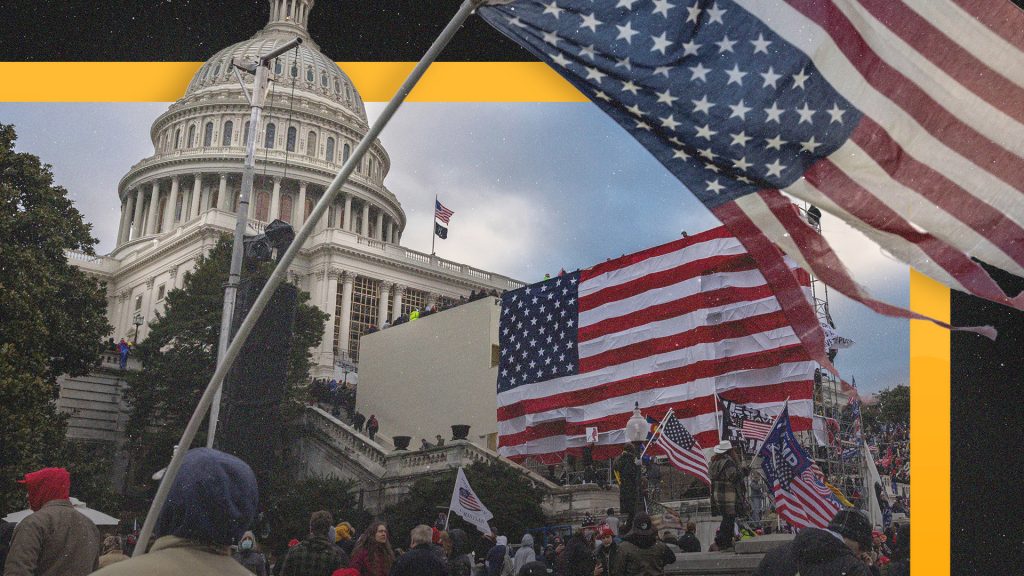
Several people pardoned for their involvement in the Jan. 6, 2021, attack on the U.S. Capitol have been rearrested, charged or convicted of new crimes, according to a Straight Arrow News analysis. Those alleged crimes include making terroristic threats, child sex offenses and a deadly drunk-driving crash.
On Jan. 20, 2025, President Donald Trump issued blanket pardons and sentence commutations for more than 1,500 people tied to the 2021 Capitol riot.
Under Department of Justice clemency guidelines, those seeking clemency are typically expected to wait at least five years after conviction or completing their sentence — whichever is later — before applying for a pardon. However, those guidelines are not binding, according to Peter Katz, a criminal defense attorney who specializes in federal pardons and is a former DOJ trial attorney.
“It is a matter of, let’s see what that person has done over time,” Katz told SAN. “ A year out, how do I know whether this person has become a different person? Have they changed? Are they deserving of it?”
Assessing the risk
Criminal justice experts often evaluate factors such as age, stability and post-conviction conduct when assessing the likelihood that a person will reoffend. That likelihood is then considered in the pardoning process.
“For example, we know very young people, when it comes to brain development, under the age of 25, their brains are not fully developed when it comes to making these decisions,” Katz said. ”So we tend not to punish them [as severely].”
Katz said people who are married and over the age of 40 are also less likely to commit violent crimes.
Trump said the clemencies would end “a grave national injustice that has been perpetrated upon the American people over the last four years and begin a process of national reconciliation.”
Critics argue the pardons reflect a departure from traditional clemency standards that emphasize accountability, rehabilitation and individualized review.
“The pardon was based upon an event rather than based on conduct,” Katz said.
Katz also noted President Joe Biden granted broad pardons for certain non-violent drug offenses, but those actions excluded people convicted of violent crimes — a distinction that was not consistently applied in the Jan. 6 clemencies.
“You’re including people who are a harm to society,” Katz said. “You’re including people who are maybe violent. You’re including people who will recidivate.”
While reviewing criminal justice reports filed after the pardons, SAN found several such instances in which people who had been pardoned were subsequently charged with felonies.
Notable criminal charges filed after Jan. 6.
Andrew Paul Johnson, 44, of Florida, was pardoned for his role in the Jan. 6 attack, during which FBI records show he climbed through a broken window and illegally entered the Capitol.

He pleaded guilty to violent entry and disorderly conduct on Capitol grounds, for which he was later pardoned.
In October 2025, nearly nine months after his pardon, Johnson was charged in Florida with molesting two children, one as young as 11. According to police reports first obtained by “The Intercept,” Johnson falsely claimed he was entitled to $10 million as part of his clemency; police allege he used that claim in an attempt to bribe one of the victims into silence.
According to affidavits, Johnson’s former girlfriend discovered he had been sending her son images of girls accompanied by sexual comments. The child later reported being molested multiple times over a six-month period in 2024.
Investigators say Johnson later mailed the child an iPhone so they could communicate secretly.
A separate police report alleges Johnson also molested a 16-year-old girl. Johnson has pleaded not guilty and is scheduled to appear in court later this year. His attorney did not respond to SAN’s request for comment.
Christopher Moynihan, of New York, had previously been sentenced to 21 months in prison for obstructing the Jan. 6 joint session of Congress, a conviction later covered by Trump’s pardon.

Moynihan was arrested in October 2025 and charged with making a felony terroristic threat against U.S. Rep. Hakeem Jeffries.
According to the criminal complaint, Moynihan sent a text message stating: “Hakeem Jeffries makes a speech in a few days in NYC. I cannot allow this terrorist to live… I will kill him for the future.”
Moynihan entered a plea of not guilty in October.
SAN left a message with the Duchess County Public Defender’s office, which represents Moynihan in his most recent case. The office did not respond.
Kyle Travis Colton, of California, illegally entered the Capitol on Jan. 6, 2021, according to an FBI affidavit that includes video showing him confronting law enforcement officers inside the rotunda.
He pleaded guilty to disorderly and disruptive conduct in a restricted building or grounds and was later pardoned on Jan. 20, 2025. Six months later, he was convicted of receiving child pornography and was sentenced to 6 years and 8 months in prison.
The allegations occurred after the Jan. 6 attack, between July 2022 and December 2023.
According to a federal indictment, investigators discovered numerous images and videos depicting the sexual abuse of children stored on Colton’s electronic devices.
Court documents indicate some of the material was saved to his desktop and bookmarked from known child exploitation websites. His attorney did not respond to SAN’s request for comment.
Emily Hernandez, of Missouri, was sentenced to 10 years in prison in January 2025 for a deadly drunk-driving crash that occurred in 2022.

According to local news reports, Hernandez drove the wrong way on a highway and hit another vehicle head-on.
The passenger in the other vehicle was killed, and Hernandez’s husband was hurt.
Hernandez traveled to Washington, D.C., on Jan. 6, 2021, and was accused of illegally entering the Capitol, as well as then-Speaker Nancy Pelosi’s office. She was photographed smiling and posing with a broken piece of Pelosi’s nameplate.
Hernandez received Trump’s pardon for her Jan. 6 offenses on Jan. 20, 2025, days before she was formally sentenced in the unrelated DWI case. Her attorney did not respond to SAN’s request for comment.
Clemency granted despite pending felony cases
Several people involved in the Capitol attack had pending or unresolved felony cases for unrelated crimes when they received clemency. Typically, Katz said, this would exclude someone from consideration.
“[They] wouldn’t even get past the initial analyses,” Katz said. “Obviously, for this administration, they felt whatever had happened on Jan. 6, it was pardonable, it didn’t matter.”
The White House did not respond to SAN’s request for comment.
Andrew Taake, of Texas, had previously been investigated in 2016 for charges related to soliciting sexual conduct from someone he believed to be a minor online.

Taake has pleaded not guilty, and the case remained unresolved at the time of the Capitol riot.
An FBI affidavit states Taake illegally entered the Capitol on Jan. 6, 2021, and participated in confrontations with law enforcement. He later pleaded guilty to obstructing law enforcement officers during the riot.
His Jan. 6 conviction was covered by Trump’s pardon, but the earlier solicitation case is unrelated and still pending. Taake’s attorney did not respond to SAN’s request for comment.
David Paul Daniel, of North Carolina, was indicted in October 2024 on federal charges of possessing child sexual abuse material and of sexual exploitation of a minor. He is accused of committing the crimes years before the Capitol attack.

An application for a criminal complaint obtained by SAN reveals law enforcement seized Daniel’s electronic devices during a search connected to his Jan. 6 case and later discovered images consistent with child sexual abuse.
Daniel has pleaded not guilty to the charges and remains in federal custody. The case is ongoing, and no trial date has been set.
An FBI affidavit states that Daniel illegally entered the Capitol on Jan. 6, 2021, and includes images of him on Capitol grounds pushing against police officers attempting to secure a Senate entrance.
While representing himself, Daniel pleaded guilty to assaulting, resisting or impeding law enforcement. His conviction was later covered by Trump’s pardon, but the child exploitation charges are unrelated and remain active. His attorney did not respond to SAN’s request for comment.
The new age of clemency
It’s unusual for someone who has additional felonies to receive a pardon, Katz told SAN. Due to the legal consequences imposed on a person with a felony record, pardoning someone for an unrelated crime offers little value aside from keeping them out of jail.
“It’s not going to benefit them,” Katz said. “It’s not going to affect their life in any way.”
Throughout history, the Office of the Pardon Attorney has been responsible for evaluating petitioners seeking clemency, before sending candidates to the White House.
But clemency scholars and criminal defense attorneys, like Katz, have long criticized that process, describing it as too bureaucratic.
“To be honest, that system was very difficult to navigate,” Katz told SAN. “First to meet the requirement, then consideration and ultimately clemency or pardon.”
Under Trump’s new model, the clemency process appears to be streamlined by limiting the Office of the Pardon Attorney’s involvement.
“In the last 11 months, the traditional path has given way to one that is much more geared towards getting the ear of the right person,” Katz said. “It’s really about just getting the president’s ear, and if he wants to [grant clemency] he will, and if he doesn’t he won’t.”
The new system isn’t necessarily worse than the traditional pardoning system, he said.
“I think it’s a mixed bag,” Katz said. “The old system was not a great system by any stretch. The new system, some people feel like, ‘OK, if you can get to the right person, you have a chance.”
The evolving role of the Office of the Pardon Attorney
Getting to the right person can be its own challenge — especially for attorneys like Zachary Newland, a federal criminal defense lawyer who doesn’t consider himself a “Washington insider.”
“I don’t think they’re really running it through the Pardon Attorney Office at all,” Newland said. “I don’t really know what they’re doing at this point for most of these.”
The departure from utilizing the Office of the Pardon Attorney by traditional standards has given Newland pause when taking on new cases.
“Even if they’re meaningful, it’s hard to say, ‘Pay me money,’ because it sure seems like the only way to do it is through personal connection.”
The new model for granting clemency has also changed the way Newland analyzes the cases he does take on. In the past, Newland evaluated potential clients’ criminal history. He asked himself: “What have they done post conviction? Are they someone with a spotless record? Are they someone who was prosecuted for a non-violent crime?”
Now, Newland adds new variables as he runs his equation.
“There is still that analysis, but also now I’m usually trying to do an analysis on, if I want to present this case to the Trump White House, how does this case fit into the broader narrative of the weaponization of the Justice Department,” Newland said.
Then Newland tackles the final variable: How he expects the president, as well as his supporters and detractors, to respond.
It has required a significant shift in mindset and approach. But, Newland said, there is a silver lining: Like Katz, he is encouraged by Trump’s renewed attention to pardon power.
Clemency scholars have long criticized presidents for failing to utilize their constitutional authority to grant clemency more broadly. This administration needs no such critique.
“I think there’s a general sense among the criminal defense community that anything is possible,” Newland said.
Abigail Jackson, spokesperson for the White House, declined answer questions from SAN about the role of the Office of the Pardon Attorney under the Trump administration.
When asked if Trump takes the risk of recidivism into account when granting clemency, Jackson also declined to answer.
“The media’s continued obsession with January 6 is one of the many reasons trust in the press is at historic lows — they aren’t covering issues that the American people actually care about,” Jackson said in the statement.
“President Trump was resoundingly reelected to enact an agenda based on securing the border, driving down crime, and restarting our economy — the President is delivering.”
Jackson deferred SAN to previous comments made by Karoline Leavitt, White House press secretary.
“When it comes to pardons, the White House takes them with the utmost seriousness and the President understands the responsibility that he has as President to issue pardons to individuals who are seeking that,” Leavitt said. “That’s why we have a very thorough review process here that moves with the Department of Justice and the White House Counsel’s office. There’s a whole team of qualified lawyers who look at every single pardon request that ultimately make their way up to the President of the United States. He’s the ultimate, final decision maker. And he was very clear when he came into office that he was most interested in looking at pardoning individuals who were abused and used by the Biden Department of Justice, and were over prosecuted by a weaponized DOJ.”
The future of pardons
Citizens for Responsibility and Ethics estimates that at least 33 people pardoned for crimes on Jan. 6 have since been charged or convicted for additional crimes, though the final tally is unclear.
It is also unclear what will guide the president’s future clemency decisions.
Mark Osler, a law professor at the University of St. Thomas School of Law and a nationally recognized expert on clemency, previously told SAN that a president’s use of pardon power often reflects personal values.
“We’re seeing a huge number relative to other presidents of people accused of financial crimes and bribery and other types of white-collar crimes,” Osler said.
When SAN asked the White House last month whether Trump plans to grant future clemency based on traditional standards of mercy, the White House did not respond.
Newland now questions the necessity of the Office of the Pardon Attorney.
“If we’re staffing out of the White House, staff it out of the White House,” Newland said. “If I had it my way, I would think there would be a complete overhaul of the Office of the Pardon of the Attorney.”
The post The new rules of clemency: A five-year analysis of the Jan. 6 defendants appeared first on Straight Arrow News.
Ella Rae Greene, Editor In Chief