Maduro says he was ‘kidnapped’ by US; 2M more Epstein files under DOJ review
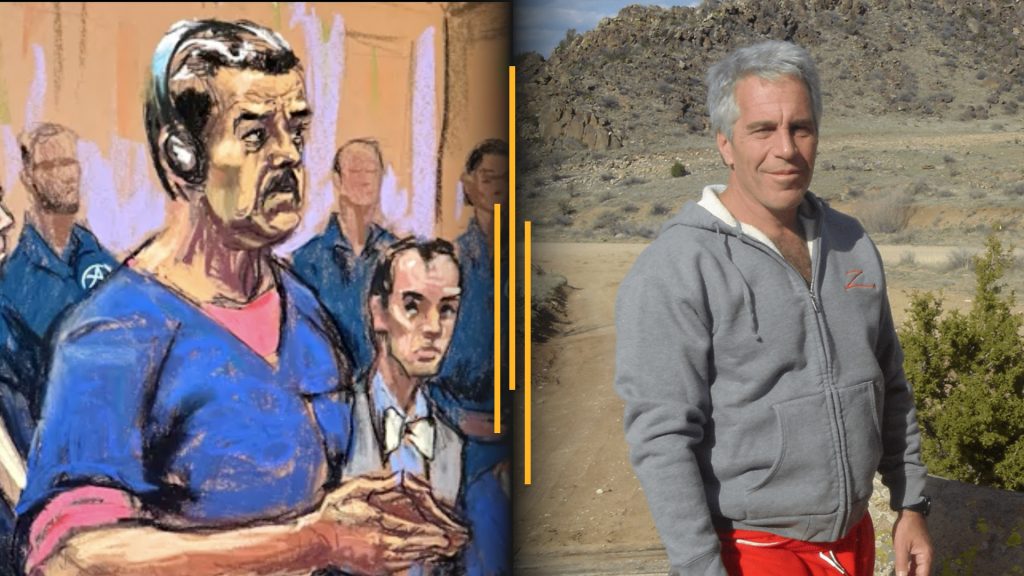
Nicolás Maduro and his wife faced federal court charges including drug trafficking and gun crimes. During his court appearance, Maduro wore a jumpsuit and shackles, asserting he was kidnapped rather than legally detained.
Plus, American forces are preparing to seize a Venezuelan oil tanker accused of evading U.S. sanctions.
And the CDC is rolling out new childhood vaccine recommendations, scaling back universal guidance on shots like flu and hepatitis. But some doctors warn that the changes could raise risks and create confusion.
These stories and more highlight your Unbiased Updates for Tuesday, January 6, 2026.
Maduro faces judge, alleges US ‘kidnapped’ him
Captured Venezuelan President Nicolás Maduro made his first appearance in court Monday, claiming he and his wife were “kidnapped” by the United States. He pleaded not guilty in Manhattan to federal drug‑trafficking and other charges, telling the judge he is “a prisoner of war.”

Maduro and his wife, Cilia Flores, were captured by U.S. forces Saturday morning at their home in Caracas. Both face charges of conspiracy to import cocaine and weapons offenses.
Despite the U.S. military operation, President Donald Trump insists the U.S. is not at war with Venezuela, telling NBC News on Monday:
“We’re at war with people who sell drugs. We’re at war with people who empty their prisons into our country and empty their drug addicts and empty their mental institutions into our country.”

Venezuela’s vice president, Delcy Rodríguez, was sworn in as acting president on Monday. Still, Trump and senior officials from his administration claim that the U.S. is now de facto in control, with Trump having final authority.
Secretary of State Marco Rubio and other senior officials briefed members of Congress Monday on the operation as concerns grow over the legal basis and the long‑term plan.
Democrats raise concerns about the legality of forcibly removing a foreign leader without congressional approval, while Republicans commend the action as a vital national security measure.

“The U.S. military operation in Venezuela was a decisive and justified action. Nicolás Maduro is responsible for the deaths of untold thousands of Americans, after years of trafficking illegal drugs and violent cartel members into our country. This is undisputed and everybody agrees with it,” House Speaker Mike Johnson said.
“Despite the claims by some of my colleagues, under the War Powers Act, there is no requirement for prior congressional approval or prior notification,” Johnson said.

Senate Minority Leader Chuck Schumer said the briefing left far more questions than it gave answers.
“Their plan for the U.S. running Venezuela is vague, based on wishful thinking and unsatisfying. I asked for — I did not receive — any assurances that we would not try to do the same thing in other countries,” Schumer said.
And the rhetoric may not stop with Venezuela.


Trump has suggested Colombian President Gustavo Petro, whom he accuses of ties to drug cartels, could be next. Petro has denied those claims.
Trump also appeared to threaten Venezuela’s longtime ally, Cuba.
Meanwhile, Mexican President Claudia Sheinbaum is downplaying any possibility of U.S. military action against Mexican drug cartels, calling the idea unrealistic.
US moves to seize Venezuelan oil tanker
American forces are preparing to intercept a sanctioned oil tanker that has been evading U.S. authorities since last month, according to a CBS News report.
The ship, now named Marinera, was formerly known as Bella 1 and has a history of carrying Venezuelan crude oil. The tanker has been on the run since mid‑December as the U.S. tightens its pressure campaign against Venezuela following Maduro’s capture.
U.S. officials told CBS that the preference is to seize the ship — not sink it — as in last month’s operation that ended with American forces boarding and taking control of another oil tanker from Venezuela.

Intelligence officials informed the outlet that before Maduro’s capture, Venezuelan authorities considered stationing armed personnel on tankers, disguised as civilians, and deploying portable air-defense systems.
The Marinera has since changed its name and its flag. It’s now registered in Russia and en route to Europe.
The Irish Times reported that U.S. surveillance aircraft have been tracking the ship as it approaches Irish waters and that Russia has asked the U.S. to stand down.
The White House hasn’t commented. If the Marinera is seized, it would be the third Venezuelan oil tanker taken by the U.S. since this campaign began.
CDC narrows childhood vaccines amid new risk warnings
The Trump administration is making a major change to how and when American children are vaccinated.
The CDC is overhauling the U.S. childhood immunization schedule, recommending fewer routine shots for most children and shifting several vaccines to case‑by‑case decisions between parents and doctors.
Health officials say core vaccines — including measles, polio and HPV — remain in place. But others, such as the flu, COVID, RSV and certain hepatitis and meningococcal vaccines, will no longer be universally recommended for healthy children.
Instead, those decisions move to what the government calls “shared clinical decision‑making,” meaning a doctor’s visit is now required to obtain them.
Health and Human Services Secretary Robert F. Kennedy said the change brings the U.S. closer to other developed countries and helps rebuild trust. But many public health leaders are sounding the alarm.
In a statement obtained by The Washington Post, former CDC Director Tom Frieden said:
“Upending the childhood vaccine schedule leaves American children at much greater risk of contracting hepatitis, rotavirus, and other preventable infections. This is a giant step backward.”
The change comes as flu cases rise nationwide, with the CDC reporting multiple pediatric deaths this season.
2M Epstein files still unreviewed as DOJ falls behind
The Justice Department claims it’s holding more than two million records tied to Jeffrey Epstein, but has reviewed less than one percent of them to date. Congress set a Dec. 19, 2025, deadline for the release of all files connected to the accused sex trafficker.
The U.S. attorney for the Southern District of New York told a federal court Monday that about 400 Justice Department lawyers — from Washington, New York and Florida — are now assigned to the review.
Dozens of FBI analysts are also involved, including specialists trained to handle victim-related material. The DOJ says the work is being done to comply with the Epstein Files Transparency Act, which Congress passed last year. However, there is still no timeline for when the review will be complete.
Officials say many of the records may be duplicates, adding to the volume without necessarily adding to the content.
So far, the DOJ has released more than 12,000 documents totaling about 125,000 pages on its public Epstein Files website.
Democrats release new Jan. 6 reports on post‑pardon crimes, DOJ turmoil
Tuesday marks five years since the Jan. 6, 2021, attack on the U.S. Capitol, and Democrats on the House Judiciary Committee have released a new assessment of what has happened since. The reports focus on two areas: Trump’s sweeping pardons for Jan. 6 rioters and what followed.
The committee says those pardons came with consequences.
Citing data from Citizens for Responsibility and Ethics in Washington, the report finds that more than 30 pardoned rioters have since been charged, arrested or convicted of new crimes, including violent felonies and threats against lawmakers.
Democratic Rep. Jamie Raskin called the pardons “a nightmare for public safety,” warning that they’ve created what he describes as a private militia of proven street fighters.
The report also tracks how figures tied to Jan. 6 and “Stop the Steal” have moved into positions of power, including roles within the Justice Department. It points to what has not yet happened: the display of a congressionally mandated plaque honoring the officers who defended the Capitol, which remains in storage.
With the official plaque still in storage, Democrats are taking matters into their own hands, installing replicas of the plaque outside their office doors to honor the police officers who defended the Capitol.
This morning, we’re going deeper.
A Straight Arrow News investigation is now available and examines what happened after the Jan. 6 pardons, including who reoffended, who was rearrested and how the rules of clemency changed.
Check out that report from SAN investigative reporter Jessica McMaster on our site or app right now.
Grammys bring back ‘Best Album Cover’ after 50 years
The Grammys are less than a month away, and this year the Recording Academy is bringing back a category that hasn’t been seen in half a century. The award for Best Album Cover is returning after 50 years. Album art has recently been folded into the Best Recording Package category, but it will now receive its own recognition again.
This year’s nominees are Wet Leg for Moisturizer, Bad Bunny for Debí tirar más fotos, Tyler, the Creator for Chromakopia, Perfume Genius for Glory, and Djo for The Crux. The award goes to the album’s art directors, though most of the artists are also listed as nominees, except for Perfume Genius.
Recording Academy CEO Harvey Mason Jr. said bringing back the category is about recognizing the power of album art, even in a digital-first era.
More from Straight Arrow News:

The new rules of clemency: A five-year analysis of the Jan. 6 defendants
Several people pardoned for their involvement in the Jan. 6, 2021, attack on the U.S. Capitol have been rearrested, charged or convicted of new crimes, according to a Straight Arrow News analysis. Those alleged crimes include making terroristic threats, child sex offenses and a deadly drunk-driving crash.
On Jan. 20, 2025, President Donald Trump issued blanket pardons and sentence commutations for more than 1,500 people tied to the 2021 Capitol riot.
Under Department of Justice clemency guidelines, those seeking clemency are typically expected to wait at least five years after conviction or completing their sentence — whichever is later — before applying for a pardon. However, those guidelines are not binding, according to Peter Katz, a criminal defense attorney who specializes in federal pardons and is a former DOJ trial attorney.
“It is a matter of, let’s see what that person has done over time,” Katz told SAN. “ A year out, how do I know whether this person has become a different person? Have they changed? Are they deserving of it?” Read the full story now>
The post Maduro says he was ‘kidnapped’ by US; 2M more Epstein files under DOJ review appeared first on Straight Arrow News.
Ella Rae Greene, Editor In Chief