Federal assistance for child care is frozen after influencer’s viral video alleges fraud in Minnesota
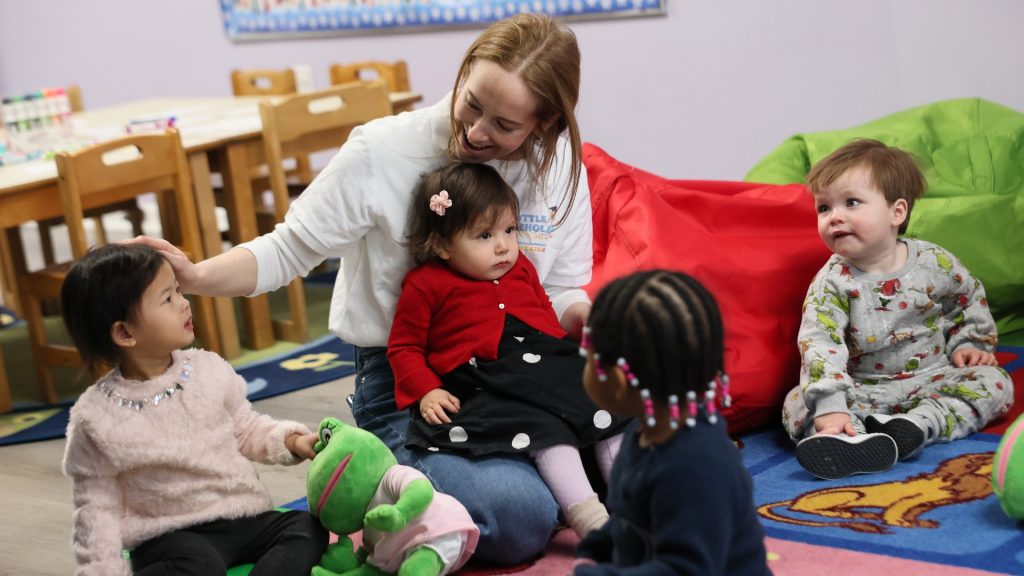
Federal subsidies for child care payments are frozen while the Trump administration hunts for alleged fraud in the program. The funding pause was a response to conservative influencer Nick Shirley’s viral video on purportedly fraudulent day care centers in the Twin Cities raised concerns — and disbelief — online.
Even though Shirley’s video claimed fraud only in Minnesota, the U.S. Department of Health and Human Service’s Administration for Children and Families will withhold funding to all 50 states that is used to help families offset the cost of care, HHS Deputy Secretary Jim O’Neill announced on X. Freezes could be lifted if states provide “justification and a receipt or photo evidence” before funds are redistributed.
O’Neill also said the department has launched a hotline to field reports of fraud. Vice President JD Vance applauded the move on X, saying: “Many more to come.”
“Turning off payments and forcing verification before taxpayer money flows out the door is one of the most important steps we can take to end the fraud in Minnesota,” Vance wrote.
The funding freeze follows President Donald Trump’s attacks on Somali Americans living in Minnesota, particularly Democratic Rep. Ilhan Omar, who was born in Somalia. Trump has amplified claims of widespread fraud by Somali Americans who operate day care centers and other safety net programs.
But problems in those programs have been public knowledge for more than a decade and have been the subject of extensive local and national news coverage.
State officials have tried to rein in fraud and abuse, and since 2021, a federal investigation has resulted in charges against at least 92 people. About 60 have been convicted or have pleaded guilty, while most of the rest are awaiting trial. Many of the defendants are Somali Americans.
“This isn’t fraud prevention,” wrote St. Paul Mayor Melvin Carter, “it’s retaliatory disruption for over 12,000 Minnesota families who rely on these payments, many of whom live far below the state median income. Child care is a lifeline. It is not a bargaining chip.”
Funding delays could have widespread effects
The nationwide funding pause could raise costs for families as the federal program provides funding to states and territories for low-income families, according to ChildCare.gov. According to HHS, families spend anywhere between $100 and $500 a week for full-time care for an infant in a center for subsidized care.
The freeze also threatens the viability of many day care centers, Cindy Lehnhoff, director of the National Child Care Association, an industry group, told NPR.
“Providers are extremely concerned, as they should be, that they are not going to be able to remain open if there are any delays in receiving their subsidized payments for the children they care for,” Lehnhoff said.
“And this will not just affect the 1.4 million children that are on subsidized care,” she added, “but it’s very common for centers to serve subsidized care and working parents that are paying for care. So if these centers are closed, you’re going to affect millions of children and families that rely on this essential service to work.”
Freeze initially targeted Minnesota
Trump administration officials reacted quickly to Shirley’s Christmas Eve video, even as news organizations raised questions about its veracity. Officials used the allegations from the video to criticize Minnesota Gov. Tim Walz, a Democrat who was his party’s vice presidential nominee in 2024.
“We believe the state of Minnesota has allowed scammers and fake day care to siphon millions of taxpayer dollars over the past decade,” O’Neill said in a video he posted on X. He also requested Walz to furnish attendance records, licenses, complaints, investigations and inspections of all centers operating in Minnesota.
Minnesota Attorney General Keith Ellison threatened legal action against the Trump administration, saying the action was prompted by a single social media video and was a “scorched earth-attack.” He added that his office has prosecuted more than 300 Medicaid fraud cases and won more than $80 million in judgments and restitution.
“What I will not do, if it is at all within my power, is let the Trump administration devastate funding for services that Minnesota families depend on to afford their lives,” Ellison said in a statement.
Payments help families afford care
The federal subsidies are a form of assistance offered to eligible families so their children can receive care in preschool, day care or other child care facilities.
According to the Administration for Children and Families, states are limited from setting copayments of about 7% of a family’s income, regardless of how many children get care. Twenty-nine states waive copayments for families at or below 100% of the federal poverty level for a family of their size. For instance, if a family of four has a combined annual income of $24,112.50, and they seek assistance in Kansas, the state would waive their costs.
But copayments are much higher in some states. In Vermont, for instance, the cost to families can run as high as $1,075 a month.
Child care burdensome for some families
Child Care Aware of America said in its annual report for 2024 that there were 84,592 licensed centers across the nation, an increase of 1.5% from 2023. The nonprofit counted 99,958 licensed family child care homes, an increase of 4.3%.
On average, families paid $13,128 for the year. The nonprofit calculated that in some states, paying for child care could take up as much as 62.2% of the median income for a single-parent family and 17.9% for a married-couple family.
“Child care prices remain high for families,” the organization said. “According to CCAoA’s analysis, the price of child care continued to rise in 2024. The five-year increase in child care prices from 2020 to 2024 is 29%. Over the same five-year period, overall prices rose by 22%, meaning child care prices grew by 7% more.”
ChildCare.gov acknowledged that for some families, the cost could be the biggest part of a family’s budget and can often exceed housing, food or a college tuition expenses.
The post Federal assistance for child care is frozen after influencer’s viral video alleges fraud in Minnesota appeared first on Straight Arrow News.
Ella Rae Greene, Editor In Chief