HHS freezes Minnesota child care funds; States move to ban soda from SNAP
The Trump administration has cut off federal child care funding to Minnesota, citing alleged daycare fraud. Gov. Tim Walz calls the move political, warning that families and providers could feel the impact quickly.
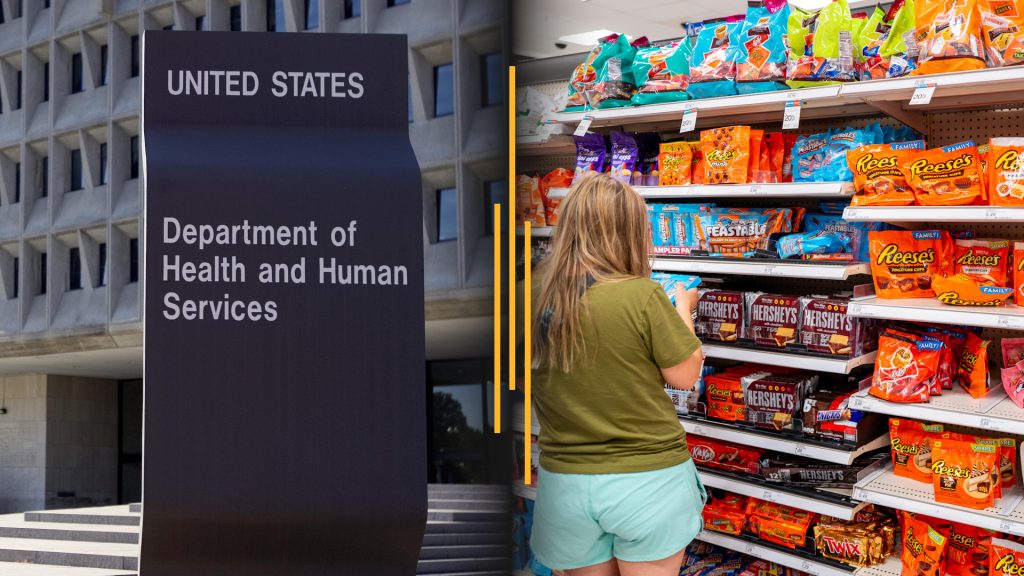
Plus, several states are restricting SNAP purchases of soda and candy to encourage healthier choices. Critics argue the changes could complicate shopping and stigmatize recipients.
And Tatiana Schlossberg, granddaughter of former President John F. Kennedy, has died at 35 after battling leukemia. The environmental journalist is being remembered for her work and powerful final essay.
These stories and more highlight your Unbiased Updates for Wednesday, December 31, 2025.
Trump administration freezes Minnesota child care funds
The Trump administration is freezing all federal child care payments to the state of Minnesota. The move comes amid allegations of widespread fraud at daycare centers across the state, with some estimates reaching billions of dollars.
The case has been under investigation for years, but gained new attention after a video by conservative journalist Nick Shirley spotlighting the allegations in the Somali community in the Twin Cities went viral.
In a social media post, Department of Health and Human Services (HHS) Deputy Secretary Jim O’Neill said, “We have turned off the money spigot, and we are finding the fraud.”
In a separate video message, O’Neill outlined how the department plans to crack down not only in Minnesota but nationwide:
“I have activated our defend the spend system for all ACF payments across America. Starting today, all ACF payments across America will require a justification, receipt or photo evidence before we make a payment. Second, I have just signed and sent a demand letter to Governor Walz. I required a full 360 review of these centers. This includes attendance records, licenses, complaints, investigations and inspections.”
— Jim O’Neill, HHS deputy secretary
Minnesota Gov. Tim Walz has pushed back, accusing the Trump administration of politicizing the issue.
In a post on X, Walz wrote, “This is Trump’s long game. We’ve spent years cracking down on fraudsters. It’s a serious issue, but this has been his plan all along. He’s politicizing the issue to defund programs that help Minnesotans.”
HHS has also launched dedicated state-specific fraud hotlines and a nationwide email tip line for reporting suspected child care abuse.
The federal administration for children and families sends about $185 million to Minnesota each year for child care programs.
Judge questions DOJ case, Abrego Garcia prosecution under scrutiny
The El Salvador national living in Maryland who was wrongfully deported in the spring may now have momentum in court.
A federal judge in Tennessee has unsealed a court order suggesting the Justice Department made Kilmar Abrego Garcia’s prosecution a top priority — only after he challenged his wrongful deportation to El Salvador.
Abrego Garcia is asking that the human smuggling charges be dismissed, arguing they amount to a vindictive prosecution.
The judge said he reviewed more than 3,000 documents and found one in which a senior DOJ lawyer described the case as a “top priority.” A grand jury indictment followed less than a month later.
As a result, the January trial is off. Judge Waverly Crenshaw has ordered an evidentiary hearing for late January 2026, at which DOJ lawyers will be required to explain the timing of the case.

Abrego Garcia was deported in March 2025 to El Salvador’s notorious Cecot prison — and returned to the U.S. in June 2025 under a court order.
Despite setbacks in court, the Trump administration continues to claim that he has ties to MS-13 and has been involved in domestic abuse and human trafficking.
SNAP bans on candy, soda to take effect in five states Thursday
Starting Thursday, millions of Americans who rely on food assistance will face new limits on what they can buy at the grocery store, including soda, candy and other sweetened foods.
Five states — Indiana, Iowa, Nebraska, Utah and West Virginia — are the first to roll out new Supplemental Nutrition Assistance Program (SNAP) restrictions after receiving federal waivers. It’s part of a broader push by the Trump administration, led by Health Secretary Robert F. Kennedy Jr., to steer food stamp dollars away from what officials call unhealthy choices.
Supporters say the goal is simple: reduce obesity, diabetes and other chronic diseases by cutting taxpayer-funded junk food. But critics warn that the rollout could be messy and confusing, especially at checkout lines.

Retail groups say stores aren’t fully prepared, and nutrition experts argue that the evidence is mixed on whether such bans actually change eating habits.
The rules vary by state. Some ban soda and energy drinks. Others add candy, and in Iowa, even certain prepared foods.
Altogether, about 1.4 million SNAP recipients will be affected starting Jan. 1, 2026.
Measles cases surge nationwide, vaccination gaps drive outbreaks
Measles cases across the country have now exceeded 2,000, marking the highest number since 1992, according to the CDC.
Health officials said this is not driven solely by travel.
The vast majority of cases are domestic. Nearly all involve people who are unvaccinated or whose vaccination status is unknown.
About one in ten patients has been hospitalized, and more than half are children. The CDC also reports 50 separate outbreaks this year — more than triple the number seen in the country last year.
Texas has been hit hardest, with hundreds of cases linked to communities with low vaccination rates.

South Carolina is also experiencing a growing outbreak, forcing hundreds of students into quarantine as schools work to contain it.
Doctors point to a nationwide decline in routine childhood vaccinations. MMR coverage among kindergartners is now below pre-pandemic levels, even though two doses of the vaccine are 97% effective at preventing measles.
Public health experts warn that the clock is ticking. If transmission continues into the new year, the U.S. could lose its measles elimination status, which it has held since 2000.
JFK’s granddaughter, Tatiana Schlossberg, dies at 35 after leukemia fight
Tatiana Schlossberg, an environmental journalist, author and the granddaughter of former President John F. Kennedy, has died. Her family announced the news in a simple message posted Tuesday.
“Our beautiful Tatiana passed away this morning. She will always be in our hearts.”
Schlossberg revealed last month that she was battling an aggressive and rare form of leukemia — a diagnosis she received shortly after giving birth to her daughter.
In a deeply personal essay for The New Yorker, she wrote about the shock of learning she was critically ill at a moment when she felt strong, healthy and full of life.
Beyond her illness, Schlossberg built a career focused on climate science and environmental accountability — writing for The New York Times, publishing a prize-winning book and urging readers to understand the unseen impact of everyday choices.

She leaves behind her husband, George Moran, and two young children.
Tatiana Schlossberg was 35 years old.
104-year-old WWII vet plays national anthem at Islanders game
He might have predated the team by half a century, but Dominick Critelli stole the show, stepping onto the ice to play the national anthem on saxophone before a New York Islanders-Rangers matchup.
The 104-year-old World War II veteran played the Star-Spangled Banner for 18,000 fans Saturday night.
Critelli served as a staff sergeant in the Army and survived the Battle of the Bulge. Born in 1921, he immigrated to the U.S. at age eight and has played the saxophone since age 13.
For context, the Islanders didn’t exist until 1972. At the time, Critelli was 51 years old.
He told ABC News that he practices about an hour a day, and the national anthem remains one of his favorite songs.
More from Straight Arrow News:

The energy trends that will define 2026: AI, affordability and the future of power
Heading into 2026, energy news is heating up in the national conversation. From surging demand from data centers powering AI to increasing electricity bills and political fights over wind and solar power, Straight Arrow News’ fact-based journalism will explore these forces throughout the year, starting with three pressing questions: How many data centers will be built? Which energy sources will win under shifting policies? And who will win the political fight over affordable electricity?
The answers to these questions won’t just shape corporate policies; they will affect everyday life, from the price paid to keep the lights on to energy reliability during extreme weather events. Read the full story now>
The post HHS freezes Minnesota child care funds; States move to ban soda from SNAP appeared first on Straight Arrow News.
Ella Rae Greene, Editor In Chief