Measles resurgence: US cases top 2,000 as vaccine rates slip
The United States has crossed a troubling threshold: more than 2,000 measles cases have been confirmed nationwide, the highest total in over 30 years. Health officials say the surge is driven largely by declining vaccination rates and broader policy shifts in vaccine guidance.
According to the Centers for Disease Control and Prevention, at least 2,012 measles cases had been reported as of Dec. 23, a number that continues to climb as outbreaks stretch across dozens of states.
A milestone the U.S. hasn’t seen since the early 1990s
The last time the U.S. recorded more than 2,000 measles cases in a single year was 1992, when the CDC logged 2,126 infections, ABC News reported, citing CDC data. This year’s total now rivals that peak, marking the most widespread transmission since the disease was declared eliminated in the U.S. in 2000.
Data from the Johns Hopkins cumulative measles tracker, which updates independently from the CDC, shows an even higher count, revealing how fast the outbreak is evolving.

Where cases are spreading, and who is being hit hardest
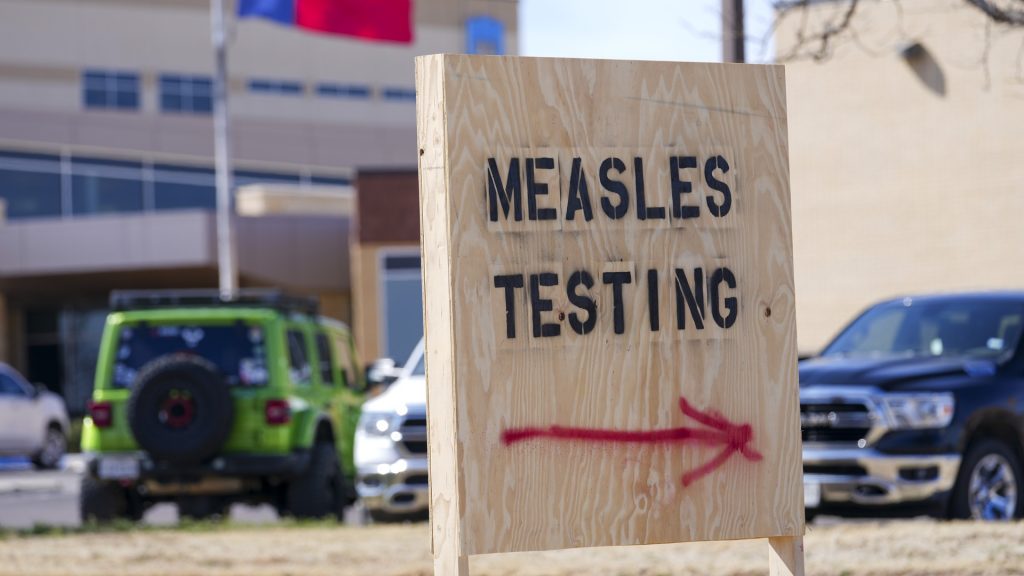
Measles cases have now been confirmed in more than 40 states, with the largest concentration reported in Texas, where the CDC lists over 800 cases this year alone.
Health officials say about 11% of patients have been hospitalized, and more than half of those hospitalized are children and teens under 19. Several school districts have reported hundreds of students quarantined due to exposure, particularly in outbreak clusters in the South and Midwest.
South Carolina is one of the most active hotspots. State health officials report 176 confirmed cases, with the vast majority centered in Spartanburg County, near the North Carolina border.
Vaccination gaps are driving the surge
Federal data shows that roughly 93% of confirmed measles cases this year involve people who were unvaccinated or whose vaccination status is unknown. Only a small fraction occurred among people who had received one or two doses of the MMR vaccine.
The CDC says one dose of the measles, mumps and rubella vaccine is 93% effective, while two doses are 97% effective. Yet national vaccination rates continue to slide.
During the 2024–2025 school year, only 92.5% of kindergartners were fully vaccinated against MMR, down from 95.2% before the pandemic and below the threshold public health experts say is needed to prevent outbreaks.

Policy shifts add new pressure to an old disease
This surge comes as federal vaccine guidance and oversight are undergoing major changes.
Unbiased. Straight Facts.TM
Measles is so contagious that if one person has it, up to 9 out of 10 people nearby who are not protected will become infected.

Earlier this year, Health and Human Services Secretary Robert F. Kennedy Jr. dismissed the entire Advisory Committee on Immunization Practices (ACIP), the independent panel that guides national vaccine recommendations. The reconstituted committee has since adjusted guidance on several vaccines, including separating chickenpox shots from MMR and revising long-standing hepatitis B recommendations.
As Straight Arrow News has reported, these changes do not automatically change the law — states still control school vaccine requirements — but experts warn the ripple effects could be significant, especially if insurance coverage or access shifts in the future.
SAN reporting also notes that vaccine mandates in the U.S. are limited largely to school attendance policies, with exemptions and enforcement varying widely by state. While no vaccines are federally mandated for civilians, even modest changes in guidance can influence state policy, public perception and vaccination rates.
Why elimination status is now at risk
Public health experts warn the U.S. is approaching a critical deadline: 12 consecutive months of sustained measles transmission, which would formally end the country’s elimination status.
Canada already lost its measles elimination designation earlier this year. With U.S. case counts climbing and vaccination coverage lagging, epidemiologists say the next 12 to 18 months could determine whether measles becomes a persistent threat again, rather than a preventable one.
The post Measles resurgence: US cases top 2,000 as vaccine rates slip appeared first on Straight Arrow News.
Ella Rae Greene, Editor In Chief