Four times Congress actually found common ground in 2025
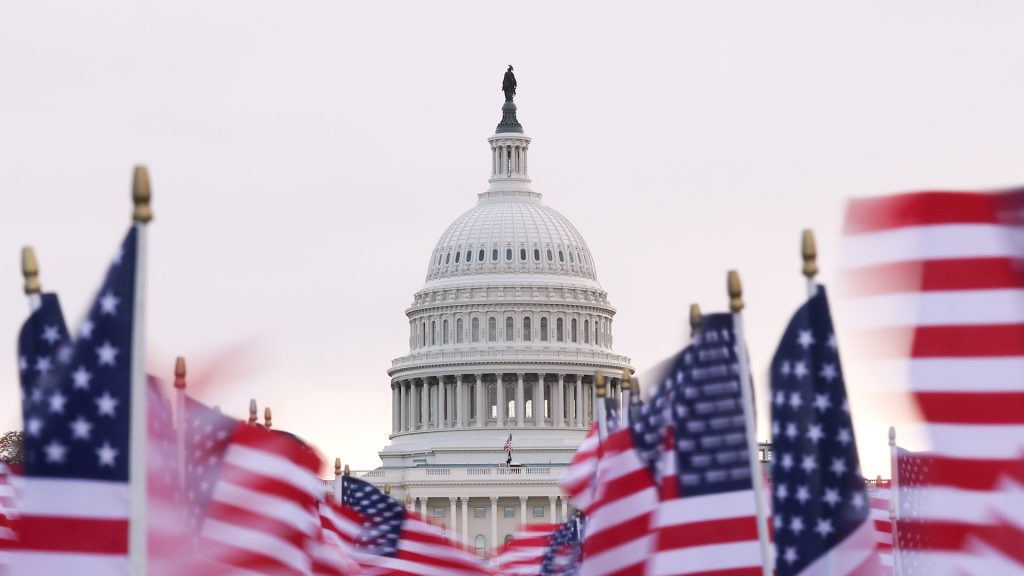
For all the shouting and stalemates in Washington this year, Congress still managed to come together — quietly, and sometimes surprisingly — on a handful of big issues. From defense and online safety to addiction treatment and firefighter health, these were the moments when bipartisan deal-making broke through the noise.
1. Defense: A massive Pentagon bill passes with room to spare
The biggest bipartisan vote of the year came on defense.
Congress approved a record $901 billion National Defense Authorization Act with wide margins, 77-20 in the Senate and 312-112 in the House. The bill included a 4% pay raise for troops, updates to weapons procurement, and funding aimed at countering China and Russia.
According to Reuters, lawmakers also folded in $800 million in aid for Ukraine and $175 million for the Baltic Security Initiative, while locking in U.S. troop levels in Europe above 76,000. In a notable move, the bill formally repealed the 1991 and 2002 Iraq war authorizations and rolled back the long-standing “Caesar” sanctions on Syria.
For a polarized Congress, it was a rare vote that felt both consequential and broadly supported.
2. Online safety: Congress targets revenge porn and AI deepfakes
Another bipartisan breakthrough came in May with passage of the Take It Down Act. It’s a bill aimed at cracking down on nonconsensual intimate images, including AI-generated deepfakes, the Associated Press reported.
Backed by Sens. Ted Cruz and Amy Klobuchar, the law makes it illegal to knowingly publish, or threaten to publish, intimate images without consent. It also requires tech platforms to remove reported content within 48 hours and take steps to eliminate duplicate copies.
The measure had high-profile backing from first lady Melania Trump, who described the impact of online exploitation of teens as “heartbreaking.” Civil liberties groups raised concerns about the scope of takedown requirements, but the bill still cleared Congress with bipartisan support.
3. Addiction treatment: SUPPORT Act extended through 2030
In December, Congress quietly renewed one of its most consequential public health laws.
Lawmakers reauthorized the SUPPORT for Patients and Communities Act through 2030, extending federal programs on substance use prevention, treatment and recovery. The bill passed the House overwhelmingly in June and cleared the Senate by unanimous consent in September.
Key provisions renew funding for opioid recovery centers, expand grants for pregnant and postpartum women, and continue loan-repayment incentives designed to strengthen the addiction treatment workforce.
Policy experts flagged one important caveat: reauthorization doesn’t guarantee funding. How much impact the law ultimately has will depend on future appropriations and agency capacity.
4. First responders: Firefighter cancer benefits expanded
Another bipartisan breakthrough came for first responders, driven in large part by years of pressure from the International Association of Fire Fighters (IAFF).
As part of the massive defense bill, Congress passed the Honoring Our Fallen Heroes Act, which updates federal guidelines to automatically classify certain cancers as occupational hazards for firefighters. That change expands death and education benefits for surviving families and formally treats occupational cancer as a line-of-duty risk.
The IAFF called the legislation long-overdue, saying it reflects the reality firefighters have faced for decades. The union noted that cancer is now the leading cause of line-of-duty deaths among firefighters and praised lawmakers for finally aligning federal policy with medical evidence.
The measure passed with overwhelming bipartisan support — 312 votes in the House and 77 in the Senate — before being signed into law in December. IAFF General President Edward Kelly described it as a turning point for firefighter families who have long sought recognition, benefits and accountability.
The takeaway
Congress may still be deeply divided, but 2025 offered reminders that bipartisan deals are not extinct. They’re just rarer, quieter, and often buried beneath louder political fights.
The post Four times Congress actually found common ground in 2025 appeared first on Straight Arrow News.
Ella Rae Greene, Editor In Chief