After a tough 2025, farmers wary of impacts of Trump’s trade policies in 2026
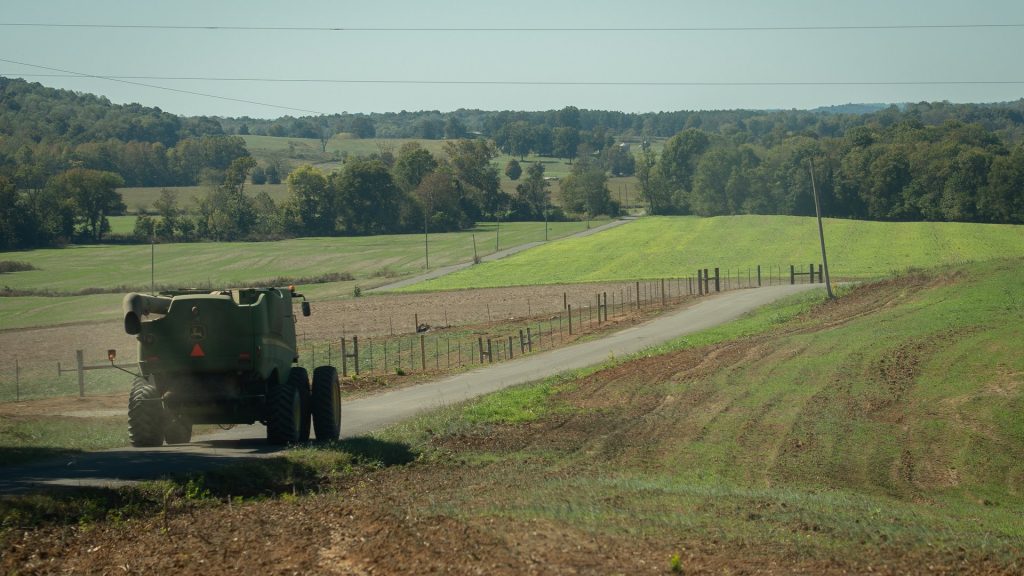
No one ever said farming would be easy. But no one could have foreseen how difficult 2025 would be.
“Farming is an inherently risky business,” Mike Lavender, policy director at the National Sustainable Agriculture Coalition, told Straight Arrow News. “You are dealing with a ton of variables, from the weather to pests to markets, whether domestic or international, and impacts that has on prices and all this sort of stuff. And I think one of the things we’ve seen in 2025 is an injection of uncertainty.”
That uncertainty came from no greater source than President Donald Trump.
‘Self-inflicted’
Few industries have been harder hit by Trump’s tariffs on imported goods than agriculture. Countries affected by the levies have retaliated by reducing their purchases from U.S. farmers, eliminating important markets for their crops. While Trump announced a bailout for farmers earlier this month, thousands could go bankrupt because of lost income.
“The trade disruptions we’ve had, and the market losses, with the impacts of that, that’s hurt us a lot,” Scott Metzger, a farmer from Ohio and president of the American Soybean Association, told SAN.
China had historically been the largest buyer of U.S. soybeans, but cut much of that spending and began buying from other countries because of Trump’s tariffs. Soybeans account for 10% of U.S. farmland and are the largest agricultural export from the U.S.
“It’s been a challenging year for farmers for a lot of different reasons,” Lavender said. “I think a number of them have kind of been exacerbated by uncertainty that feels more self-inflicted than anything.”
Trade deficits, immigration enforcement also hurt
Other factors have also affected U.S. farmers in 2025.
“We had a growing concern of a widening agricultural trade deficit,” Dave Salmonsen, senior director of government affairs at American Farm Bureau, told SAN. “Since 2022, we had been at the point where we were at least by value, importing more than we exported.”
Grain farmers have been hit especially hard by the tariffs and trade disruptions, which most economists saw coming as soon as Trump announced tariffs on imports from virtually every other country.
“Any economist worth their salt predicted that this tariff policy was going to lead to inflationary pressure on prices, and it was going to hurt our farm sector, especially because it’s a very export-oriented sector of the economy,” Harry Kaiser, professor of applied economics at Cornell University, told SAN.
Kaiser said the president’s immigration policies have also caused issues for farmers. A significant portion of crop farmworkers are immigrants without legal status, according to U.S. Department of Agriculture data.
“The No. 1 issue in the agricultural sector of the United States for the last 15 years has been a shortage of agricultural labor,” Kaiser said. “Quite frankly, people that are citizens of this country will not do it. It’s hard work. It’s low pay. And if we rely on our citizens to do that, labor prices would go through the roof.”
On top of those issues, the downsizing of the federal workforce has also impacted the farm sector.
“One of the key ways that the Department of Agriculture interacts with farmers on a day-to-day basis is through staff at county local offices,” Lavender said. “Farmers will come into the office and say, ‘Hey, I want to apply for this program, I want to do this,’ and they’ll work with USDA staff. USDA is at least 20,000 staff fewer today than they were on January 20 of this year.”
Helping hand
Trump has acknowledged his tariffs have had negative impacts on farmers. Earlier this year, he asked them to “bear with me.”
That, in part, is why his administration recently announced a $12 billion bridge payment for farmers impacted by tariff-related market disruptions.
“President Trump will not let our farmers be left behind, so he directed our team to build a bridge program to see quick relief while the president’s dozens of new trade deals and new market access take effect,” Agriculture Secretary Brooke Rollins said while announcing the payout.
But is that enough?
“It’s a good start,” Salmonsen said. “And everybody’s pleased that we’re getting going on this, recognizing the need and the need to desire to help farmers.”
But Lavender said the program is not large enough and doesn’t address the issues that caused the problem in the first place.
“It is clearly not a long-term solution,” Lavender said. “It is not only expensive for the government and, ultimately, taxpayers, but it’s not solving anything long term. And so, when we look at the aid package, I think it will help some farmers temporarily, right, but it will not help all farmers, and it will not help them structurally in the long term.”
Metzger shared similar sentiments.
“It’s a great first step, and we really appreciate that,” Metzger said. “On the downside, we don’t want to farm from our mailboxes. We want to have strong markets and not have them rely on emergency payments.”
Kaiser described the bridge payment program as a form of socialism that Trump’s supporters in the Make America Great Again movement typically oppose.
“It’s government bailing out a sector, which MAGA is totally against,” Kaiser said. “MAGA was so against any help for the automobile industry back during COVID and Biden and company bailed out the industry, and they saved a lot of jobs by doing that.”
Meanwhile, China has agreed to purchase 12 million metric tons of soybeans from the U.S. by February as part of the latest trade negotiations between the two countries.
So far, China has fulfilled nearly 3 million metric tons of that promise. But it has increasingly turned to countries like Argentina to purchase soybeans.
“Getting towards the end of February, that’s when the South American crop is going to start coming on,” Metzger said. “And it’s a grave concern whether they’re actually even going to meet the obligations that they have said they were going to meet.”
What to expect in 2026
Experts said the Trump administration has been willing to listen to farmers and their concerns, as evidenced by the bailout.
“That obviously makes you feel like you’re resonating with him, with what we’re saying from the American Soybean Association and telling Congress,” Metzger said. “So, it is good to hear that he’s hearing our frustrations.”
But heading into the new year, trade discussions continue between the U.S. and numerous other countries.
“This was a start, and starts are always contentious,” Salmonsen said. “And there was so much going on. This administration took on the biggest trade agenda I think we’ve ever had.”
Discussion will also start in the new year on the United States-Mexico-Canada (USMCA) free trade agreement.
“That’s going to be an ongoing discussion on the future of the North American marketplace, which we want to see preserved,” Salmonsen said. “We have issues we want to address. We always have issues of dairy access with Canada. We have issues of seasonal produce surges that impact our growers that come from Mexico.”
Metzger also pointed to biofuels as another major issue to look at going into 2026. The EPA expects to finalize biofuel rules during the first quarter of the year.
“I know that’s going to be a big, big issue for us this next year,” Metzger said. “There’s an opportunity to have a pretty strong biofuel market.”
Farmers have mostly supported Trump during his political career. With these ongoing issues, will that continue into the 2026 midterms?
“I would say, it’s a mixed bag on it,” Metzger said. “You could poll a certain number, and you would probably be half and half on it.”
How farmers vote in November will likely depend on what deals get done as the calendar turns.
“We need to find new, good, long-term markets that have reduced barriers and that our farmers can depend on,” Salmonsen said. “Everybody wants certainty that what they’re planting will have a good market, have a good return, and that’s what the administration and the industry and, of course, Farm Bureau will be involved in trying to make sure that happens in 2026.”
The post After a tough 2025, farmers wary of impacts of Trump’s trade policies in 2026 appeared first on Straight Arrow News.
Ella Rae Greene, Editor In Chief