Trump’s marijuana move marks a turning point for medicine and money
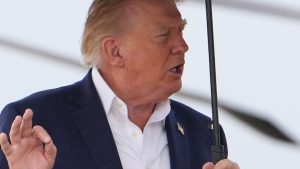
For the first time since Congress enacted the Controlled Substances Act in 1970, cannabis is one step closer to no longer being classified as a Schedule I drug. On Thursday, President Donald Trump signed an executive order directing Attorney General Pam Bondi to reclassify it as a Schedule III drug, the same designation as anabolic steroids and ketamine.
The Drug Enforcement Administration defines a Schedule I drug as having “no currently accepted medical use and a high potential for abuse” and a Schedule III drug as having “a moderate to low potential for physical and psychological dependence.” The reclassification has potential implications for cannabis research or for medical purposes.
However, those hoping the order would federally legalize pot will need to keep hoping. Marijuana remains illegal for recreational use at the federal level. Trump’s order opens the door to more research and expanded medical uses for marijuana. It may also lower tax burdens for state-licensed cannabis dispensaries in states that have legalized the drug. This is because federal law bars businesses that sell Schedule I substances from taking some tax deductions.
What are the reactions to reclassification?
Unbiased. Straight Facts.TM
Cannabis is the most commonly used federally illegal substance, with 25% of Americans reporting using cannabis products at least once in 2022.

Trump’s order aligns with increasing public support for marijuana legalization. According to a recent Gallup survey, about 64% of Americans believed cannabis should be legal. This is slightly lower than 2023, when 70% of the country supported legalization.
Despite the large public support, the president’s own party seems wary. Before Trump signed the order, 20 Senate Republicans signed a letter urging Trump not to reclassify the drug, according to Punchbowl News.
The letter was led by Sen. Ted Budd, R-N.C., and includes Senate Majority Whip John Barrasso, R-Wyo., and stalwart Trump allies like Sen. Tommy Tuberville, R-Ala.
“The only winners from rescheduling will be bad actors such as Communist China, while Americans will be left paying the bill,” the letter reads.
In August, nine House Republicans wrote to Attorney General Pam Bondi urging her not to reclassify marijuana. They said there was no science or data to back the change.
“Marijuana, while different than heroin, still has the potential for abuse and has no scientifically proven medical value,” the letter states. “Therefore, rescheduling marijuana would not only be objectively wrong, but it would also imply to our children that marijuana is safe. That couldn’t be further from the truth.”
Supporters said they are encouraged by Trump’s order but believe this is just a first step in a long journey. They said Congress needs to pass more reforms relating to banking restrictions before marijuana businesses begin to see significant change.
“The industry would still fall under the Bank Secrecy Act, with all its reporting and monitoring obligations intact,” Terry Mendez, the CEO of Safe Harbor Financial, said. “This moment is likely to invite broader interest from financial institutions, but without structural reform or updated guidance, many will remain cautious.”
Despite that, those in the industry believe this is an encouraging sign that Congress may act on changing cannabis law in the future.
“Reclassification increases the likelihood that Congress and the federal government will move toward a coherent framework that keeps hemp products legal but properly regulated,” Joe Gerrity, CEO of Crescent Canna, told MJBizDaily.
What does reclassification mean?
Rescheduling cannabis would ease the barriers companies have faced while conducting clinical trials. Experts have said these barriers have hamstrung scientific research.
“Medical research has effectively been under lock and key,” Ryan Vandrey, a Johns Hopkins University professor who helps run its Cannabis Science Lab, told CNBC. “Schedule I makes large, placebo-controlled trials incredibly difficult. Without that data, policymakers are being asked to make decisions in the dark.”
The Washington Post reported that Trump met last week with cannabis industry executives, Health and Human Services Secretary Robert F. Kennedy Jr., and the head of the Centers for Medicare and Medicaid Services, Dr. Mehmet Oz, to discuss reclassification.
According to the Department of Agriculture, U.S. cannabis production increased 40% last year compared to the previous year. Industry researchers predict the global market for cannabis-derived products to hit $160 billion by 2032.
Others say reclassification could help pull in new investors to the marijuana industry. Timothy Seymour, founder and chief investment officer of Seymour Asset Management, told CNBC it’s hard for businesses to justify investing in something that is at the same level as heroin or cocaine.
“Having to go out and tell their shareholders … that they own a company who’s selling something that is on a par with heroin, LSD or cocaine … is kind of a tough thing to swallow,” he said.
The post Trump’s marijuana move marks a turning point for medicine and money appeared first on Straight Arrow News.
Ella Rae Greene, Editor In Chief