What the holiday crafting market says about the US economy
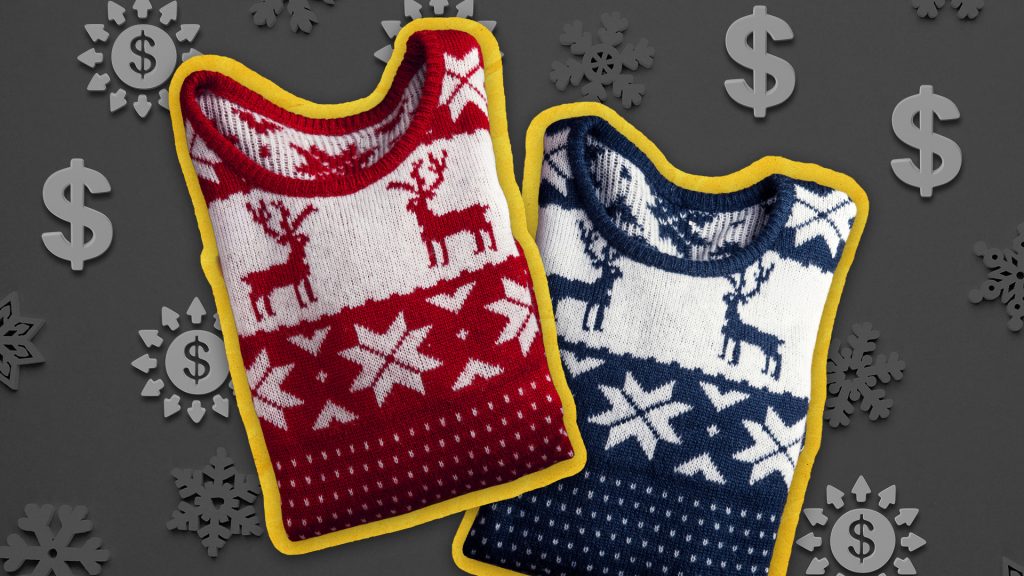
This year, a handmade holiday comes with quite a backstory: From Grandma-made stuffed toys to costumes for iconic performances, makers have had to overcome a lot to get the goods they need to make gifts or products.
The corset market explains it all.
“It’s Nutcracker season,” said Rogie Sussman Faber, co-owner of the Chicago-based fabric and sewing supply retailer, Vogue Fabrics. The family-run business has invested heavily in its corset specialty, collaborating on workshops for cosplay enthusiasts and supplying theaters across the country with specialty supplies.
Holiday shoppers turn to handmade options

But this year, a 50% tariff on steel boning from Canada pushed costumiers to swap in German-made plastics, which are both more available and lighter, Sussman Faber said. At the same time, the ongoing war in Ukraine has all but eliminated exports from that country, which grows the extra-strong cotton required for the tightly structured garments.
“Crafters and makers are very creative. They understand that sometimes you need to pivot and often when you pivot, it leads to something even better,” she said.
Consumers crown handmade gifts with a holiday halo. Buying from artisans and sourcing craft project materials aligns with shoppers’ urge to support creators and small businesses — as 60% of Americans want to do, according to a new survey of holiday spending intentions sponsored by Clever Real Estate.

How the crafting supply chain has shifted
This would have been a challenging year for crafters and artisans even if tariffs hadn’t erupted. Retailer Joann went out of business, shutting 800 stores that crafters across the country counted on for basics like elastic and denim. Then, the parent company of sewing pattern maker Simplicity declared bankruptcy. The pattern operation was rescued at the last minute by an employee-led buyout.
Now, makers are applying their creativity as much to their business models as to their designs. Fabric retailer Mood (made famous as the setting for designer shopping sprees on Project Runway) just opened a store in Houston — its fourth, said Eric Sauma, a co-owner of the family business.
In the coming year, Mood intends to roll out satellite stores in Chicago and Atlanta using a showroom model: Shoppers will peruse samples of up to 14,000 products and place orders for two-day delivery from the company’s New Jersey warehouse.
Michael’s, a privately owned national craft supply retailer with 1,300 stores, expanded the space it devotes to fabric and sewing supplies by 25% at hundreds of stores, specifically to win consumers who felt abandoned by the collapse of Joann. Etsy, a selling platform for makers, now captures 9% of its revenue from supplies, rather than finished goods, and has been concentrating in the past couple years on gaining share in the supply chain, according to its financial statements.
With makers nimbly adjusting to the new market realities, suppliers will have to do more than refill their channels with the same old materials, said Vincent Quan, associate professor of fashion business management, at the Fashion Institute of Technology.
One case in point: There is a rising interest among consumers to invest time, attention and money to sew their own classic clothing rather than relying on fast fashion, Quan said. Similarly, shoppers are increasingly willing to spend money on quality materials to make clothes that last, or to buy well-made clothes from small artisans during this period of stagnant earnings and tariff-inflated pricing, he said.

Nimble on the thimble: Adapting to the new market
This will lead to an increased demand for quality materials; and if consumers can’t find those new, they are likely to harvest supplies from thrift stores, Quan told SAN. Doing so comes with the implication of sustainability, or, as Quan called it, product “circularity, with zero waste.”
Those same economic pressures are forcing artisans to streamline designs, so they can produce more in less time, without compromising quality, according to Quan.
“The cost of supplies and materials is a major component that affects prices,” Quan said. “Either they’ll raise the retail price or find ways to lower the cost of materials or production.”
Laura Maki has been finding alternatives all year. She is owner of Sew With Me, a Minnesota chain of three sewing stores and studios. Both artisans and gift-giving hobbyists need to buy very specific items to produce batches of baskets, totes, toys or other items, she explained. This year, many of those creative commodities were simply not available, or only available in random sizes and colors. That means Maki and her staff have to constantly help customers adapt designs and instructions.
For instance, purse hardware was ground zero for tariff-inflicted turmoil earlier this year.
“It became really hard to get consistently from distributors,” Maki told SAN. “Suddenly, we couldn’t get one-inch swivel hooks, and every pattern calls for that, so your customer can’t make that item if they can’t get the materials.”
Now, she works directly with manufacturers for crafting essentials, even taking bulk orders for entrepreneur customers and a few other stores. Becoming her own middleman has boosted Maki’s profits even as it has eased her headaches, she said.
The next phase, she said, will be for designers to adjust their patterns to accommodate different combinations of standard materials — a tall order given that by definition, patterns are designed around longstanding industry standards.

How community-based crafting can lead to business success
This year’s shift prompted a rethink by Debbie Hodge, a serial entrepreneur who parlayed her experience in the scrapbooking category to capture the once-hot market for online courses, only to convert her pandemic-era rediscovery of embroidery into a third act.
Casting a seasoned eye on the market for kits, Hodge combined her knowledge of online marketing with a carefully honed aesthetic, to capture $500,000 in sales in 2024. She “saw it coming,” she said of the tariffs, and stocked up last year on English needles, tiny tins and specialty items like needle threaders.
She’s scaling back her goals for 2026, aiming to re-invent once more with a strategy of short-term online pop-up shops instead of being available 24/7, as e-commerce customers expect. The secret to continuous pivoting, Hodge said, is for designers and retailers to zero in on a clearly defined, unique niche. Her brand, Stitched Stories, has a modern folk look; another designer she knows has cornered the market for cross-stitched satire.
Sauma, from Mood Fabrics, expected a few dozen sewists to show up at the new Houston store. Instead, 500 thronged in and stayed for hours.
“With the presence of social media being so strong, I think people are looking for their community. That’s what I saw when I opened Houston,” he said. “People found their group. And they were recognizing each other from social media.”
Real world events are one of the fastest-growing sectors in the quilting world. In 2024, the Modern Quilt Guild’s QuiltCon extravaganza of markets, lectures and workshops pulled in 25,370 attendees, a 46% leap from its 2023 show.
Maki and others cite workshops, coaching and mentoring, all held in person, as the universal dynamic for makers of all levels of experience and skill. Sauma says Mood is all in on being the gathering place for creative growth and celebration, with like-minded others.
“Every store will have a community aspect,” he says of the company’s plan. “It’s not just ‘buy my product and leave.’ Let’s make it a Starbucks for designers.”
The post What the holiday crafting market says about the US economy appeared first on Straight Arrow News.
Ella Rae Greene, Editor In Chief