How an antitrust case could derail Hollywood’s biggest deal
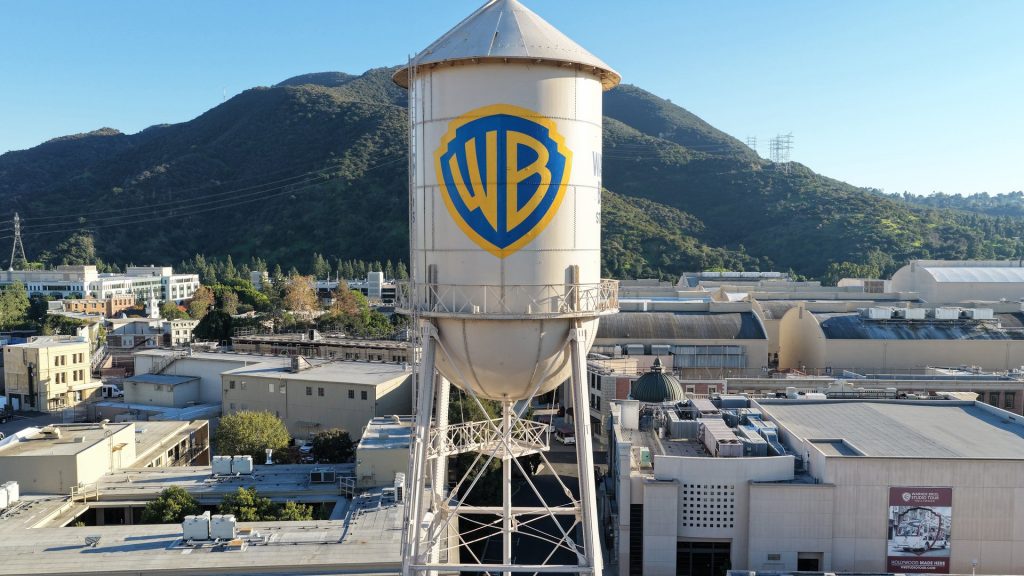
If Netflix acquires Warner Bros. Discovery for the blockbuster price of $83 billion, it could be one of the biggest deals in Hollywood’s history. But that’s only if the feds allow it.
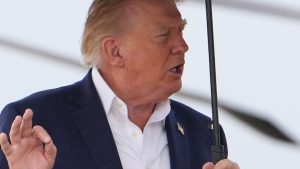
Although Netflix told federal regulators it would not gain too much power from the deal, the regulators say it would trigger a deep investigation. Members of Congress and other critics also say the Warner Bros. acquisition could trigger an antitrust lawsuit. And President Donald Trump says he’ll be “involved” in any government review of takeover bids, a highly unusual move by a sitting chief executive.
The main concern in an antitrust case would be whether the acquisition would choke out competition.
“A deal this large would raise concerns that Netflix could gain too much control over both distribution and premium content,” Joseph Raetzer, an attorney and legal content reviewer at the legal platform LawDistrict, told Straight Arrow News. “ Regulators would worry that owning a major studio could let Netflix favor its own platform, limit where Warner Bros. content appears or raise prices for consumers and advertisers.”
An antitrust case would likely hinge on how, exactly, Netflix’s competition is defined.
“[S]treaming doesn’t have clear market boundaries,” Raetzer, who specializes in complex antitrust cases, said. “Netflix competes with traditional studios, other streamers, live TV, and even user-generated platforms. That makes defining competitors harder, but Netflix’s scale makes regulators more willing to test new antitrust theories.”
Courts have not yet ruled on whether such a deal would be an evolution of technology and streaming or an illegal consolidation of power.
The decision could have major consequences, and could reshape the future of Hollywood.
The Clayton Act of 1914
Both the Federal Trade Commission and the Department of Justice say the merger would “raise a presumption of illegality.” The agencies could challenge the deal under the Clayton Act of 1914. The act prevents mergers and acquisitions that “may be substantially to lessen competition, or to tend to create a monopoly.”
Netflix already dominates the market for paid streaming services. But is it in competition only with companies currently in the same marketplace? Or it is vying for dominance in the broader attention economy?
“What about the TV dinosaurs it disrupted, or the social video services nipping at its heels?” James Faris and Lucia Moses wrote for BusinessInsider. “Could sleep even be a competitor, as its cofounder Reed Hastings famously suggested?”
Netflix’s response
Founded in 1997, Netflix got its start renting and selling DVDs through snail mail. Now headquartered in Los Gatos, California, Netflix has since expanded to a massive, publicly traded company that produces its own content. It’s also a Fortune 500 company.
But the company’s co-chief executives, Greg Peters and Ted Sarandos, say it would not become too big a power in the entertainment industry if it acquired Warner Bros.
“[W]e strongly believe that Netflix and Warner Bros. joining forces will offer consumers more choice and value, allow the creative community to reach even more audiences with our combined distribution, and fuel our long-term growth,” Peters and Sarandos wrote in an email that was included in a Securities and Exchange Commission filing. “We made this deal because their deep portfolio of iconic franchises, expansive library, and strong studio capabilities will complement—not duplicate—our existing business.”
Peters and Sarandos expressed confidence to their employees that the deal will move forward, regardless of antitrust challenges.
“[W]e’re confident we’ll get the approvals we need to make it happen,” they wrote in the email. “The fundamentals are clear: this deal is pro-consumer, pro-innovation, pro-worker, pro-creator, and pro-growth. Also, if you look at it through the lens of Nielsen data, even after combining with Warner Bros., our view share would only move from 8% to 9% in the US — still well behind YouTube (13%) and a potential Paramount/WBD combination (14%). We believe the facts speak for themselves, and we’re fully prepared to put ourselves in a strong position for approval.”
Paramount’s hostile takeover bid
Meanwhile, another big Hollywood player, Paramount, slammed the deal. It said a merger between Netflix and Warner Bros. would hurt both customers and talent.
Paramount launched a $108 billion hostile takeover bid for Warner Bros. Unlike Netflix, which would buy only Warner Bros.’ studio and HBO Max streaming service, Paramount wanted to acquire its cable channels — including CNN.
But on Wednesday, Warner Bros. rejected Paramount’s bid, saying the Netflix offer was superior. The announcement came shortly after Affinity, the private equity firm run by Trump’s son-in-law Jared Kushner, dropped out of the deal.
Trump had controversially indicated at a roundtable discussion that he would prefer that Paramount acquired Warner Bros. Inserting himself into the fight, he said, “It’s imperative that CNN be sold.”
Typically, it is the role of the Justice Department and the Federal Trade Commission to review major corporate deals, without presidential involvement.
Paramount, recently purchased by multi-billionaire Larry Ellison and his son, David, would have potentially made changes to CNN if the deal had gone through. The Wall Street Journal reported that David assured Trump administration officials that if his company were to acquire Warner Bros., he would make sweeping changes to CNN.
Meanwhile, if Netflix acquires Warner Bros., some critics say it would be the end of movie theaters. Some say neither of the acquisitions would help.
“Neither deal is going to save Hollywood,” Lucas Shaw wrote for Bloomberg. “Both Netflix and Paramount are presenting themselves as saviors. Paramount says it is the only one of the two bidders that believes in movie theaters. While that may be true, the company is proposing $6 billion in cost synergies. That is thousands and thousands of jobs. Netflix says it’s a better buyer because it won’t cut as many jobs as Paramount. It doesn’t own cable networks or really own a studio, which is a big reason why the streaming company is projecting less cost-cutting. Still, this is a company infamous for cutting low-performing employees. Hollywood isn’t keen on either deal and is worried about Netflix’s impact on the movie business.”
The post How an antitrust case could derail Hollywood’s biggest deal appeared first on Straight Arrow News.
Ella Rae Greene, Editor In Chief