Trump declares ‘our hemisphere’: Monroe Doctrine gets 21st-century makeover
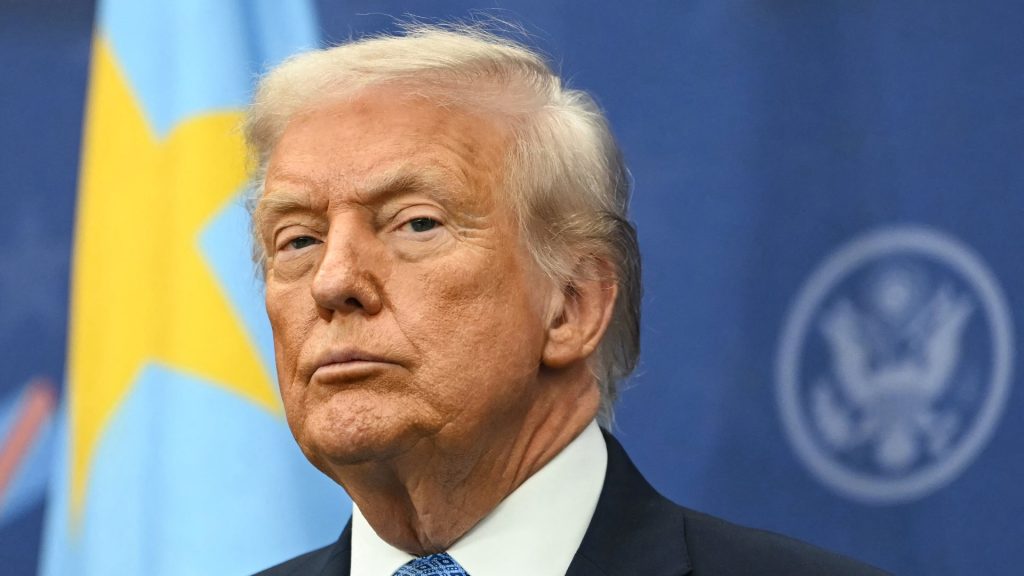
The new National Security Strategy from President Donald Trump calls for invoking the Monroe Doctrine and adding a “Trump Corollary.” Among many things, the new strategy calls for U.S. dominance of the Western Hemisphere.
What is the Monroe Doctrine?
“We will assert and enforce a ‘Trump Corollary’ to the Monroe Doctrine,” the strategy reads.
Trump’s declaration might lead many to the question; what is the Monroe Doctrine?
America’s fifth president, James Monroe, sent the declaration to Congress on Dec. 2, 1823. Written by Monroe and then-Secretary of State John Quincy Adams, the document served mainly as a message to European powers.
“[Monroe] essentially stated that Europe should stay out of the affairs of all independent republics in the Americas, and that in return, American republics would stay out of the internal affairs of Europe,” Alan McPherson, a history professor at Temple University, told Straight Arrow News.
The doctrine came shortly after the end of the War of 1812, sometimes called America’s second war of independence. That war once again pitted the relatively newly formed U.S. against the British.
Other actions from the British also contributed to the Monroe Doctrine.
“The British completely dominated the commerce of Latin America and would do so through much of the 19th century,” Stephen Rabe, emeritus professor of history at the University of Texas-Dallas and author of more than a dozen books, told SAN. “[The Monroe Doctrine] said there could be no further European colonialism in Latin America.”
American leadership also saw attempts at European colonization in other parts of the world.
“With us looking around the hemisphere as a recently independent power fighting against its former colonial master that wanted to recolonize it, seeing that type of thing elsewhere in the hemisphere, with respect to Spain trying to reassert its control over its former South American colonies, and looking at the French and others mucking around, and looking at the Russians mucking around in the Pacific Northwest, the Monroe Doctrine, in its original form, was basically a statement of solidarity,” Evan Ellis, Latin America research professor with the U.S. Army War College, told SAN.
The response from European powers to that Doctrine? They didn’t really care.
In 1823, the U.S. was not the global military power it is today and had no way to actually enforce anything in the Monroe Doctrine.
“It was a series of wishes, and the United States had no navy, had essentially no army to help Latin Americans reach or keep their independence,” McPherson said. “It was just sort of a statement of principle.”
Modern history of the Monroe Doctrine
“The Monroe Doctrine has always been as much about domestic politics as it has been about foreign policy,” Jay Sexton, director of the Kinder Institute on Constitutional Democracy at the University of Missouri, told SAN. “Its history is, more often than not, the history of politicians competing to claim a popular nationalist symbol and to kind of wrap themselves in the flag, and to use the doctrine as a club to beat their political, electoral opponents.”
The first famous invocation of the Monroe Doctrine came in the mid-late 1840s under former President James K. Polk. He used the policy in the spirit of Manifest Destiny, warning Britain and Spain to lose any interest they had in what is now Oregon and California.
“He’s the president in the days of the Mexican War, and he uses the Monroe Doctrine to justify territorial conquest, and taking, in particular, California from Mexico,” Sexton said.
The next, and most famous, invocation of the Monroe Doctrine came in 1904 under former President Theodore Roosevelt, who added what would come to be known as the “Roosevelt Corollary.”
By then, the U.S. military was a growing global force and Roosevelt basically expanded on the original messaging, adding the U.S. had the rights to intervene in the internal affairs of Latin American countries in the case of any wrongdoing and protect Latin America from European powers.
“Roosevelt was turning this sort of defensive doctrine into an offensive one,” McPherson said. “And so as of the turn of the century, it became much more of a shorthand for U.S. imperialism in the hemisphere.”
The Monroe Doctrine came up again during the Cold War.
“I have also indicated that the United States would not permit Cuba to export its power by force in the hemisphere,” former President John F. Kennedy said during a press conference on Sept. 13, 1962.
Kennedy invoked the doctrine as a justification for the U.S. naval quarantine of Cuba to prevent the Soviet Union, an Eastern Hemisphere country, from putting missile bases on the island nation.
“Much of the U.S. intervention, mostly covert, in Latin America in the second half of the 20th century, during the Cold War, could be justified as a way of upholding the Monroe Doctrine to protect Latin America from the Soviet Union, or later from Cuba,” Rabe said.
Trump corollary
That brings us to the newly named Trump Corollary and what it means. The new strategy lays out several demands on how things should operate in the Western Hemisphere.
Among those wants is ensuring other nations in the hemisphere are well-governed to prevent mass migration to the U.S. and a hemisphere where all governments cooperate to fight “narco-terrorists, cartels and other transnational criminals.”
“My guess is the Trump Corollary to the Monroe Doctrine is an attempt to reassert that the United States is the hegemonic power in Latin America,” Rabe said.
What will that actually mean going forward?
“What they mean is that the United States will be the most powerful country acting on Latin America, right?” McPherson said. “And so, what is that? Another word for Imperialism.”
Experts SAN spoke with agreed it’s not exactly clear what the words will mean when it comes to actual policy and implementation.
“My first reaction is that this is kind of like a Truth Social post,” Sexton said. “It’s a lot of bluster and bombast. It’s an administration that really likes to invoke national symbols.”
Sexton acknowledged that this could be the signal of something real to come. The U.S. continues its military buildup in the Caribbean following the bombing of alleged drug boats and threats from Trump of military action in Venezuela.
“There’s obviously a regime in Venezuela that the administration does not like,” Sexton said. “So, I don’t know what to think. Is this going to be just another kind of instance of political theater, or is it going to be a sign of a new, more aggressive turn in the administration’s hemispheric foreign policy?”
This new messaging appears to align with those actions around Venezuela and the Monroe Doctrine.
“I think it’s part and parcel of the same ideology that says that the United States should be able to do essentially whatever it wants in terms of security in the Americas and weaker nations are just going to have to go along,” McPherson said.
The Trump administration also has a track record of injecting political slights into administrative messaging. Twelve years ago, former U.S. Secretary of State John Kerry famously declared, “the Monroe Doctrine is dead.”
“He talked about how it was this discredited symbol of imperialism from a different era,” Sexton said. “And so the Trump administration loves to trigger American leftists and invoking the Monroe Doctrine certainly does that.”
The message to Latin America
The United States is by far the largest military power in the Western Hemisphere. The U.S. ranks third in the world in military size, with the next largest country in our hemisphere, Brazil, ranking 14th.
Colombia is the only other Western Hemisphere nation in the top 20. This new strategy from the U.S. appears to continue the Monroe Doctrine sentiment that America is the dominant power here, referring to the Western Hemisphere several times as “our hemisphere.”
“When you call the United States ‘our hemisphere,’ that doesn’t go down well, even among allied regimes in South America,” Sexton said. “The Monroe Doctrine has always been a really toxic symbol of Yankee imperialism in Latin America, so invoking it is never a wise move if you’re trying to curry favor down south of the border.”
It’s a policy mostly rejected by Latin American countries.
“For the most part, Latin Americans may or may not have welcomed it in the 19th century, but they completely rejected it in the 20th century,” Rabe said.
This new strategy also seems to outline the importance of working with Latin American countries.
“I think the intended message is there’s room to work with us,” Ellis said. “We’re open for business, but we’re going to be focused on how the deal we come up with is good for us, and it’s up to you to figure out how it’s good for you.”
The message to China
While the original Monroe Doctrine focused on Europe, experts said the Trump Corollary may have more to do with China.
“Influence in Latin America is contested, for example, by the Chinese, who have significant investments in Latin America now,” Rabe said.
From 2000-2018, China invested $73 billion in Latin America’s raw materials sector. The new strategy directly calls out that Chinese investment.
“This is the first time I can think of where a document actually calls out that the U.S. will work against, not only China and others establishing a military presence in the hemisphere, but also strategically threatening presence in certain economic things such as supply chains,” Ellis said. “I think that’s pretty remarkable.”
Meanwhile, China has large influence over operations of the Panama Canal.
During his inaugural address, Trump said China is now operating the canal — which is not technically true because it is operated by Panama. However, a Hong Kong based company manages ports at both ends of the canal and Chinese influence on the canal remains a concern for the U.S.
“One can understand, if one is paranoid enough, that the Chinese could stop Americans from landing their ships in those areas, but it never has,” McPherson said. “So, it’s not clear what the message directly to China is. It’s not saying that you can’t sell to Latin America or that you can’t buy from Latin America, but it’s basically saying: We’re going to try to muscle you out of the things that we feel are the most strategically important.”
The message to Europe
Of course, the original Monroe Doctrine was a message to European powers. The new strategy pushes those powers to reestablish themselves economically and defensively through limiting immigration and other measures.
“It is far from obvious whether certain European countries will have economies and militaries strong enough to remain reliable allies,” the report reads.
“This document focuses on the European identity of interest and its expression of a fear of the decline of that kind of traditional Europe,” Ellis said.
So, what does this new messaging say to European powers, many of which are NATO allies?
“It’s sending a message of disregard, if not contempt,” Sexton said. “There’s the line in there about the ‘no globalist institutions are going to decide American foreign policy in our hemisphere. It’s for the United States to determine.’ So, it’s not a multilateral act.”
The message to Russia
If the Trump administration moves toward a policy that essentially says America will police its own backyard and the East can do the same, what does that mean for the Russia-Ukraine War? The U.S. has remained heavily involved in trying to bring peace to the region as well as supplying Ukraine with arms.
“What would this look like to a reader in Taiwan or Hong Kong, or, for that matter, in Ukraine?” Sexton said. “The Monroe Doctrine, by carving up the world into separate spheres of influences, is making a claim for the United States and its region. But it is extending legitimacy to our geopolitical rivals in their bid to do exactly the same thing in their spheres of influence.”
Historically, foreign countries used that policy to defend their own actions.
“The Japanese, in the days of the 1930s, were the ones that were really talking about the Monroe Doctrine,” Sexton said. “And they were talking about a Monroe Doctrine in East Asia, like their own sphere of influence. They’re saying, ‘if America does this in the Caribbean, we can certainly do the same thing in our backyard.’”
The post Trump declares ‘our hemisphere’: Monroe Doctrine gets 21st-century makeover appeared first on Straight Arrow News.
Ella Rae Greene, Editor In Chief